

Stone structures possess a timeless beauty and durability that can last for generations. However, even the most robust stone is susceptible to damage from water penetration. Using waterproofing agents for stone is essential to preserve its integrity and aesthetic appeal, especially in environments with harsh weather conditions.
This article explores the importance of waterproofing stone, the types of waterproofing agents available, and the best practices for their application and maintenance. By understanding these techniques, you can effectively protect your stone masonry from moisture-related issues and ensure its longevity.
Whether you’re dealing with a historic building, a modern stone facade, or a simple garden wall, knowing how to waterproof stone is a valuable skill. Let’s examine the methods and materials that can help you safeguard your investment and maintain the beauty of your stone surfaces for years to come.
The Importance of Waterproofing Stone
Water is a persistent threat to stone structures. It can penetrate the porous surface of the stone, leading to a range of problems that compromise its structural integrity and appearance.
One of the most significant issues is freeze-thaw damage. When water enters the stone and freezes, it expands, creating internal pressure that can cause cracks and spalling.
Efflorescence, the white powdery deposit that appears on stone surfaces, is another common problem caused by water. This occurs when water dissolves salts within the stone and carries them to the surface, where they are left behind after the water evaporates.
Biological growth, such as mold, mildew, and algae, can also thrive in damp stone environments. These organisms not only stain the stone but can also contribute to its deterioration over time.
The constant exposure to moisture can weaken the stone’s structure over time. This weakening can lead to costly repairs and, in severe cases, even structural failure. Waterproofing helps to mitigate these risks by preventing water from entering the stone in the first place.
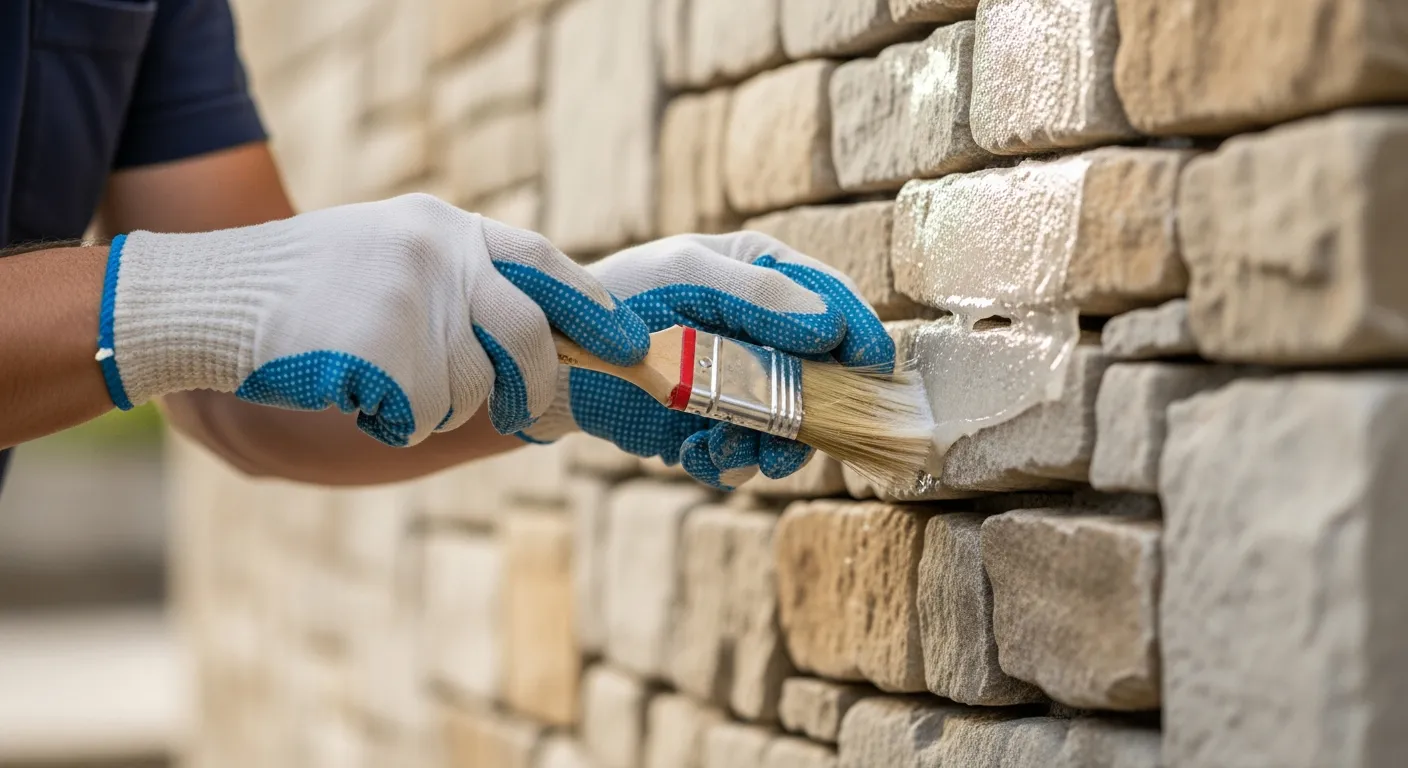
Beyond the structural concerns, water damage can also detract from the aesthetic appeal of stone. Staining, discoloration, and biological growth can make stone surfaces look unsightly and neglected. By waterproofing the stone, you can preserve its natural beauty and maintain its visual appeal.
In historic buildings, preserving the original stone is of paramount importance. Waterproofing is a crucial component of any preservation strategy, helping to protect these valuable structures from the ravages of time and weather. It ensures that future generations can appreciate the craftsmanship and beauty of these historic landmarks.
Furthermore, waterproofing can enhance the energy efficiency of stone buildings. Damp stone conducts heat more readily than dry stone, leading to increased heating and cooling costs. By keeping the stone dry, waterproofing can help to reduce energy consumption and lower utility bills.
Understanding Waterproofing Agents
Waterproofing agents are designed to create a barrier that prevents water from penetrating the stone. These agents come in various forms, each with its own properties and application methods.
Some waterproofing agents work by creating a hydrophobic surface, which repels water. Others penetrate the stone and react with its minerals to form a water-resistant layer.
It’s essential to choose the right waterproofing agent for the specific type of stone and the environmental conditions it will be exposed to. Factors such as the stone’s porosity, the climate, and the desired aesthetic effect should all be considered.
Different types of stone have varying levels of porosity and react differently to waterproofing treatments. For example, a dense granite may require a different approach than a porous sandstone.
Penetrating sealers are generally preferred for natural stone because they don’t alter the stone’s appearance. These sealers work by impregnating the stone with a water-repellent substance that doesn’t form a visible film on the surface. This allows the stone to maintain its natural look and texture while still being protected from water damage.
Surface sealers, on the other hand, create a protective layer on top of the stone. While they can provide excellent water resistance, they often alter the stone’s appearance, making it look glossy or artificial. Surface sealers are typically used on manufactured stone or concrete surfaces where the natural look is not as important.
Breathability is another crucial factor to consider when choosing a waterproofing agent. Stone needs to be able to “breathe,” allowing water vapor to escape from within. Sealers that are not breathable can trap moisture inside the stone, leading to a build-up of pressure and potential damage.
The longevity of the waterproofing agent is also important. Some sealers are designed to last for many years, while others need to be reapplied more frequently. Consider the long-term maintenance requirements when making your selection.
Silane and Siloxane Sealers
Silane and siloxane sealers are popular choices for waterproofing stone due to their penetrating properties. These sealers work by reacting with the silica in the stone to create a hydrophobic layer within the material.
This type of sealer doesn’t form a surface film, so it doesn’t alter the stone’s appearance or reduce its breathability. Breathability is a key factor, as it allows water vapor to escape from the stone, preventing moisture buildup inside.
| Feature | Silane Sealers | Siloxane Sealers |
|---|---|---|
| Penetration Depth | Deeper penetration | Shallower penetration |
| Molecular Size | Smaller molecules | Larger molecules |
| Water Repellency | Excellent | Very Good |
| Durability | Long-lasting | Slightly less durable |
| Cost | Generally more expensive | Generally less expensive |
Silane sealers generally offer deeper penetration and longer-lasting protection, making them suitable for highly porous stones. Siloxane sealers, while less penetrating, are often more cost-effective and still provide excellent water repellency.
Silane sealers are particularly effective on concrete and brick surfaces as well. They provide excellent resistance to chloride ion penetration, making them ideal for structures exposed to de-icing salts or marine environments. The deeper penetration ensures a longer lifespan for the waterproofing treatment.
Siloxane sealers, due to their larger molecular size, are often used on less porous stones. They are still highly effective at repelling water and preventing surface staining. The lower cost makes them a popular choice for large-scale projects where budget is a concern.
Both silane and siloxane sealers are UV resistant, meaning they won’t break down or discolor when exposed to sunlight. This is an important consideration for outdoor stone surfaces that are constantly exposed to the elements. UV resistance ensures that the waterproofing treatment remains effective for years to come.
When applying silane or siloxane sealers, it’s important to follow the manufacturer’s instructions carefully. Proper surface preparation is essential for optimal penetration and adhesion. The stone surface should be clean, dry, and free of any loose debris.
Acrylic Waterproofing Agents
Acrylic waterproofing agents form a protective film on the surface of the stone. These sealers are typically less expensive than silane or siloxane sealers and can provide good water resistance.
However, acrylic sealers can alter the stone’s appearance, giving it a glossy or plastic-like finish. They also tend to be less breathable, which can trap moisture and lead to problems over time.
Acrylic waterproofing is best suited for situations where a surface coating is acceptable and breathability is not a primary concern. For example, it can be used on decorative stone elements that are not subject to heavy water exposure.
It’s important to choose a high-quality acrylic sealer that is specifically designed for stone. Cheaper acrylic products may yellow or crack over time, detracting from the stone’s appearance.
Acrylic sealers are often used in interior applications where aesthetics are more important than breathability. For example, they can be used to seal stone countertops or floors. The glossy finish can enhance the stone’s color and add a touch of elegance.
However, it’s important to note that acrylic sealers are not as durable as silane or siloxane sealers. They are more susceptible to scratching and abrasion, and they may need to be reapplied more frequently. This is especially true in high-traffic areas.
When applying acrylic sealers, it’s crucial to apply thin, even coats. Thick coats can lead to bubbling or peeling. Allow each coat to dry completely before applying the next.
Acrylic sealers are available in a variety of finishes, from matte to high-gloss. Choose the finish that best suits your aesthetic preferences. Keep in mind that a high-gloss finish will be more reflective and may show scratches more easily.
Applying Waterproofing Agents Correctly
Proper application is crucial for the effectiveness of any waterproofing agent. Before applying any sealer, the stone surface must be clean and dry.
Remove any dirt, dust, algae, or efflorescence with a brush, pressure washer, or appropriate cleaning solution. Allow the stone to dry completely before proceeding.
- Read the manufacturer’s instructions carefully
- Apply the sealer evenly using a brush, roller, or sprayer
- Avoid over-application, which can lead to a build-up of sealant
- Apply multiple thin coats rather than one thick coat
- Allow each coat to dry completely before applying the next
Follow the manufacturer’s instructions for the specific product you are using. Some sealers require multiple coats, while others are designed for single-coat application.
Surface preparation is paramount for ensuring proper adhesion of the waterproofing agent. Use a wire brush to remove any loose or flaking material. This will create a clean, stable surface for the sealer to bond to.
When using a pressure washer, be careful not to damage the stone surface. Use a low-pressure setting and a wide-angle nozzle. Avoid holding the nozzle too close to the stone, as this can cause erosion.
Apply the sealer in a well-ventilated area. Some sealers contain solvents that can be harmful if inhaled. Wear a respirator if necessary.
Test the sealer on a small, inconspicuous area of the stone before applying it to the entire surface. This will allow you to see how the sealer affects the stone’s appearance and ensure that it is compatible with the stone.
Maintaining Waterproofed Stone Surfaces
Waterproofing is not a one-time solution; it requires ongoing maintenance to ensure its effectiveness. Regularly inspect the stone surfaces for signs of water damage, such as cracks, spalling, or efflorescence.
Clean the stone surfaces periodically to remove dirt, algae, and other contaminants that can compromise the sealer’s performance. Use a mild soap and water solution, and avoid harsh chemicals or abrasive cleaners.
Depending on the type of sealer used and the environmental conditions, reapplication may be necessary every few years. Check the manufacturer’s recommendations for reapplication intervals.
When reapplying a sealer, it’s important to clean the surface thoroughly and remove any old or failing sealant. This will ensure proper adhesion of the new coating.
Regular cleaning prevents the buildup of dirt and grime, which can trap moisture and create a breeding ground for mold and algae. Use a soft brush or sponge to avoid scratching the stone surface.
Avoid using de-icing salts on waterproofed stone surfaces. Salts can damage the sealer and accelerate the deterioration of the stone. Use sand or other non-corrosive alternatives.
Inspect the stone surfaces after severe weather events, such as heavy rain or snowstorms. Look for any signs of damage or water penetration. Address any issues promptly to prevent further damage.
Consider applying a sacrificial coating on top of the waterproofing agent. A sacrificial coating is a thin layer of material that is designed to wear away over time, protecting the underlying sealer. This can extend the lifespan of the waterproofing treatment.
Choosing the Right Waterproofing Agent for Your Stone
Selecting the appropriate waterproofing agent requires careful consideration of several factors. The type of stone is a primary determinant, as different stones have varying porosities and react differently to sealers.
Sandstone, for example, is highly porous and benefits from deep-penetrating silane sealers. Granite, being less porous, may only require a surface treatment like an acrylic sealer.
The climate and environmental conditions also play a significant role. In areas with frequent freeze-thaw cycles, a breathable sealer is essential to prevent moisture buildup and subsequent damage.
Consider the aesthetic effect you desire. If you want to maintain the stone’s natural appearance, a penetrating sealer like silane or siloxane is the best choice. If you’re open to a glossy finish, an acrylic sealer may be suitable.
Also, consider the location of the stone. Is it an interior or exterior surface? Is it exposed to direct sunlight or shade? These factors will influence the type of sealer you choose.
Read the product labels carefully and compare the features and benefits of different sealers. Look for sealers that are specifically designed for the type of stone you are working with.
Consult with a stone care professional for advice. They can assess your specific needs and recommend the best waterproofing agent for your situation. Their expertise can save you time and money in the long run.
Don’t be afraid to ask questions. The more information you have, the better equipped you will be to make an informed decision. Choose a sealer that you are confident will provide long-lasting protection for your stone.
Addressing Common Waterproofing Challenges
Waterproofing stone can present several challenges, depending on the specific project. One common issue is dealing with existing moisture problems.
If the stone is already saturated with water, applying a sealer can trap the moisture and exacerbate the problem. In such cases, it’s essential to address the source of the moisture and allow the stone to dry completely before applying any waterproofing agent.
Another challenge is selecting the right application method. Some sealers are best applied with a brush, while others are more effectively applied with a sprayer.
It’s crucial to follow the manufacturer’s instructions and use the recommended application technique to ensure proper coverage and penetration. Over-application can lead to a build-up of sealant, while under-application may not provide adequate protection.
Dealing with efflorescence can be tricky. Efflorescence needs to be removed before applying any sealer, but some cleaning methods can damage the stone. Use a specialized efflorescence cleaner and follow the instructions carefully.
Matching the color of the sealer to the stone can also be a challenge. Some sealers can slightly darken or lighten the stone. Test the sealer on a small, inconspicuous area before applying it to the entire surface.
Working with old or damaged stone can be difficult. Cracks and chips need to be repaired before waterproofing. Use a stone repair mortar that is compatible with the type of stone you are working with.
Applying sealer in cold or humid weather can affect its performance. Follow the manufacturer’s recommendations for temperature and humidity. Avoid applying sealer in direct sunlight, as this can cause it to dry too quickly.
DIY vs. Professional Waterproofing
Waterproofing stone can be a DIY project or a task for a professional, depending on the complexity of the job. For small, straightforward projects, such as sealing a garden wall, a DIY approach may be feasible.
However, for larger or more complex projects, such as waterproofing a building facade, it’s often best to hire a professional stone mason. Professionals have the expertise and equipment to properly assess the stone, select the appropriate sealer, and apply it correctly.
They can also identify and address any underlying moisture problems that may be contributing to the damage. Hiring a professional can save you time and money in the long run by ensuring that the job is done right the first time.
Consider the risks involved. Improperly applied waterproofing can cause more harm than good, trapping moisture and accelerating the stone’s deterioration.
DIY projects require careful planning and preparation. Research the different types of sealers and choose the one that is best suited for your stone and climate. Gather the necessary tools and materials before you begin.
Professional stone masons have years of experience working with stone. They understand the nuances of different types of stone and know how to properly waterproof them. They can also provide valuable advice on maintaining your stone surfaces.
Get quotes from multiple contractors before hiring a professional. Ask for references and check their credentials. Make sure they are licensed and insured.
Weigh the costs and benefits of DIY versus professional waterproofing. Consider your budget, your skill level, and the complexity of the project. Choose the option that is best for you.
The Environmental Impact of Waterproofing Agents
When choosing a waterproofing agent, it’s important to consider its environmental impact. Some sealers contain volatile organic compounds (VOCs), which can contribute to air pollution.
Look for low-VOC or water-based sealers, which are more environmentally friendly. These products release fewer harmful chemicals into the atmosphere.
Also, consider the durability of the sealer. A longer-lasting sealer will require less frequent reapplication, reducing the overall environmental impact.
Dispose of any leftover sealer and cleaning materials properly. Follow local regulations for hazardous waste disposal to prevent contamination of soil and water.
Water-based sealers are generally considered to be more environmentally friendly than solvent-based sealers. They contain fewer VOCs and are less likely to contribute to air pollution. Look for water-based sealers that are certified by a third-party organization, such as Green Seal or EcoLogo.
Some sealers are made from recycled materials. These sealers can help to reduce waste and conserve resources. Look for sealers that are made from post-consumer or post-industrial recycled content.
Consider the packaging of the sealer. Choose sealers that are packaged in recyclable containers. Avoid sealers that are packaged in single-use plastic containers.
Support companies that are committed to sustainability. Choose sealers from companies that have a strong environmental track record. Look for companies that have implemented sustainable manufacturing practices and are actively working to reduce their environmental impact.
Conclusion
Waterproofing is an essential step in preserving the beauty and longevity of stone structures. By understanding the importance of waterproofing, the types of agents available, and the best practices for application and maintenance, you can effectively protect your stone from moisture damage.
Whether you choose a silane sealer, an acrylic waterproofing, or another type of agent, remember to select the right product for your specific stone and environmental conditions. With proper care and maintenance, your waterproofed stone surfaces will remain beautiful and durable for years to come.
Investing in quality waterproofing and consistent maintenance is an investment in the future of your stone structures. It ensures that these timeless elements will continue to enhance our built environment for generations to come. By taking proactive steps to protect your stone, you are preserving a piece of history and ensuring its lasting beauty.
Remember to consult with professionals when needed, especially for large or complex projects. Their expertise can be invaluable in ensuring that the waterproofing is done correctly and effectively. With the right knowledge and tools, you can confidently protect your stone surfaces and enjoy their beauty for years to come.