
The preservation of stone structures is a complex endeavor, requiring a deep understanding of the materials involved and the environmental factors that contribute to their decay. One of the most common and insidious threats to stone is the formation of gypsum, a mineral that can cause significant damage over time. Understanding the role of gypsum in stone deterioration and the methods for its treatment is essential for effective conservation.
This article will explore the formation, effects, identification, removal, prevention, and conservation treatments associated with gypsum in stone preservation. By gaining a comprehensive understanding of this problematic mineral, we can better protect our valuable stone heritage.
From ancient monuments to modern buildings, the presence of gypsum poses a significant challenge to conservators and stonemasons alike. Let’s examine how this mineral forms and what steps can be taken to mitigate its destructive impact.
What is Gypsum and How Does it Form on Stone?
Gypsum is a soft sulfate mineral composed of calcium sulfate dihydrate, with the chemical formula CaSO₄·2H₂O. It is a common mineral found in sedimentary rocks and is often associated with evaporite deposits.
The formation of gypsum on stone surfaces is typically the result of a chemical reaction between calcium carbonate (the primary component of limestone and marble) and sulfuric acid. This sulfuric acid can originate from various sources, including atmospheric pollution, industrial emissions, and the oxidation of pyrite (iron sulfide) present in some stone materials.
Atmospheric pollution, particularly sulfur dioxide (SO₂), is a major contributor to gypsum formation. When SO₂ dissolves in rainwater, it forms sulfurous acid (H₂SO₃), which can then oxidize to sulfuric acid (H₂SO₄).
This sulfuric acid reacts with the calcium carbonate in the stone, converting it to calcium sulfate, which then crystallizes as gypsum. The process is accelerated in humid environments, where moisture facilitates the dissolution and transport of the reactants.
Gypsum’s crystalline structure is characterized by layers of calcium sulfate molecules interleaved with layers of water molecules. This layered structure contributes to its softness and its tendency to cleave easily along certain planes.
The presence of water molecules also plays a crucial role in the gypsum formation process, as it facilitates the dissolution and transport of ions. Furthermore, the crystallization of gypsum from solution can exert significant pressure on the surrounding stone material.
The oxidation of pyrite, commonly found as an impurity in some types of stone, also contributes to gypsum formation. When pyrite comes into contact with water and oxygen, it undergoes a chemical reaction that produces sulfuric acid and iron oxides.
This sulfuric acid then reacts with the calcium carbonate in the stone, leading to the formation of gypsum. The presence of pyrite in stone can significantly accelerate the rate of gypsum formation, especially in environments with high humidity and oxygen levels.
The Detrimental Effects of Gypsum on Stone
The presence of gypsum on stone surfaces can lead to a variety of detrimental effects, compromising the structural integrity and aesthetic appearance of the material. One of the primary concerns is the phenomenon known as salt weathering.
Gypsum, being a salt, is susceptible to cycles of dissolution and recrystallization in response to changes in humidity and temperature. As gypsum crystals grow within the pores and fissures of the stone, they exert pressure on the surrounding material.
This pressure can cause the stone to crack, flake, and eventually disintegrate, leading to significant loss of material. The process is particularly damaging in areas with high levels of atmospheric pollution and fluctuating environmental conditions.
In addition to its physical effects, gypsum can also alter the appearance of stone surfaces. The formation of gypsum crusts can obscure the original color and texture of the stone, leading to a dull, disfigured appearance.
The repeated cycles of dissolution and recrystallization cause a progressive weakening of the stone matrix. This weakening eventually leads to the detachment of surface layers, a process known as exfoliation or scaling.
The growth of gypsum crystals within the stone’s pores can also lead to the formation of blisters and pustules on the surface. These blisters are caused by the pressure exerted by the growing crystals, which forces the surface layer of the stone to detach from the underlying material.
Furthermore, gypsum can react with other minerals present in the stone, leading to the formation of new, potentially harmful compounds. For example, gypsum can react with clay minerals to form ettringite, a mineral that can cause expansion and cracking in concrete and stone.
The discoloration caused by gypsum can also be exacerbated by the accumulation of dirt and pollutants on the gypsum crust. This creates a visually unappealing surface that detracts from the original beauty of the stone structure.
Factors Influencing Gypsum Formation
Several factors influence the rate and extent of gypsum formation on stone. These include the level of atmospheric pollution, the type of stone, and the environmental conditions.
Areas with high levels of sulfur dioxide (SO₂) and nitrogen oxides (NOx) in the atmosphere are more prone to gypsum formation. Porous stones, such as certain types of limestone and sandstone, are more vulnerable to gypsum damage due to their greater surface area and ability to absorb moisture and pollutants.
| Factor | Influence on Gypsum Formation | Mitigation Strategies |
|---|---|---|
| Atmospheric Pollution | High levels of SO₂ and NOx accelerate gypsum formation. | Implement pollution control measures and reduce emissions. |
| Stone Type | Porous stones are more susceptible to gypsum damage. | Select less porous stones for construction and apply protective coatings. |
| Environmental Conditions | Fluctuating humidity and temperature promote gypsum crystallization and weathering. | Improve drainage and ventilation to reduce moisture accumulation. |
| Pyrite Content | Oxidation of pyrite in stone releases sulfuric acid, contributing to gypsum formation. | Select stones with low pyrite content and apply barrier coatings. |
The orientation of the stone surface can also influence the rate of gypsum formation. Surfaces that are directly exposed to rain and sunlight are more likely to experience gypsum formation due to the increased availability of moisture and the acceleration of chemical reactions.
The presence of pre-existing cracks and fissures in the stone can also promote gypsum formation. These cracks provide pathways for moisture and pollutants to penetrate deeper into the stone, increasing the surface area available for chemical reactions.
The pH of the rainwater and surface water can also affect the rate of gypsum formation. Acidic rainwater, with a pH below 5.6, can accelerate the dissolution of calcium carbonate and the subsequent formation of gypsum.
The type of binder used in mortars and renders can also influence the susceptibility of stone to gypsum damage. Cement-based mortars, which are less flexible and more impermeable than lime-based mortars, can trap moisture and salts within the stone, increasing the risk of gypsum formation.
Identifying Gypsum Formation
Identifying gypsum formation on stone surfaces is crucial for implementing appropriate conservation strategies. Visual inspection is often the first step in detecting the presence of gypsum.
Gypsum typically appears as a white or grayish crust on the surface of the stone, often concentrated in areas exposed to rain or condensation. The crust may be powdery or crystalline in appearance, and it can sometimes be accompanied by flaking or crumbling of the stone.
In addition to visual inspection, several analytical techniques can be used to confirm the presence of gypsum and assess the extent of its damage. These techniques include X-ray diffraction (XRD), which can identify the crystalline structure of gypsum, and scanning electron microscopy (SEM), which can provide detailed images of the stone surface and reveal the distribution of gypsum crystals.
Another useful technique is infrared spectroscopy (FTIR), which can identify the chemical composition of the surface layer and detect the presence of calcium sulfate. These analytical methods provide valuable information for understanding the nature and severity of gypsum-related deterioration.
A simple field test involves applying a drop of hydrochloric acid (HCl) to the suspected gypsum crust. If the crust is indeed gypsum, it will react with the acid to produce carbon dioxide gas, which will be visible as effervescence or bubbling.
Polarizing light microscopy (PLM) can also be used to identify gypsum crystals under magnification. Gypsum crystals exhibit characteristic optical properties, such as birefringence and extinction, which can be used to distinguish them from other minerals.
Ion chromatography can be used to quantify the concentration of sulfate ions (SO₄²⁻) in samples taken from the stone surface. Elevated sulfate concentrations are indicative of gypsum formation.
Raman spectroscopy is another non-destructive technique that can be used to identify gypsum and other minerals on stone surfaces. This technique involves shining a laser beam onto the sample and analyzing the scattered light to determine the vibrational modes of the molecules present.
Methods for Removing Gypsum from Stone Surfaces
Removing gypsum from stone surfaces requires careful consideration to avoid further damage to the underlying material. Several methods are available, each with its own advantages and limitations.
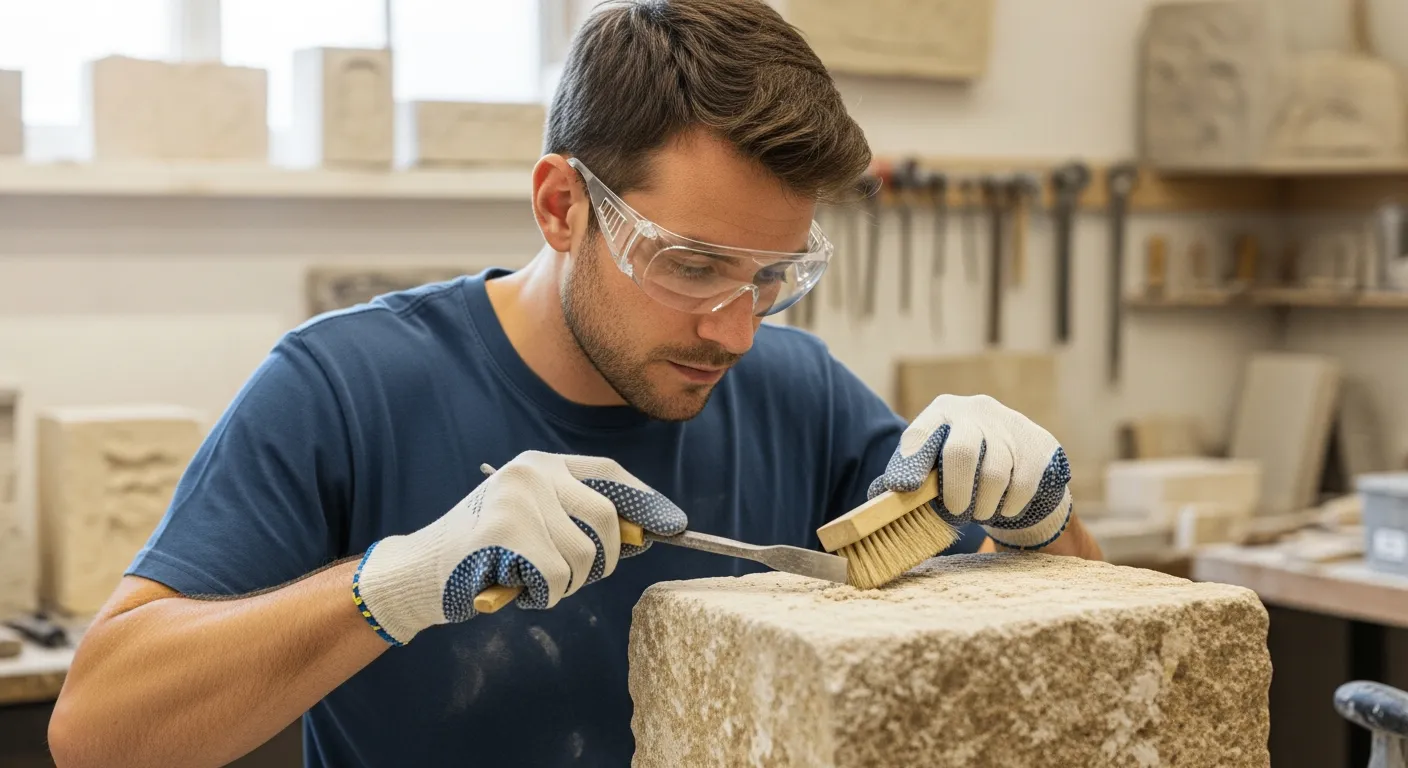
One common approach is mechanical removal, which involves using hand tools or power tools to carefully scrape or brush away the gypsum crust. This method is effective for removing thick, loosely adhered gypsum layers, but it can be time-consuming and may cause abrasion or scratching of the stone surface if not performed with care.
Another method is water washing, which involves gently rinsing the stone surface with deionized water to dissolve and remove the gypsum. This method is less aggressive than mechanical removal, but it may not be effective for removing heavily encrusted or tightly adhered gypsum layers.
Chemical treatments, such as the application of ammonium carbonate solutions, can also be used to convert the gypsum to a more soluble form that can be easily washed away. However, chemical treatments must be carefully controlled to avoid adverse reactions with the stone or the formation of harmful byproducts.
Laser ablation is a more recent technique that involves using a laser beam to vaporize the gypsum crust. This method is highly precise and can be used to remove gypsum from delicate or intricate surfaces without causing damage to the underlying stone.
Poultices, which are mixtures of absorbent materials and solvents, can also be used to draw out gypsum from the stone. The poultice is applied to the surface and allowed to dry, during which time it absorbs the gypsum and other soluble salts. The dried poultice is then removed, taking the gypsum with it.
Steam cleaning can be effective for removing loosely adhered gypsum and dirt from stone surfaces. The steam helps to dissolve the gypsum and loosen it from the stone, allowing it to be easily rinsed away.
When using any removal method, it is important to test a small, inconspicuous area first to assess the potential for damage. It is also crucial to monitor the stone surface closely during the removal process to ensure that no further deterioration is occurring.
Preventing Future Gypsum Formation
Preventing future gypsum formation is a critical aspect of stone conservation. Reducing exposure to sulfur dioxide and other pollutants is essential for minimizing the risk of gypsum formation.
This can be achieved through various measures, such as implementing stricter emission controls on industrial sources and promoting the use of cleaner energy sources. Protecting stone surfaces from direct exposure to rain and moisture can also help to reduce gypsum formation.
• Apply protective coatings to the stone surface • Improve drainage to prevent water accumulation • Use sacrificial layers to absorb pollutants • Regularly clean stone surfaces to remove accumulated dirt and pollutants • Monitor environmental conditions and adjust conservation strategies accordingly
Applying water-repellent coatings to the stone surface can help to prevent moisture from penetrating the stone and dissolving calcium carbonate. These coatings should be breathable to allow water vapor to escape from the stone, preventing the buildup of moisture beneath the surface.
Improving drainage around the stone structure can help to reduce the amount of water that comes into contact with the stone. This can involve installing gutters and downspouts to divert rainwater away from the walls, or grading the surrounding landscape to promote water runoff.
Using sacrificial layers, such as lime washes or breathable paints, can provide a protective barrier between the stone and the environment. These layers will absorb pollutants and moisture, preventing them from reaching the stone surface. The sacrificial layer can then be periodically replaced as needed.
Regularly cleaning the stone surface to remove accumulated dirt and pollutants can help to prevent the formation of gypsum. This can be done using gentle brushing or water washing, taking care not to damage the stone surface.
Conservation Treatments Involving Gypsum
In some cases, gypsum can be intentionally used in conservation treatments to consolidate and protect deteriorated stone. One such application is the use of gypsum plasters for repairing damaged or missing stone elements.
Gypsum plasters can be formulated to match the color and texture of the original stone, providing a compatible and aesthetically pleasing repair material. These plasters can be applied to fill cracks, voids, and other defects in the stone, helping to restore its structural integrity and appearance.
Another approach involves the use of lime-gypsum mortars for repointing stone masonry. These mortars combine the flexibility and breathability of lime with the strength and durability of gypsum, providing a suitable material for filling joints between stones.
The addition of gypsum to lime mortars can improve their resistance to weathering and erosion, helping to prolong the lifespan of the masonry structure. However, the use of gypsum in conservation treatments requires careful consideration and testing to ensure compatibility with the original stone and to avoid potential long-term problems.
The key to successful use of gypsum-based materials in conservation lies in careful formulation and application. The gypsum must be of high quality and free from impurities, and the plaster or mortar must be mixed and applied according to established best practices.
It is also important to consider the long-term performance of gypsum-based materials in the specific environment in which they will be used. Gypsum is susceptible to dissolution in acidic conditions, so it may not be suitable for use in areas with high levels of atmospheric pollution or acid rain.
In some cases, gypsum can be used as a consolidant to strengthen weakened or deteriorated stone. A solution of gypsum is applied to the stone surface, and as the gypsum crystallizes, it fills the pores and fissures in the stone, increasing its strength and stability.
However, the use of gypsum as a consolidant must be carefully controlled to avoid over-consolidation, which can make the stone brittle and prone to cracking. It’s important to select the appropriate concentration and application method to achieve the desired level of consolidation without causing further damage.
Case Studies of Gypsum Treatment
Examining real-world examples of gypsum treatment provides valuable insights into the effectiveness of different conservation strategies. The Cologne Cathedral in Germany, a UNESCO World Heritage Site, has faced significant challenges from gypsum formation due to atmospheric pollution.
Conservators have implemented a comprehensive conservation program that includes regular cleaning, application of protective coatings, and the use of lime-gypsum mortars for repointing. Another example is the White House in Washington, D.C., where gypsum formation has been observed on the exterior sandstone walls.
The conservation team has employed a combination of mechanical removal, water washing, and chemical treatments to address the gypsum problem. These case studies demonstrate the importance of a multi-faceted approach to gypsum treatment, tailored to the specific characteristics of the stone and the environmental conditions.
By learning from these experiences, conservators can develop more effective strategies for preserving stone structures around the world. Understanding the specific challenges and successes in these projects informs future conservation efforts.
The Houses of Parliament in London, another iconic example, have undergone extensive restoration work to combat the effects of pollution and gypsum formation. The project involved careful cleaning, repair of damaged stonework, and the application of protective coatings.
The Doge’s Palace in Venice, Italy, provides a further example of the challenges posed by gypsum and other forms of deterioration in a marine environment. The conservation efforts included the removal of salt deposits, consolidation of weakened stone, and the application of water-repellent treatments.
These case studies highlight the importance of ongoing monitoring and maintenance to prevent the recurrence of gypsum formation. Regular inspections and timely interventions are essential for preserving stone structures in the long term.
The success of these projects also relies on collaboration between different disciplines, including conservators, architects, engineers, and scientists. A holistic approach that considers all aspects of the stone structure and its environment is crucial for effective conservation.
Conclusion
Gypsum formation poses a significant threat to the preservation of stone structures, leading to material loss, aesthetic disfigurement, and structural instability. Understanding the mechanisms of gypsum formation, the factors that influence it, and the methods for its treatment is essential for effective conservation.
By implementing appropriate preventive measures and conservation treatments, we can mitigate the detrimental effects of gypsum and protect our valuable stone heritage for future generations. Addressing the issue of gypsum in stone preservation requires a collaborative effort involving conservators, stonemasons, scientists, and policymakers.
Continued research and development of new conservation techniques are essential for improving our ability to combat gypsum formation. This includes exploring new materials and methods for cleaning, consolidation, and protection of stone surfaces.
Raising public awareness about the importance of stone preservation can also help to protect our cultural heritage. By educating the public about the threats to stone structures and the measures that can be taken to prevent their deterioration, we can foster a greater appreciation for these valuable resources.