
The preservation of historic structures and monuments often requires careful intervention. One of the most important aspects of this work is consolidation, which aims to strengthen deteriorated stone.
Selecting Stone Consolidants requires a deep understanding of material science and compatibility. The right choice can make the difference between successful preservation and further damage.
This article will serve as a comprehensive guide to stone consolidants. We will cover the types of consolidants available and the factors to consider when choosing the right one for your project.
We will delve into the science behind each type of consolidant. We will also discuss the practical aspects of application and long-term maintenance.
Whether you’re a seasoned professional or new to the field, this information is designed to help you make informed decisions. The goal is to ensure the longevity and integrity of our shared cultural heritage.
By understanding the nuances of stone consolidation, we can better protect these invaluable pieces of history. Let’s embark on this journey to learn more about these essential tools for preservation.
What are Stone Consolidants?
Stone consolidants are materials applied to deteriorated stone to improve its structural integrity. They work by penetrating the stone and binding loose particles together.
These materials essentially act as a glue. They reinforce the weakened structure from within.

The goal is to restore some of the stone’s original strength. Ideally, the consolidant should be compatible with the original stone material.
Compatibility is crucial to avoid any adverse reactions. The consolidant should not cause further damage or discoloration.
A good consolidant also allows the stone to “breathe”. This means it should allow moisture to escape, preventing further damage from water buildup.
Breathability is essential for preventing salt crystallization. Trapped moisture can lead to significant deterioration over time.
There are several types of stone consolidants available, each with its own advantages and disadvantages. Common types include ethyl silicate, acrylic resins, and lime-based materials.
The choice of consolidant depends on various factors. These include the type of stone, the extent of deterioration, and the environmental conditions.
Understanding the properties of each type of consolidant is key. This will help you make the best decision for your specific project.
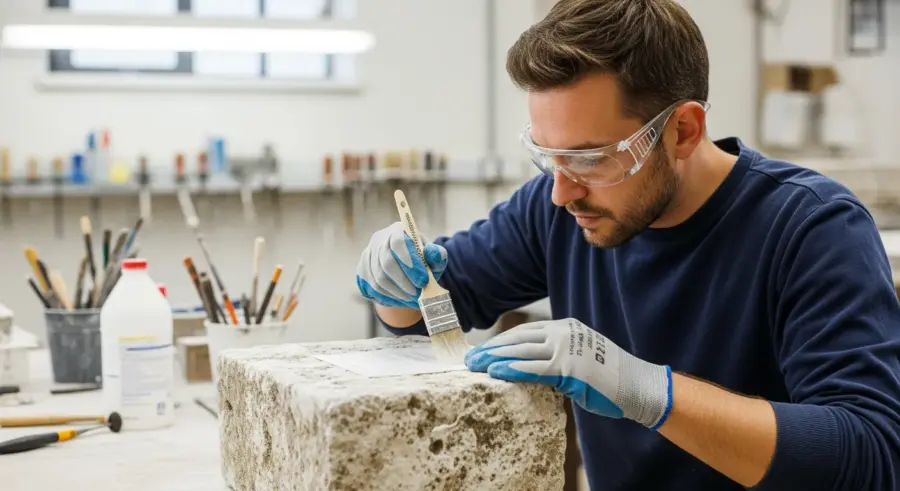
The application process also varies depending on the consolidant. Some are applied by brush, while others are injected into the stone.
Ethyl Silicate Consolidants: How They Work
Ethyl silicate consolidants are among the most widely used in stone conservation. They function by depositing silica within the pores of the stone.
This deposition strengthens the stone matrix. It essentially fills the gaps and binds the loose particles.
This silica then binds the stone particles together. The process involves the ethyl silicate reacting with moisture in the air and within the stone itself.
The presence of moisture is crucial for the reaction to occur. Without it, the ethyl silicate will not properly polymerize.
The reaction forms silicic acid, which then polymerizes into a silica gel. This gel fills the voids and strengthens the stone matrix.
The resulting silica gel is very similar in composition to many natural stones. This makes it a highly compatible and durable consolidant.
One of the main advantages of ethyl silicate is its relatively small molecule size. This allows it to penetrate deeply into the stone.
Deep penetration ensures that the consolidation occurs throughout the stone. This provides a more uniform and effective strengthening effect.
Another benefit is that the silica gel is chemically similar to many natural stones. This results in good compatibility and long-term stability.
This chemical similarity minimizes the risk of adverse reactions. It also ensures that the consolidant will last for many years to come.
However, the application of ethyl silicate requires careful control. The process can be affected by temperature and humidity.
It is also important to ensure that the stone is properly cleaned before application. This will allow the ethyl silicate to penetrate more effectively.
Acrylic Resin Consolidants: Advantages and Disadvantages
Acrylic resins are another class of stone consolidants. They work by forming a polymer network within the stone’s pores.
This network binds the loose particles together. It provides structural support to the weakened stone.
These resins are often chosen for their flexibility and ease of application. They can be applied by brush, spray, or injection.
The flexibility of acrylic resins is particularly beneficial for stones that are prone to movement. This helps to prevent cracking and further damage.
| Advantage | Disadvantage | Considerations |
|---|---|---|
| Good Flexibility | Potential for Discoloration | UV Stability |
| Easy Application | Limited Penetration | Solvent Type |
| Water Resistance | Not Always Breathable | Compatibility with Stone |
| Wide Availability | May Degrade Over Time | Long-Term Performance |
The table summarizes the key advantages and disadvantages of acrylic resin consolidants. It also highlights important considerations for their use.
However, acrylic resins also have some disadvantages. One major concern is their long-term stability.
The stability of acrylic resins can be affected by various factors. These include exposure to UV radiation, temperature fluctuations, and moisture.
Some acrylic resins can degrade over time. This can lead to discoloration or loss of strength.
Discoloration can significantly alter the appearance of the stone. Loss of strength can compromise the effectiveness of the consolidation.
It is important to choose acrylic resins that are specifically formulated for stone conservation. These resins are designed to be more durable and resistant to degradation.
The selection of the appropriate solvent is also crucial. The solvent can affect the penetration and performance of the resin.
Lime-Based Consolidants: Compatibility with Limestone
Lime-based consolidants are particularly well-suited for limestone. This is because limestone is primarily composed of calcium carbonate.
The chemical similarity between the consolidant and the stone is a major advantage. It minimizes the risk of adverse reactions and ensures good compatibility.
Using a lime-based consolidant ensures chemical compatibility. The consolidant essentially reintroduces calcium carbonate into the stone matrix.
This process helps to restore the stone’s original composition. It strengthens the weakened structure from within.
These consolidants typically consist of a suspension of lime particles in water. When applied, the lime penetrates the stone and gradually hardens.
The size of the lime particles is important for penetration. Smaller particles can penetrate deeper into the stone.
The hardening process involves the conversion of calcium hydroxide to calcium carbonate. This occurs through reaction with carbon dioxide in the air.
This process is known as carbonation. It is a slow but natural process that results in a durable and compatible consolidant.
Lime-based consolidants are known for their breathability. They allow moisture to evaporate from the stone, reducing the risk of salt damage.
Breathability is crucial for preventing the buildup of salts within the stone. Salt crystallization can cause significant damage over time.
However, lime-based consolidants can be less effective on stones that are not primarily composed of calcium carbonate. They are best suited for limestone and other similar materials.
The application of lime-based consolidants requires careful control of the moisture content. Too much moisture can prevent proper hardening.
Silane Consolidants: An Alternative Option
Silane consolidants represent another category of materials used in stone conservation. These compounds are known for their water repellency and ability to penetrate deeply into porous materials.
Their unique properties make them suitable for specific conservation challenges. They offer an alternative approach to strengthening and protecting stone.
Silanes work by reacting with moisture in the stone to form a hydrophobic layer. This layer reduces water absorption, protecting the stone from freeze-thaw damage and salt weathering.
This hydrophobic barrier prevents water from entering the stone’s pores. This significantly reduces the risk of damage caused by water-related processes.
One of the primary advantages of silane consolidants is their minimal impact on the stone’s appearance. They typically do not alter the color or texture of the treated surface.
This is a crucial consideration for preserving the aesthetic integrity of historic structures. It ensures that the conservation treatment is not visually intrusive.
Additionally, silanes are often used as a pre-treatment before applying other consolidants. This can improve the overall effectiveness of the conservation process.
By reducing water absorption, silanes can create a more favorable environment for other consolidants to penetrate and bond. This enhances the long-term durability of the treatment.
However, it’s important to note that silanes primarily provide water repellency. They do not necessarily improve the structural strength of the stone.
While they protect against water damage, they may not be sufficient for stones with significant structural weaknesses. In such cases, they may need to be combined with other consolidants.
The effectiveness of silane consolidants can also be affected by the type of stone and the environmental conditions. Proper selection and application are essential for optimal results.
Silane consolidants are generally more effective on siliceous stones. They may not be as effective on calcareous stones like limestone.
Applying Stone Consolidants Safely
The safe application of stone consolidants is paramount. Many of these materials contain solvents or chemicals that can be harmful.
Protecting the health and safety of workers and the environment is crucial. This requires careful planning and adherence to safety protocols.
Always wear appropriate personal protective equipment (PPE). This includes gloves, respirators, and eye protection.
PPE provides a barrier against exposure to harmful chemicals. It minimizes the risk of skin irritation, respiratory problems, and eye damage.
- Ensure adequate ventilation
- Follow manufacturer’s instructions
- Properly dispose of waste materials
- Avoid skin and eye contact
- Store materials safely
These are essential safety precautions to follow when working with stone consolidants. They help to minimize the risk of accidents and exposure.
It’s also crucial to protect the surrounding environment. Cover any nearby vegetation or sensitive surfaces.
This prevents the consolidant from contaminating the soil or water. It also protects any plants or animals in the area.
Proper training is essential before applying any stone consolidant. Understand the specific risks associated with the material you are using.
Training ensures that workers are aware of the potential hazards. It also provides them with the knowledge and skills to apply the consolidant safely.
Always read and understand the safety data sheet (SDS) for each consolidant. This document provides detailed information about the chemical properties, hazards, and safe handling procedures.
The SDS is a valuable resource for ensuring safe application. It should be readily available to all workers.
Surface Preparation: A Critical Step
Before applying any consolidant, proper surface preparation is essential. This ensures that the consolidant can effectively penetrate the stone.
A clean and sound surface is crucial for optimal bonding. It allows the consolidant to fully interact with the stone matrix.
Start by removing any loose or flaking material. This can be done with gentle brushing or vacuuming.
Loose material can prevent the consolidant from reaching the underlying stone. It can also compromise the long-term effectiveness of the treatment.
The surface should be clean and free of dust, dirt, and biological growth. Use appropriate cleaning methods depending on the type of soiling.
Different types of soiling require different cleaning methods. Avoid using harsh chemicals that could damage the stone.
In some cases, it may be necessary to remove previous coatings or treatments. These can interfere with the consolidant’s ability to penetrate.
Previous coatings can create a barrier that prevents the consolidant from reaching the stone. They can also react with the consolidant, causing discoloration or other problems.
Allow the stone to dry completely before applying the consolidant. Excess moisture can prevent proper penetration and curing.
Moisture can dilute the consolidant and prevent it from bonding properly. It can also create a breeding ground for biological growth.
The surface preparation process should be tailored to the specific type of stone and the extent of deterioration. A thorough assessment is essential for determining the appropriate methods.
It is also important to protect the surrounding areas during surface preparation. Use drop cloths or other protective measures to prevent damage.
Factors to Consider When Choosing a Consolidant
Selecting the right stone consolidant requires careful consideration of several factors. The type of stone is a primary concern.
Understanding the stone’s composition, porosity, and other properties is crucial. This information will help you choose a consolidant that is compatible and effective.
Different stones have different chemical compositions and physical properties. A consolidant that works well on limestone may not be suitable for sandstone.
Limestone is primarily composed of calcium carbonate, while sandstone is primarily composed of silica. These differences require different types of consolidants.
The extent and type of deterioration are also important. Is the stone suffering from surface erosion, cracking, or salt damage?
The type of deterioration will influence the choice of consolidant. For example, a consolidant that provides water repellency may be best for salt damage.
The environmental conditions at the site must be taken into account. Is the stone exposed to high levels of pollution, moisture, or temperature fluctuations?
Environmental factors can affect the performance of the consolidant. A consolidant that is resistant to UV radiation may be best for stones exposed to sunlight.
Finally, consider the aesthetic impact of the consolidant. Will it alter the appearance of the stone in any way?
The consolidant should ideally be invisible or have a minimal impact on the stone’s appearance. This is particularly important for historic structures.
It’s always a good idea to test the consolidant on a small, inconspicuous area first. This helps to assess its compatibility and effectiveness.
A test application can reveal any potential problems before treating the entire surface. It allows you to make adjustments as needed.
Consult with a qualified conservator or materials scientist. They can provide expert advice and guidance on selecting the right consolidant for your project.
Their expertise can help you avoid costly mistakes and ensure the long-term success of the conservation treatment.
Long-Term Monitoring and Maintenance
After applying a stone consolidant, long-term monitoring is essential. This helps to assess the effectiveness of the treatment.
Monitoring allows you to detect any signs of deterioration early on. This enables you to take corrective action before the problem becomes more serious.
Regular inspections can identify any signs of deterioration. Look for cracking, flaking, or discoloration.
These signs can indicate that the consolidant is failing or that the stone is experiencing new problems. Early detection is crucial for preventing further damage.
Maintenance may be required to ensure the continued protection of the stone. This could involve reapplying the consolidant or addressing any new issues.
Reapplication may be necessary if the consolidant has degraded or worn away over time. Addressing new issues may involve repairing cracks or removing biological growth.
Keep detailed records of all treatments and inspections. This information will be valuable for future conservation efforts.
These records can provide a valuable history of the stone’s condition and the effectiveness of various treatments. This information can be used to inform future conservation decisions.
Consider implementing preventative measures to reduce future deterioration. This might include improving drainage or reducing exposure to pollutants.
Preventative measures can help to extend the life of the consolidant and protect the stone from future damage. They are an important part of a comprehensive conservation plan.
Establish a regular maintenance schedule to ensure that the stone is properly cared for. This schedule should include inspections, cleaning, and any necessary repairs.
A regular maintenance schedule can help to prevent minor problems from becoming major ones. It can also help to ensure that the stone remains in good condition for many years to come.
Conclusion
Selecting Stone Consolidants is a complex decision. It requires a thorough understanding of the stone, the deterioration mechanisms, and the properties of available materials.
The process involves careful assessment, informed decision-making, and skilled application. It is a critical step in preserving our cultural heritage.
By carefully considering all of these factors, you can choose the right consolidant. You can ensure the long-term preservation of our valuable stone heritage.
Your efforts will contribute to the protection of these irreplaceable structures. You will help ensure that they are enjoyed by future generations.
Remember that conservation is an ongoing process. It requires continuous monitoring and maintenance to ensure the long-term success of the treatment.
By embracing a proactive approach, we can safeguard our stone heritage. We can preserve these valuable resources for the benefit of all.