
Creating a stone sculpture is a rewarding process that allows you to transform raw material into a unique piece of art. It requires patience, skill, and a good understanding of the materials and techniques involved. This beginner’s guide will provide you with the essential information to start your stone sculpture creation journey.
We’ll cover everything from choosing the right stone and tools to mastering basic sculpting techniques and finishing your masterpiece. Whether you’re an experienced artist looking to explore a new medium or a complete novice, this guide will help you create stunning art projects.
Get ready to unleash your creativity and discover the beauty of stone sculpture. With practice and dedication, you can learn to carve beautiful and meaningful art pieces.
Choosing the Right Stone for Your Sculpture
Selecting the appropriate stone is the first and most important step in stone sculpture creation. Different stone types offer unique characteristics that will influence the final outcome of your art projects.
Consider factors such as hardness, grain, color, and availability when making your selection. Each of these elements will play a crucial role in how the stone responds to your sculpting tools and the overall aesthetic of your finished sculpture.
Soapstone is an excellent choice for beginners due to its softness and ease of carving. It has a smooth, waxy feel and comes in various colors, making it ideal for intricate designs and detailed work.
Alabaster is another soft stone that’s relatively easy to work with, offering a translucent quality that can add depth and luminosity to your sculpture. However, it’s more fragile than soapstone and requires careful handling.
Beyond these beginner-friendly options, consider exploring limestone for a slightly harder challenge. Limestone offers a good balance between workability and durability, making it suitable for a range of projects.
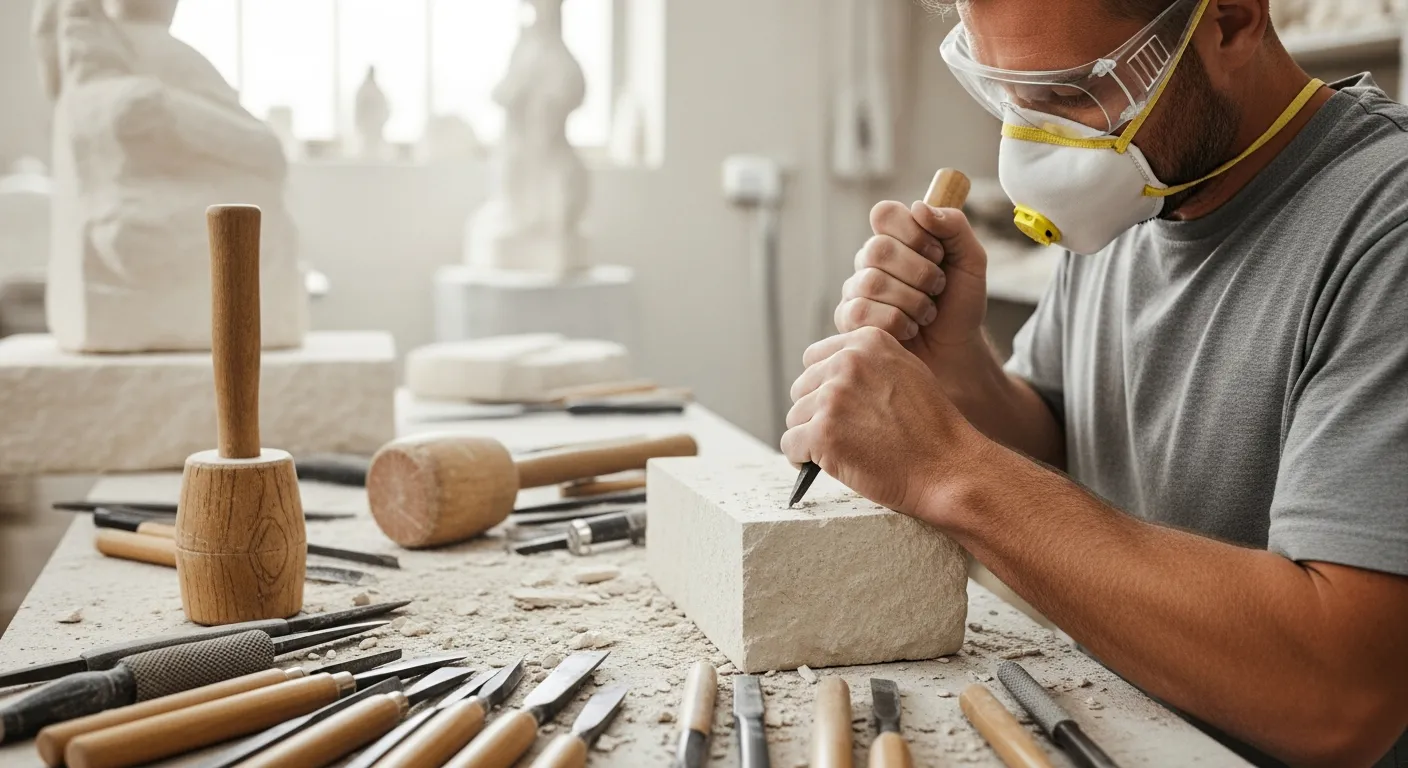
For more advanced sculptors, marble presents a beautiful but demanding option. Its fine grain and ability to take a high polish make it ideal for creating classical and contemporary sculptures.
Granite, the hardest of the common sculpting stones, requires specialized tools and techniques. It is best left to experienced sculptors who are comfortable working with power tools and have a strong understanding of stone behavior.
Think about the size of the stone you need for your intended project. Larger stones can be more challenging to handle and require more specialized equipment for moving and positioning.
Also, consider the source of your stone and its environmental impact. Choose suppliers who practice sustainable quarrying methods and minimize waste.
Examine the stone carefully for any cracks, flaws, or inclusions that could weaken it or affect its appearance. A seemingly minor flaw can become a major problem as you begin to carve.
Essential Tools for Stone Sculpture
Having the right sculpting tools is essential for successful stone sculpture creation. The tools you’ll need will depend on the type of stone you’re working with and the complexity of your design.
However, a basic set of tools will include hammers, chisels, rasps, rifflers, and safety glasses. Each tool serves a specific purpose in shaping and refining your stone sculpture.
Different types of chisels are used for removing larger pieces of stone, creating details, and refining surfaces. Point chisels are used for roughing out the initial shape, while flat chisels are used for smoothing and creating flat surfaces.
Tooth chisels, also known as comb chisels, have multiple teeth and are used for creating textured surfaces. Rasps and rifflers are used for refining the shape and removing small amounts of material. These tools come in various shapes and sizes to reach different areas of your sculpture.
Mallets are essential for striking chisels, and they come in various sizes and materials. A wooden mallet is suitable for softer stones, while a steel hammer is needed for harder stones like granite and marble.
Consider investing in a good quality angle grinder with diamond blades for removing larger amounts of stone quickly. However, angle grinders require careful handling and should only be used by experienced sculptors.
Dust collection systems are also important when using power tools to minimize dust exposure. A shop vacuum with a HEPA filter can help keep your work area clean and safe.
Sharpening stones and honing tools are necessary for maintaining the sharpness of your chisels. Dull chisels are not only less effective but also more dangerous to use.
Don’t forget measuring tools like calipers and rulers for ensuring accuracy in your sculpture. These tools help you maintain proportions and create symmetrical designs.
Understanding Stone Types and Their Properties
Different stone types vary significantly in hardness, grain structure, and color. Understanding these properties is crucial for selecting the right stone for your project and anticipating how it will respond to your sculpting tools.
Harder stones like granite and marble require more force and specialized tools, while softer stones like soapstone and alabaster are easier to carve but may be more prone to chipping or breaking.
| Stone Type | Hardness (Mohs Scale) | Grain Structure | Typical Colors |
|---|---|---|---|
| Soapstone | 1-2 | Fine, compact | Gray, green, brown |
| Alabaster | 1.5-2 | Fine, crystalline | White, pink, yellow |
| Limestone | 3-4 | Variable | Beige, gray, white |
| Marble | 3-5 | Crystalline | White, gray, pink, green |
| Granite | 6-7 | Coarse, granular | Gray, pink, black |
The Mohs hardness scale is a useful tool for comparing the relative hardness of different minerals. A higher number indicates a harder stone that is more resistant to scratching and abrasion.
Grain structure refers to the size and arrangement of the mineral crystals within the stone. Fine-grained stones like marble are easier to carve and can hold finer details than coarse-grained stones like granite.
The color of the stone can also influence your design choices. Consider how the color will complement the form of your sculpture and the surrounding environment.
Some stones have unique veining or patterns that can add visual interest to your sculpture. However, these patterns can also create weak points in the stone, so it’s important to choose your stone carefully.
Porosity is another important property to consider, especially if your sculpture will be displayed outdoors. Porous stones are more susceptible to water damage and staining.
Basic Sculpting Techniques
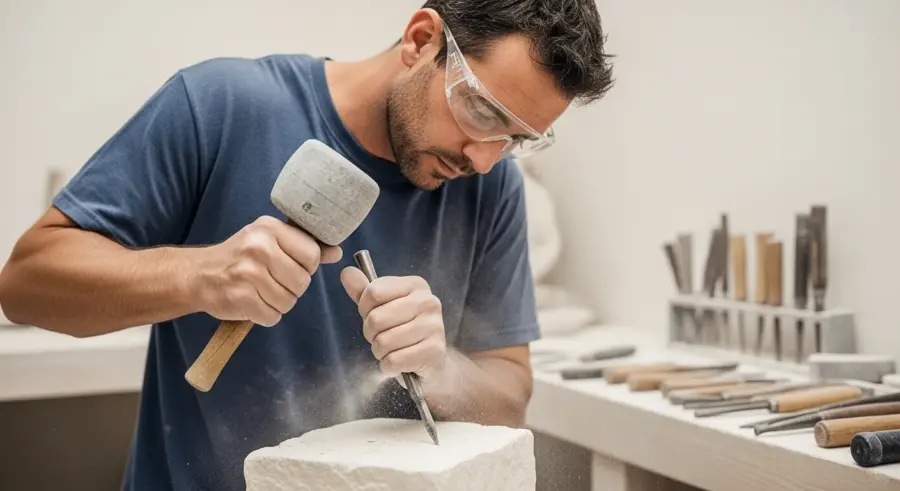
Mastering basic sculpting techniques is essential for bringing your stone sculpture creation ideas to life. Start by roughing out the general shape of your sculpture using a point chisel and hammer.
Hold the chisel at a slight angle to the stone and strike it firmly with the hammer, removing small pieces of material. Work slowly and methodically, constantly checking your progress against your design.
Once you have the basic shape, switch to a flat chisel to refine the surfaces and create smoother transitions. Use a rasp or riffler to remove any remaining rough spots and achieve a more polished finish.
For more detailed work, use smaller chisels and rifflers to carve intricate patterns and textures. Remember to keep your tools sharp and to work in a well-lit area to ensure accuracy.
When using a point chisel, aim for controlled, even strokes to avoid accidentally removing too much material. It’s always better to remove small amounts of stone gradually than to try to rush the process.
Practice your chisel control on scrap pieces of stone before working on your final sculpture. This will help you develop a feel for the tools and avoid making costly mistakes.
Use a rasp to smooth out any rough areas and blend the different planes of your sculpture. Rasps come in various coarseness levels, so start with a coarser rasp and gradually move to finer ones.
Rifflers are useful for reaching tight spaces and carving intricate details. They come in a variety of shapes and sizes, allowing you to access even the most difficult-to-reach areas of your sculpture.
Remember to keep your stone damp while you’re working on it. This will help reduce dust and make the stone easier to carve.
Developing Your Design and Concept
Before you even touch a chisel, it’s essential to have a clear design and concept for your stone sculpture. Start by sketching your ideas on paper, exploring different shapes, forms, and compositions.
Consider the message you want to convey with your sculpture and how the stone’s natural properties can enhance your vision. Think about the overall aesthetic you want to achieve and how it will fit into its intended environment.
Create a maquette, or small-scale model, of your sculpture using clay or wax to visualize your design in three dimensions. This will allow you to identify any potential problems and make adjustments before you start working on the stone.
Transfer your design to the stone by drawing or tracing the outline of your sculpture onto its surface. Use a marker or pencil to create clear, visible lines that will guide your carving.
Research different sculpting styles and techniques to find inspiration for your own work. Look at the work of master sculptors from different periods and cultures to learn from their expertise.
Consider the scale of your sculpture and how it will relate to its surroundings. A large sculpture will have a different impact than a small one.
Think about the texture of your sculpture and how it will feel to the touch. Will it be smooth and polished or rough and textured?
Experiment with different materials and techniques in your maquette to see how they will translate to stone. This will help you avoid making costly mistakes on your final sculpture.
Don’t be afraid to deviate from your original design if you discover something new and exciting while you’re carving. The best sculptures often evolve organically as the artist interacts with the stone.
The Importance of Safety Gear
Stone carving can be a dangerous activity if proper safety precautions are not taken. Always wear safety glasses to protect your eyes from flying debris.
A dust mask or respirator is also essential to prevent inhalation of stone dust, which can cause respiratory problems. Protect your hands with gloves to prevent cuts and abrasions.
- Safety glasses
- Dust mask or respirator
- Gloves
- Ear protection
- Sturdy footwear
Ear protection is crucial when using power tools like angle grinders or pneumatic chisels. Prolonged exposure to loud noise can cause permanent hearing damage.
Wear sturdy footwear to protect your feet from falling tools or stone chips. Closed-toe shoes or boots are essential.
A well-ventilated work area is important to minimize dust exposure. If you’re working indoors, consider using a dust collection system.
Be aware of your surroundings and keep your work area clear of obstacles. This will help prevent accidents and injuries.
Take breaks regularly to avoid fatigue. Working when you’re tired can increase your risk of making mistakes and getting injured.
Finishing and Protecting Your Stone Sculpture
Once you’ve completed the carving process, it’s time to finish and protect your stone sculpture. Start by sanding the surface with progressively finer grits of sandpaper to remove any remaining scratches and create a smooth, polished finish.
For softer stones like soapstone and alabaster, you can apply a wax or oil finish to enhance the color and protect the surface from moisture and stains. Apply the finish evenly and buff it gently with a soft cloth.
Harder stones like marble and granite can be polished with specialized polishing compounds and tools to achieve a high-gloss finish. This process requires more skill and experience, but it can dramatically enhance the beauty and durability of your sculpture.
Consider applying a sealant to protect your sculpture from the elements if it will be displayed outdoors. Choose a sealant specifically designed for stone and follow the manufacturer’s instructions carefully.
Before applying any finish, make sure the stone is completely clean and dry. Any dirt or moisture trapped beneath the finish can cause problems later on.
Experiment with different finishes to see which one you like best. Some finishes will enhance the color and texture of the stone, while others will create a more subtle effect.
For outdoor sculptures, choose a sealant that is UV-resistant to prevent fading and discoloration. Reapply the sealant periodically to maintain its protective properties.
Consider using a paste wax to protect the surface of your sculpture from scratches and fingerprints. Apply the wax sparingly and buff it gently with a soft cloth.
If you’re not sure which finish to use, consult a professional stone conservator. They can provide expert advice on the best way to protect your sculpture.
Tips for Maintaining Your Sculpture
Proper maintenance is essential for preserving the beauty and integrity of your stone sculpture. Clean your sculpture regularly with a soft cloth and mild soap and water.
Avoid using harsh chemicals or abrasive cleaners, as these can damage the surface of the stone. Inspect your sculpture periodically for any signs of damage, such as cracks or chips.
Repair any damage promptly to prevent it from worsening over time. If you’re not comfortable making repairs yourself, consult a professional stone conservator.
Protect your sculpture from extreme temperatures and humidity, as these can cause the stone to expand and contract, leading to cracks and other problems. Store your sculpture indoors or in a covered area if possible.
Dust your sculpture regularly to prevent dirt and grime from building up. Use a soft brush or cloth to gently remove any loose particles.
If your sculpture is displayed outdoors, consider covering it during the winter months to protect it from snow and ice. This will help prevent freeze-thaw damage.
Avoid placing your sculpture in direct sunlight, as this can cause fading and discoloration over time. If you must display it in a sunny location, consider using a UV-resistant sealant.
Be careful when moving your sculpture, as it can be heavy and fragile. Use proper lifting techniques and get help if needed.
If you notice any stains or discoloration on your sculpture, try cleaning it with a mild solution of baking soda and water. Gently scrub the affected area with a soft brush and rinse thoroughly.
Safety Precautions for Stone Carving
Stone carving can be a dusty and potentially hazardous activity, so it’s important to take proper safety precautions. Always wear safety glasses to protect your eyes from flying stone chips.
Use a dust mask or respirator to prevent inhaling stone dust, which can cause respiratory problems. Work in a well-ventilated area to minimize dust exposure.
Wear gloves to protect your hands from cuts and abrasions. Use ear protection if you’re working with noisy power tools.
Be aware of your surroundings and keep your work area clear of obstacles. Never work when you’re tired or distracted.
Always use sharp tools. Dull tools require more force and are more likely to slip and cause injury.
Secure your stone firmly before you begin carving. This will prevent it from moving and causing you to lose control of your tools.
Never strike a chisel with excessive force. Use controlled, even strokes to avoid breaking the stone or injuring yourself.
If you’re using power tools, be sure to follow the manufacturer’s instructions carefully. Wear appropriate safety gear and use the tools only for their intended purpose.
If you’re working with a large or heavy stone, get help from someone else to move it. Never try to lift something that is too heavy for you.
Exploring Different Stone Carving Styles
As you gain experience in stone sculpture creation, consider exploring different carving styles to expand your artistic horizons. Abstract sculpture focuses on shape, form, and texture rather than representational imagery.
Relief carving involves creating a design that projects from a flat background, like a bas-relief or high-relief sculpture. Representational sculpture aims to depict recognizable objects or figures in a realistic or stylized manner.
Each style offers unique challenges and opportunities for artistic expression. Experiment with different styles to find the ones that resonate with you and allow you to express your creativity most effectively.
Study the work of master sculptors from different periods and cultures to gain inspiration and learn new techniques. Visit museums and galleries to see stone sculptures in person and appreciate their beauty and craftsmanship.
Consider the historical context of different carving styles. How did the cultural and social environment influence the artists and their work?
Experiment with different tools and techniques to achieve different effects. How does the choice of tools and techniques affect the final appearance of the sculpture?
Don’t be afraid to break the rules and create your own unique style. The most innovative artists are those who are willing to experiment and push the boundaries of their art form.
Attend workshops and seminars to learn from experienced sculptors. This is a great way to improve your skills and learn new techniques.
Join a local sculpture club or organization. This will give you the opportunity to meet other artists, share your work, and get feedback.
Conclusion
Stone sculpture creation is a challenging but ultimately rewarding art form. By following this beginner’s guide, you’ll have a solid foundation for exploring the world of stone carving and creating your own unique art projects.
Remember to start with simple designs and gradually increase the complexity as you gain experience. Be patient, persistent, and always prioritize safety. With practice and dedication, you can learn to transform raw stone into beautiful and meaningful works of art.