

Working with stone is a rewarding craft, but it comes with inherent health risks. The creation of stone dust during cutting, grinding, and shaping processes poses a significant threat to respiratory health and overall well-being.
Protecting yourself and your workspace from this hazard is not just a matter of compliance, it’s a matter of preserving your long-term health. This article provides practical guidance on effective stone dust control.
We’ll cover everything from selecting the right respirators to implementing dust collection systems and utilizing wet cutting techniques. Implementing these measures will ensure a safer and healthier environment for you and those around you.
The Dangers of Stone Dust Inhalation
Stone dust, especially silica dust, is a serious health hazard. Inhaling it can lead to a variety of respiratory illnesses, some of which are irreversible.
Silicosis, a progressive and debilitating lung disease, is one of the most significant risks. This occurs when silica dust scars the lungs, making it difficult to breathe.
Prolonged exposure to stone dust can also increase the risk of developing lung cancer. The tiny particles can penetrate deep into the lungs, causing inflammation and cellular damage.
Beyond silicosis and cancer, stone dust inhalation can contribute to chronic bronchitis and other respiratory ailments. These conditions can significantly impact your quality of life and ability to work.
The severity of these health problems often depends on the duration and intensity of exposure. Even short-term exposure to high concentrations of stone dust can cause acute respiratory distress. It’s crucial to understand the long-term consequences of neglecting proper safety measures.
Silica dust is particularly dangerous because the particles are so small they can bypass the body’s natural defenses. These particles become trapped deep within the lungs, causing inflammation and scarring over time.
The effects of silicosis are often irreversible, leading to a diminished lung capacity and a reduced quality of life. There is no cure for silicosis, and treatment focuses on managing symptoms and preventing further damage. This makes prevention the most important strategy.
Furthermore, studies have shown a link between silica exposure and autoimmune diseases like rheumatoid arthritis and lupus. These conditions can further complicate the health issues caused by stone dust inhalation.
Therefore, it is essential to prioritize safety and implement effective dust control measures in any stone working environment. Protecting your respiratory health is an investment in your long-term well-being and ability to continue practicing your craft.
Ignoring the dangers of stone dust can have devastating consequences for both your health and your livelihood. Taking proactive steps to minimize exposure is not just a good idea; it’s a necessity.
Choosing the Right Respirator for Stone Work
Selecting the appropriate respirator is paramount for protecting yourself from stone dust. Not all respirators are created equal, and choosing the wrong one can leave you vulnerable.
For stone dust, a properly fitted N95 or higher-rated respirator is essential. These respirators are designed to filter out at least 95% of airborne particles, including the fine silica dust produced during stone work.
Consider a half-face or full-face respirator with replaceable P100 filters for more comprehensive protection. These offer a tighter seal and can filter out even smaller particles, providing an extra layer of defense against silica dust.
Ensure the respirator fits properly and forms a tight seal around your face. A poor fit can allow dust to enter, rendering the respirator ineffective.
Regularly inspect your respirator for damage and replace filters as recommended by the manufacturer. A damaged respirator or clogged filter won’t provide adequate protection.
It’s crucial to understand the different types of respirators and their limitations. An N95 respirator is a disposable filtering facepiece respirator that provides basic protection against particulate matter.
For more demanding tasks and higher levels of dust exposure, a half-face or full-face respirator with replaceable filters is recommended. These respirators offer a tighter seal and can accommodate more advanced filter types, such as P100 filters.
P100 filters are highly efficient at capturing airborne particles, including silica dust. They are designed to filter out at least 99.97% of airborne particles, providing a superior level of protection.
Proper fit testing is essential to ensure that your respirator is providing adequate protection. A fit test involves wearing the respirator and performing a series of exercises to check for leaks. It is best to have a professional fit test done.
Facial hair can interfere with the respirator seal, so it’s important to be clean-shaven in the area where the respirator makes contact with your face. This ensures a tight and effective seal.
Remember to clean your respirator regularly according to the manufacturer’s instructions. This helps to remove dust and debris that can accumulate on the respirator and affect its performance.
Store your respirator in a clean, dry place when not in use. This protects it from damage and contamination.
Finally, it’s important to be aware of the signs of respirator failure, such as difficulty breathing or a noticeable odor or taste. If you experience any of these signs, leave the work area immediately and replace your respirator.
Implementing Dust Collection Systems in Your Workshop
Dust collection systems are a critical component of any stone working shop. These systems capture dust at the source, preventing it from becoming airborne and reducing exposure.
Investing in a high-quality dust collector with a HEPA filter is a worthwhile investment. HEPA filters are designed to capture even the smallest dust particles, ensuring cleaner air in your workspace.
| System Type | Description | Best For |
|---|---|---|
| Source Capture | Collects dust directly at the tool. | Grinders, saws, and other power tools. |
| Ambient Air Cleaners | Filters the air in the entire workshop. | Supplementing source capture, general dust control. |
| Downdraft Tables | Work surface with built-in dust collection. | Grinding, sanding, and small-scale carving. |
| Centralized Systems | Large, powerful systems for multiple tools. | Large workshops with multiple workstations. |
Connect your dust collection system to your power tools using appropriate adapters and hoses. This ensures that dust is captured immediately as it’s produced, preventing it from spreading throughout the shop.
Source capture systems are particularly effective because they remove dust right at the point of generation. This prevents the dust from becoming airborne and spreading throughout the workshop.
When selecting a dust collector, consider the size of your workshop and the types of tools you use. A larger workshop with multiple tools will require a more powerful dust collector.
Ensure that your dust collector has sufficient airflow to effectively capture dust from all of your tools. Insufficient airflow can reduce the system’s effectiveness.
Regularly empty the dust collection bag or container to prevent it from becoming overfilled. An overfilled dust collector can lose suction and become less effective.
Inspect your dust collection hoses and adapters regularly for damage and replace them as needed. Damaged hoses and adapters can leak dust and reduce the system’s effectiveness.
Consider using a pre-separator to remove larger debris from the airstream before it reaches the dust collector. This can help to extend the life of your HEPA filter and improve the system’s overall performance.
Proper grounding of your dust collection system is essential to prevent static electricity buildup. Static electricity can create a fire hazard and interfere with the system’s performance.
Remember to follow the manufacturer’s instructions for operating and maintaining your dust collection system. Proper maintenance will ensure that the system continues to operate effectively and safely.
Wet Cutting Techniques for Minimizing Dust
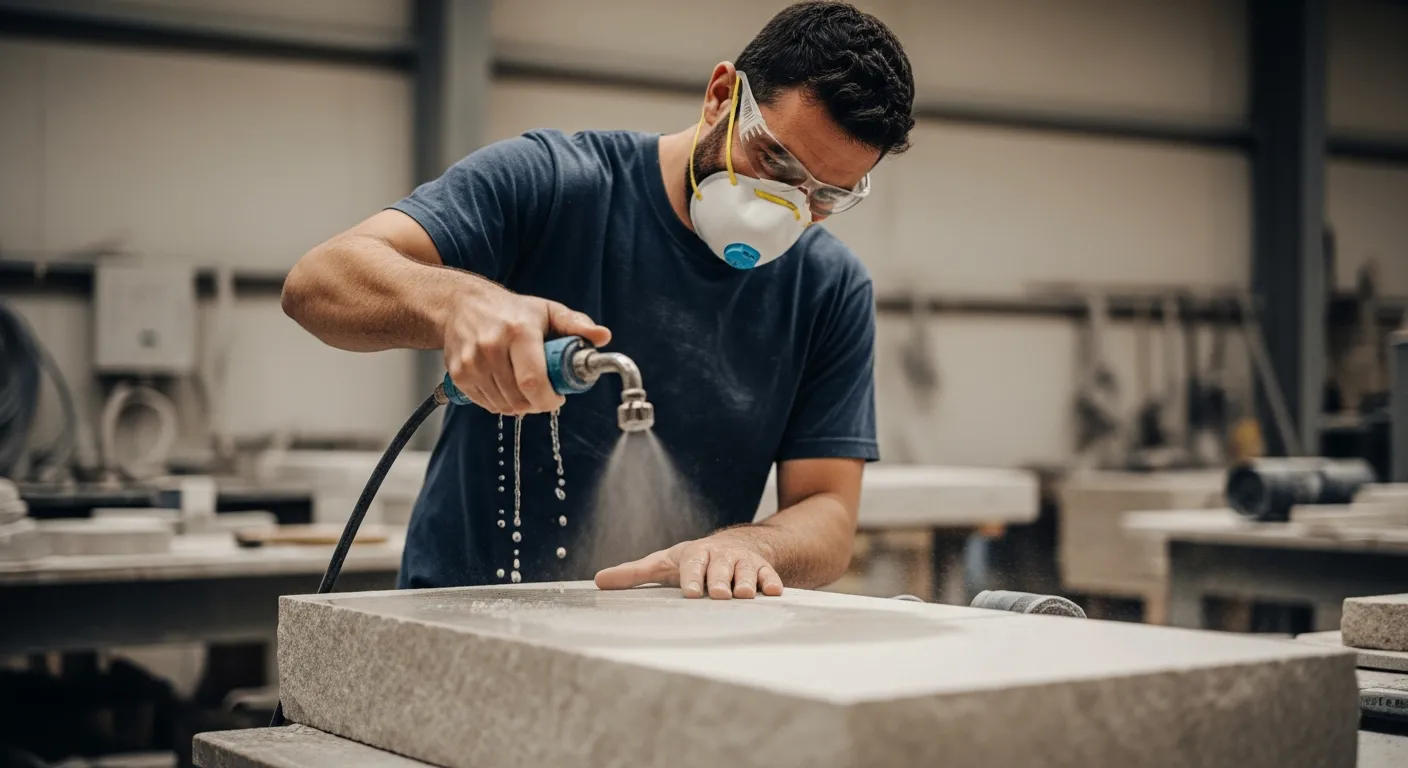
Wet cutting is a highly effective method for significantly reducing stone dust. By introducing water to the cutting process, dust particles are trapped and prevented from becoming airborne.
Using a wet saw is one of the best ways to implement wet cutting techniques. Wet saws use a constant stream of water to cool the blade and suppress dust, creating a cleaner and safer cutting environment.
When using a grinder, attach a water attachment to continuously spray water onto the cutting surface. This will help to minimize dust and keep the work area cleaner.
Ensure that you have proper drainage in place to collect the slurry produced during wet cutting. This prevents the slurry from drying and becoming a source of dust later on.
Regularly clean your wet saw and water attachments to prevent buildup and ensure optimal performance. A clean system will work more effectively and last longer.
Wet cutting is particularly effective for materials that generate a lot of dust, such as concrete, brick, and tile. It can significantly reduce dust exposure compared to dry cutting methods.
When using a wet saw, make sure the water reservoir is filled with clean water. Dirty water can clog the system and reduce its effectiveness.
Adjust the water flow rate on your wet saw or grinder attachment to ensure adequate dust suppression without excessive splashing. The goal is to wet the cutting surface without creating a mess.
Consider using a surfactant in the water to improve its wetting properties. A surfactant helps the water to spread more evenly over the cutting surface, enhancing dust suppression.
Be aware of the potential for electrical hazards when working with water and power tools. Ensure that all electrical connections are properly grounded and protected from water.
Wear appropriate personal protective equipment, such as waterproof gloves and aprons, to protect yourself from water and slurry. This will help to keep you clean and dry while working.
Dispose of the slurry properly according to local regulations. Do not pour slurry down the drain, as it can clog pipes and contaminate water sources.
Proper Ventilation for Stone Dust Removal
Good ventilation is crucial for removing any remaining stone dust from your workspace. Proper airflow helps to dilute and exhaust airborne particles, reducing the risk of inhalation.
Open windows and doors whenever possible to create natural ventilation. This allows fresh air to circulate and helps to remove dust from the shop.
Install exhaust fans to actively remove dust-laden air from the workspace. Position the fans to draw air away from your breathing zone and towards the outside.
Consider using an air purifier with a HEPA filter to further clean the air in your shop. These devices can capture fine dust particles that may have escaped the dust collection system.
Regularly inspect and maintain your ventilation system to ensure it’s working effectively. Clean or replace filters as needed to maintain optimal airflow.
Natural ventilation is a simple and cost-effective way to improve air quality in your workshop. However, it may not be sufficient in all situations, especially in enclosed spaces or during periods of high dust generation.
Exhaust fans are a more reliable way to remove dust-laden air from your workspace. Choose fans that are appropriately sized for your shop and that have sufficient airflow capacity.
Position exhaust fans strategically to create a flow of air that moves dust away from your breathing zone and towards the outside. This can be achieved by placing fans near dust-generating activities and directing the airflow away from workers.
Air purifiers with HEPA filters can supplement your ventilation system by removing fine dust particles that may have escaped other control measures. These devices are particularly useful in enclosed spaces where natural ventilation is limited.
When selecting an air purifier, consider its Clean Air Delivery Rate (CADR), which indicates how quickly it can clean the air in a room. Choose an air purifier with a CADR that is appropriate for the size of your workshop.
Regularly clean or replace the filters in your air purifier to maintain its effectiveness. Clogged filters can reduce the purifier’s airflow and ability to capture dust particles.
Consider using a combination of ventilation methods to achieve optimal dust control in your workshop. This might involve using natural ventilation, exhaust fans, and air purifiers in conjunction with other control measures.
Cleaning and Maintaining Your Workspace to Reduce Dust
Regular cleaning and maintenance are essential for minimizing stone dust accumulation in your workspace. A clean shop is a safer shop, and it reduces the risk of dust becoming airborne.
Use a HEPA-filtered vacuum to regularly clean floors, walls, and work surfaces. This type of vacuum is designed to capture fine dust particles without releasing them back into the air.
- Wet-wipe surfaces to remove dust
- Avoid dry sweeping, which stirs up dust
- Clean tools and equipment regularly
- Dispose of dust and debris properly
- Store materials in closed containers
Regularly inspect and maintain your dust collection system, respirator, and ventilation equipment. Proper maintenance ensures that these systems are working effectively to protect you from dust exposure.
HEPA-filtered vacuums are specifically designed to capture very small particles, making them ideal for cleaning up stone dust. Standard vacuums may not be effective at capturing fine dust and can actually release it back into the air.
Wet-wiping surfaces is an effective way to remove dust without stirring it up into the air. Use a damp cloth or mop to wipe down floors, walls, and work surfaces.
Dry sweeping can actually worsen dust problems by dispersing dust particles into the air. Avoid dry sweeping whenever possible and use a HEPA-filtered vacuum or wet-wiping instead.
Cleaning your tools and equipment regularly helps to prevent dust from accumulating and becoming airborne. Use a brush, vacuum, or damp cloth to clean your tools after each use.
Dispose of dust and debris properly to prevent it from becoming a source of dust exposure. Seal dust and debris in bags or containers before disposing of it.
Storing materials in closed containers helps to prevent dust from escaping and contaminating the air. Keep stone, sand, and other dusty materials in sealed containers when not in use.
Regularly inspect your dust collection system for leaks, clogs, and other problems. Repair any issues promptly to ensure that the system is working effectively.
Replace the filters in your dust collection system and air purifier regularly according to the manufacturer’s instructions. Clogged filters can reduce the effectiveness of these systems.
Inspect your respirator for damage and replace it as needed. A damaged respirator may not provide adequate protection from dust exposure.
Additional Safety Measures for Stone Dust Control
Beyond respirators, dust collection, and wet cutting, there are other steps you can take to enhance stone dust control. These additional measures can further minimize your exposure and create a safer working environment.
Wear appropriate protective clothing, such as coveralls or a lab coat, to prevent dust from accumulating on your skin and clothing. Wash your work clothes separately from other laundry to avoid spreading dust.
Implement administrative controls, such as limiting the amount of time spent in dusty environments. Rotate tasks to reduce individual exposure levels.
Provide comprehensive training to all workers on the hazards of stone dust and the proper use of control measures. Ensure everyone understands the importance of protecting themselves and following safety protocols.
Regularly monitor air quality in your workspace to assess the effectiveness of your dust control measures. This can help you identify areas where improvements are needed.
Protective clothing helps to prevent dust from coming into contact with your skin, which can cause irritation and other health problems. Choose clothing that is made from a breathable material and that covers your entire body.
Washing your work clothes separately from other laundry helps to prevent dust from spreading to other items. Use a washing machine with a HEPA filter to further reduce the risk of dust contamination.
Limiting the amount of time spent in dusty environments can help to reduce your overall exposure to stone dust. Schedule tasks that generate a lot of dust for times when ventilation is optimal and when fewer workers are present.
Rotating tasks can help to reduce individual exposure levels by spreading the risk of dust exposure among multiple workers. This is particularly important for tasks that generate a lot of dust.
Comprehensive training is essential for ensuring that all workers understand the hazards of stone dust and how to protect themselves. Training should cover topics such as the health effects of stone dust, the proper use of respirators and other personal protective equipment, and the importance of following safety protocols.
Air quality monitoring can help you to assess the effectiveness of your dust control measures and identify areas where improvements are needed. Use air monitoring equipment to measure the concentration of dust in the air and compare it to OSHA’s permissible exposure limits.
Consider implementing a written dust control plan that outlines the specific measures you will take to protect workers from stone dust exposure. This plan should be reviewed and updated regularly.
Understanding OSHA Regulations for Stone Dust
The Occupational Safety and Health Administration (OSHA) has specific regulations in place to protect workers from silica dust exposure. Familiarizing yourself with these regulations is crucial for ensuring compliance and maintaining a safe workplace.
OSHA’s silica rule sets permissible exposure limits (PELs) for respirable crystalline silica. The current PEL is 50 micrograms per cubic meter of air, averaged over an 8-hour workday.
Employers are required to implement engineering controls, such as dust collection systems and wet cutting techniques, to minimize silica exposure. They must also provide respirators when engineering controls are not sufficient to meet the PEL.
OSHA also requires employers to conduct air monitoring to assess worker exposure levels. This helps to ensure that control measures are effective and that workers are not being overexposed.
Failure to comply with OSHA’s silica rule can result in significant fines and penalties. More importantly, it can put workers at risk of developing serious respiratory illnesses.
OSHA’s silica rule applies to all workplaces where workers are exposed to respirable crystalline silica. This includes construction, manufacturing, and other industries.
In addition to the PEL, OSHA’s silica rule also includes other requirements, such as written exposure control plans, medical surveillance, and worker training.
Employers are required to provide medical surveillance to workers who are exposed to silica at or above the action level of 25 micrograms per cubic meter of air. Medical surveillance includes periodic medical examinations and lung function tests.
Worker training must cover topics such as the health hazards of silica, the proper use of control measures, and the requirements of OSHA’s silica rule.
OSHA conducts inspections of workplaces to ensure compliance with its silica rule. If violations are found, OSHA can issue citations and penalties.
Staying informed about OSHA’s silica rule and implementing appropriate control measures is essential for protecting workers from silica dust exposure and avoiding costly penalties.
Consult with a safety professional or industrial hygienist to ensure that your workplace is in compliance with OSHA’s silica rule.
Conclusion
Stone dust control is an essential aspect of any stone working operation. By implementing the measures outlined in this article, you can significantly reduce your risk of exposure and protect your long-term health.
From choosing the right respirators to investing in dust collection systems and utilizing wet cutting techniques, every step counts. Prioritizing safety will create a healthier and more productive work environment for everyone.
Remember that protecting yourself from stone dust is an ongoing process, not a one-time event. Stay vigilant and continue to implement and improve your dust control measures over time.
By working together to create a safer and healthier work environment, we can ensure that stone working remains a rewarding and sustainable craft for years to come.
Your health and the health of your colleagues depend on it. Make stone dust control a top priority in your workshop today.