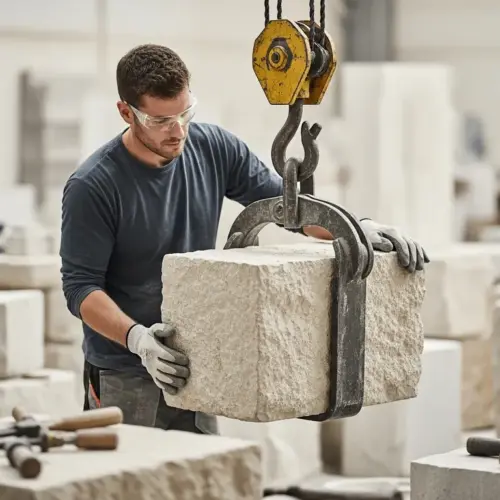

Stone cracking, an ancient craft, remains essential in lithic conservation and stone masonry. Mastering stone cracking techniques allows for precise shaping and controlled demolition, crucial for both preserving historical structures and creating new ones. The ability to split stone effectively opens up possibilities for intricate designs and structural integrity.
This article will explore various methods of stone cracking, focusing on their applications and safety considerations. We will examine the nuances of feather and wedge, plug and feather, and line drilling, equipping you with the knowledge to approach stone work with confidence and precision.
Whether you’re a seasoned stone mason or a conservation enthusiast, understanding these Stone Cracking Techniques is paramount. Let’s get started!
Understanding the Grain and Structure of Stone
Before attempting any Stone Cracking Techniques, it’s essential to understand the stone’s composition. Different types of stone, such as granite, limestone, and sandstone, have unique grain patterns and internal structures that influence how they split. Recognizing these characteristics is key to achieving controlled and predictable results.
The grain of the stone refers to the alignment of its mineral components, which can create planes of weakness. These planes are naturally more susceptible to splitting, so understanding the grain direction is paramount. For example, slate has a very pronounced grain, making it easy to split into thin sheets.
Stone also has something called ‘rift’ and ‘grain’. Rift is the direction in which the stone splits most easily, while grain is the direction of secondary ease of splitting. Identifying these directions can save time and effort when using techniques like Feather and Wedge or Plug and Feather.
Internal flaws, such as fissures or cracks, can also affect how a stone splits. A careful inspection can reveal these weaknesses, allowing you to adjust your Stone Cracking Techniques accordingly. Ignoring these flaws can lead to unpredictable breaks and wasted material.
The density of the stone also plays a role in how it will react to cracking. Denser stones like granite require more force and carefully placed stress points. Porous stones like some sandstones may be more prone to crumbling if not handled with care.
Furthermore, the geological history of the stone can influence its structural integrity. Stones subjected to extreme pressure or temperature changes may have inherent stress fractures. Recognizing these subtle indicators is a skill honed through experience.
It’s also important to consider the presence of any inclusions or foreign materials within the stone. These inclusions can act as stress concentrators, altering the way the stone splits. Careful observation and planning are essential to mitigate these potential issues.
Ultimately, understanding the stone’s unique characteristics is the foundation for successful stone cracking. Taking the time to assess the stone before beginning any work will save time, reduce waste, and improve the overall quality of the finished product. This knowledge is the cornerstone of skilled stone work.
Using Feather and Wedge for Splitting Stone
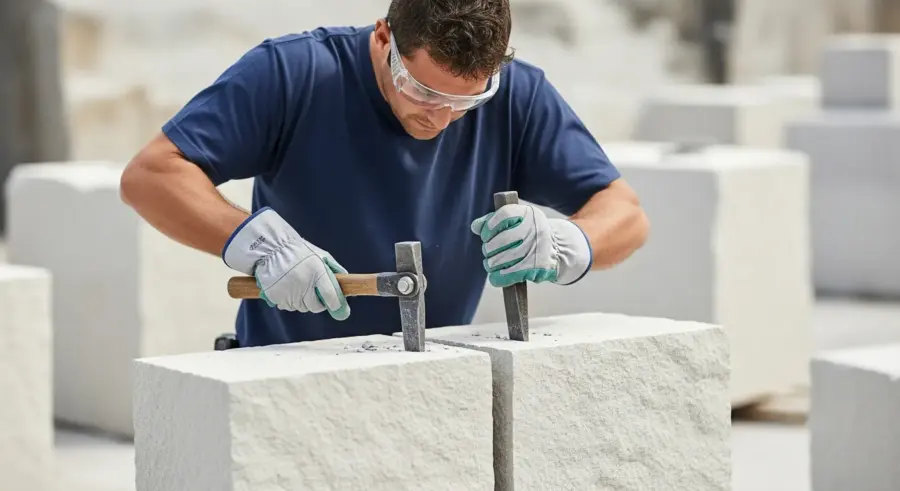
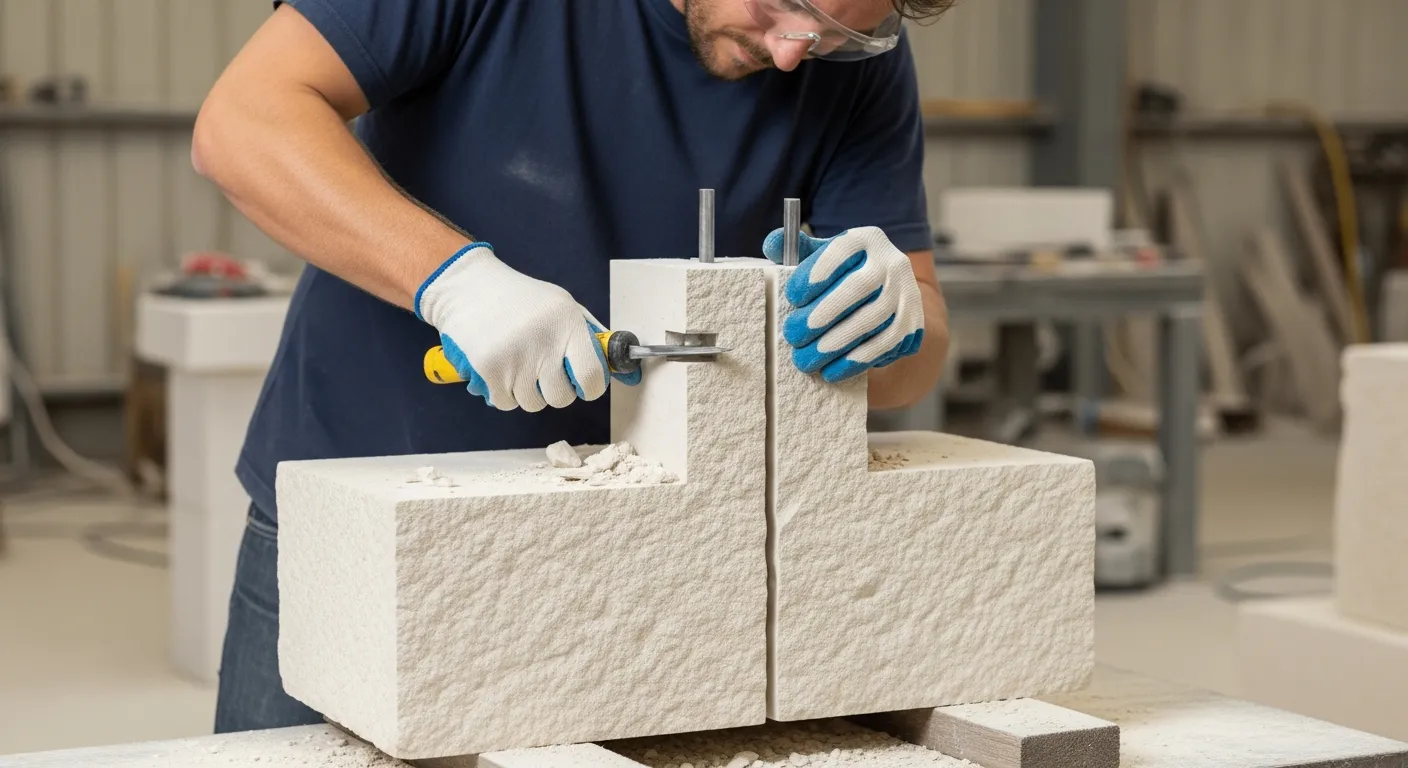
Feather and wedge, also known as plug and feather in some regions, is a time-honored method for splitting stone. This technique involves drilling a series of holes along a predetermined line and then inserting feathers and wedges into these holes. The gradual and even application of pressure causes the stone to split along the desired line.
The feathers, which are curved metal shims, are inserted first, followed by the wedge. As the wedge is hammered in, it forces the feathers outward, creating tension within the stone. This tension builds until the stone eventually cracks along the line of holes.
The success of this method relies on several factors, including the diameter and spacing of the holes, the type of stone, and the force applied to the wedges. For softer stones like sandstone, closer spacing and lighter hammering are generally required. Harder stones like granite may need wider spacing and more forceful hammering.
One advantage of the Feather and Wedge method is its precision. It allows for relatively straight and predictable splits, making it ideal for shaping stones for building or landscaping. It’s also a relatively quiet method compared to other Stone Cracking Techniques, which can be important in noise-sensitive environments.
The size of the feathers and wedges should be carefully selected based on the size and type of stone. Using too small of a set can be ineffective, while using too large of a set can cause the stone to shatter. Experience is the best guide for determining the appropriate size.
The angle at which the holes are drilled can also impact the success of the split. Ideally, the holes should be drilled perpendicular to the surface of the stone. Angled holes can cause the feathers and wedges to bind, preventing a clean break.
The hammering technique is also crucial. It’s important to strike each wedge evenly and with consistent force. Avoid striking one wedge much harder than the others, as this can create uneven stress and cause the stone to crack unpredictably.
Finally, it’s important to listen to the stone as you’re hammering. The sound of the stone will change as the tension builds. A sharp, cracking sound indicates that the stone is about to split. If you hear this sound, stop hammering and allow the stone to finish cracking on its own.
Techniques for Plug and Feather Stone Cracking
Plug and Feather, essentially synonymous with Feather and Wedge, involves a similar process but may vary slightly in the shape and design of the tools. The core principle remains the same: using controlled force to split stone along a predetermined line. This technique is widely used in quarries and construction sites for its efficiency and reliability.
When executing Plug and Feather Stone Cracking, start by marking a straight line on the stone where you want the split to occur. Then, using a drill and appropriate drill bit, create a series of holes along the marked line, ensuring they are evenly spaced and of consistent depth.
| Stone Type | Hole Diameter (inches) | Hole Spacing (inches) | Wedge Material |
|---|---|---|---|
| Granite | 1-1.5 | 6-8 | Hardened Steel |
| Limestone | 0.75-1 | 4-6 | Mild Steel |
| Sandstone | 0.5-0.75 | 3-5 | Aluminum |
| Slate | 0.25-0.5 | 2-4 | Plastic |
Once the holes are drilled, insert the feathers into each hole, followed by the plug (wedge). With a hammer, gently tap each wedge in sequence, gradually increasing the force. It’s important to maintain a consistent rhythm and avoid applying excessive force to any single wedge, as this can cause the stone to crack unevenly or shatter.
The depth of the holes is also a critical factor. The holes should be deep enough to accommodate the full length of the feathers and wedges. If the holes are too shallow, the wedges will bottom out before the stone splits.
The angle of the hammer strike is also important. The hammer should strike the wedge squarely on its head. Angled strikes can cause the wedge to slip or bend, reducing its effectiveness and potentially damaging the stone.
Lubricating the feathers and wedges can also improve their performance. A small amount of oil or grease can reduce friction and allow the wedges to slide more easily. This is especially helpful when working with harder stones.
Sometimes, the stone may not split cleanly on the first attempt. If this happens, you can try deepening the holes slightly or increasing the force applied to the wedges. However, it’s important to proceed with caution to avoid damaging the stone.
Line Drilling Methods for Precise Stone Separation
Line drilling is another effective Stone Cracking Technique used for creating clean, precise breaks in stone. This method involves drilling a series of closely spaced holes along a line and then using a chisel or other tool to connect the holes, creating a continuous crack. Line drilling is particularly useful for separating large blocks of stone or creating intricate shapes.
The precision of line drilling depends on the accuracy of the drilling and the skill of the operator. It requires a steady hand and a keen eye to ensure that the holes are aligned correctly and that the chisel is used effectively. This technique is often favored when other Stone Cracking Techniques are not feasible or practical.
To perform line drilling, start by marking the desired line on the stone. Then, using a drill and appropriate drill bit, create a series of holes along the line, spacing them as close together as possible. The closer the holes, the cleaner and more precise the resulting split will be.
Once the holes are drilled, use a chisel and hammer to carefully connect the holes. Position the chisel on the line between two adjacent holes and strike it firmly with the hammer. Continue this process along the entire line, gradually deepening the crack until the stone separates.
Line drilling is very effective on softer stones like sandstone and limestone. Harder stones like granite may require more effort and a heavier chisel. It’s essential to wear safety glasses and gloves when performing line drilling to protect yourself from flying debris and sharp edges.
The type of chisel used can also affect the outcome. A point chisel is useful for starting the crack, while a flat chisel is better for widening it. Experimenting with different chisel shapes can help you find the best tool for the job.
The angle at which you hold the chisel is also important. Holding the chisel at a slight angle can help to direct the crack along the desired line. However, holding it at too steep of an angle can cause the chisel to slip or chip the stone.
For larger stones, it may be necessary to drill holes on both sides of the stone. This will help to ensure that the crack propagates evenly and that the stone splits cleanly. Double-sided drilling requires careful alignment to ensure that the holes meet in the middle.
Line drilling can also be used to create curved or irregular shapes. By carefully planning the placement of the holes, you can create intricate designs and patterns in the stone. This requires a high level of skill and precision.
Safety Considerations for Stone Cracking
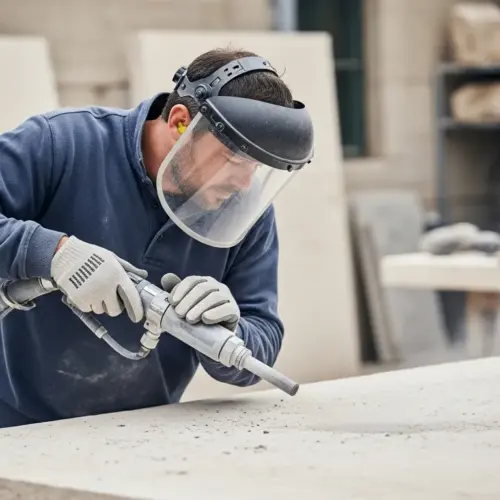
Safety should always be a top priority when working with stone. Stone Cracking Techniques can be hazardous if not performed correctly. Always wear appropriate personal protective equipment (PPE), including safety glasses, gloves, and hearing protection.
Safety glasses protect your eyes from flying debris, while gloves protect your hands from sharp edges and abrasions. Hearing protection is essential when using power tools or hammering, as prolonged exposure to loud noise can cause hearing damage.
- Wear safety glasses
- Use work gloves
- Wear hearing protection
- Ensure proper ventilation
- Keep a safe distance
In addition to PPE, it’s important to ensure that the work area is well-ventilated. Stone dust can be harmful if inhaled, so work in an open area or use a dust mask or respirator. Also, maintain a safe distance from the stone while cracking it to avoid being struck by flying fragments.
Always inspect your tools before use to ensure that they are in good working condition. Damaged or worn tools can be dangerous. Replace any tools that are cracked, chipped, or otherwise damaged.
Be aware of your surroundings and ensure that there are no bystanders in the work area. Flying debris can travel a considerable distance and cause serious injury. Establish a safety zone around the work area and ensure that everyone is aware of the potential hazards.
When using power tools, follow the manufacturer’s instructions carefully. Never operate power tools without proper training. Use the correct tool for the job and avoid using excessive force.
Take breaks regularly to avoid fatigue. Fatigue can impair your judgment and increase the risk of accidents. If you start to feel tired, stop working and take a rest.
Proper planning and preparation are essential for safe stone cracking. Take the time to assess the stone, select the appropriate tools, and plan your work carefully. A well-planned job is a safe job.
Choosing the Right Tools for Stone Cracking
Selecting the appropriate tools is crucial for successful and safe stone cracking. The type of stone, the desired outcome, and the Stone Cracking Techniques being used will all influence tool selection. Using the wrong tools can lead to inefficient work, damage to the stone, or even injury.
For Feather and Wedge or Plug and Feather Stone Cracking Techniques, you’ll need a drill, drill bits, feathers, wedges, and a hammer. The drill and drill bits should be appropriate for the type of stone you’re working with. For harder stones, you’ll need a more powerful drill and carbide-tipped drill bits.
The feathers and wedges should also be sized appropriately for the holes you’re drilling. Smaller feathers and wedges are suitable for smaller stones, while larger ones are needed for larger stones. The hammer should be heavy enough to drive the wedges effectively but not so heavy that it’s difficult to control.
For line drilling, you’ll need a drill, drill bits, a chisel, and a hammer. The chisel should be sharp and durable, capable of withstanding repeated strikes from the hammer. A variety of chisel shapes and sizes can be useful for different types of stone and desired outcomes.
Consider investing in high-quality tools. While they may be more expensive upfront, they will last longer and perform better in the long run. High-quality tools are also less likely to break or fail, reducing the risk of injury.
Maintain your tools properly. Keep them clean and sharp. Sharpen chisels regularly and lubricate moving parts to prevent rust and corrosion. Proper maintenance will extend the life of your tools and ensure that they perform optimally.
Store your tools safely. Store them in a dry place where they will not be exposed to moisture or extreme temperatures. Organize your tools so that they are easy to find and access. A well-organized workspace is a safer workspace.
Don’t be afraid to experiment with different tools and techniques. The best way to find the right tools for the job is to try them out and see what works best for you. Learn from your mistakes and continue to refine your skills.
Applications in Lithic Conservation
Stone Cracking Techniques are invaluable in lithic conservation, allowing conservators to repair and restore historical stone structures. These methods enable the precise removal of damaged or deteriorated stone elements, which can then be replaced with new or restored pieces. The ability to carefully split stone is essential for maintaining the integrity and authenticity of historical sites.
In conservation projects, it’s often necessary to match the existing stone as closely as possible. This requires a deep understanding of stone types, grain patterns, and Stone Cracking Techniques. Conservators must be able to select the right tools and methods to achieve the desired results without causing further damage to the structure.
For example, when repairing a historic limestone facade, a conservator might use Feather and Wedge to carefully remove a cracked or spalled stone block. They would then select a new limestone block that matches the original in color and texture, and use the same Stone Cracking Techniques to shape it to the required dimensions. The new block would then be installed, seamlessly blending with the existing stonework.
The techniques also allow for the creation of custom-shaped stones for repairs. This is particularly useful when dealing with irregular or ornate architectural elements. By mastering these skills, conservators can ensure the long-term preservation of our cultural heritage.
Documentation is a crucial aspect of lithic conservation. Conservators carefully document every step of the process, including the condition of the stone before treatment, the Stone Cracking Techniques used, and the materials used for repair. This documentation provides a valuable record for future conservators and researchers.
Ethical considerations are also paramount in lithic conservation. Conservators strive to preserve the original fabric of the structure as much as possible. They avoid using irreversible treatments or techniques that could damage the stone. The goal is to stabilize the structure and prevent further deterioration while respecting its historical significance.
In some cases, it may be necessary to consolidate weakened stone before attempting to crack it. Consolidation involves applying a chemical treatment that strengthens the stone and prevents it from crumbling. This can be particularly useful for fragile or deteriorated stone.
The choice of Stone Cracking Techniques in conservation is often dictated by the specific needs of the project. In some cases, it may be necessary to use a combination of techniques to achieve the desired results. A skilled conservator will be able to adapt their approach to the unique challenges of each project.
Stone Masonry Applications
Beyond conservation, Stone Cracking Techniques are fundamental to modern stone masonry. Stone masons use these methods to shape and size stones for a wide range of construction projects, from building walls and foundations to creating intricate architectural details. The ability to efficiently and accurately split stone is a cornerstone of the trade.
In stone masonry, the choice of Stone Cracking Techniques often depends on the scale of the project and the desired aesthetic. For large-scale projects, such as building retaining walls or foundations, masons might use Plug and Feather to quickly split large blocks of stone. For more detailed work, such as creating decorative elements or fitting stones around windows and doors, line drilling or smaller Feather and Wedge sets might be preferred.
Stone masons also use Stone Cracking Techniques to create specific textures and finishes on stone surfaces. For example, a mason might use a chisel and hammer to create a rough, textured surface on a stone wall, or use a specialized tool to create a smooth, polished finish. The possibilities are endless, limited only by the mason’s skill and creativity.
The skills are also valuable for creating unique landscaping features. Stone masons can use these methods to create stone pathways, patios, and garden walls, adding natural beauty and durability to outdoor spaces. The techniques are essential for any stone mason looking to create high-quality, aesthetically pleasing structures.
Understanding different stone bonds is also crucial in stone masonry. Stone bonds refer to the patterns in which stones are laid in a wall or structure. Different bonds offer varying levels of strength and aesthetic appeal. Mastering these bonds allows masons to create visually stunning and structurally sound constructions.
Mortar selection is another important consideration in stone masonry. The type of mortar used can significantly impact the durability and longevity of the structure. Masons must choose a mortar that is compatible with the type of stone being used and that can withstand the local climate conditions.
Stone masons often work with a variety of power tools, such as angle grinders and saws, to shape and finish stones. These tools can greatly increase efficiency and precision. However, it’s essential to use these tools safely and follow the manufacturer’s instructions carefully.
The best stone masons possess a combination of technical skills, artistic vision, and a deep appreciation for the beauty and durability of stone. They are able to transform raw stone into enduring works of art that will stand the test of time.
Conclusion
Mastering Stone Cracking Techniques is essential for anyone involved in lithic conservation or stone masonry. Whether you’re preserving historical structures or creating new ones, the ability to efficiently and safely split stone is a valuable skill.
By understanding the grain and structure of stone, choosing the right tools, and following proper safety procedures, you can unlock the full potential of this ancient craft. With practice and dedication, you can become a skilled practitioner of Stone Cracking Techniques, contributing to the preservation and creation of beautiful and durable stone structures.
The techniques discussed here are just the beginning. Continuous learning and experimentation are key to mastering the art of stone cracking. Attend workshops, read books, and seek out experienced mentors to further develop your skills.
Remember that patience and perseverance are essential. Stone cracking can be challenging, but the rewards are well worth the effort. The ability to shape and manipulate stone is a powerful skill that will serve you well throughout your career.
As you continue to learn and grow, you’ll develop your own unique style and approach to stone cracking. Embrace your creativity and don’t be afraid to try new things. The possibilities are endless.