
When restoring historic stone structures, choosing the appropriate mortar is essential. The correct mortar not only ensures the structural integrity of the repair but also preserves the aesthetic and historic character of the building. Understanding the different types of mortar and their properties is the first step in making an informed decision.
Different mortars offer varying degrees of strength, flexibility, and breathability, all of which impact the longevity and performance of the repair. This article will explore the characteristics of lime mortar, cement mortar, and hydraulic lime mortar, providing a guide to selecting the best option for your stone repair project.
We will also discuss how to identify existing mortar, along with proper mixing and application techniques. By understanding these aspects, you can ensure a durable and sympathetic repair that respects the original craftsmanship of the stone structure. Let’s examine the composition of mortar.
Understanding Mortar Composition
Mortar is a mixture of a binder, aggregate, and water, and sometimes includes additives. The binder is the component that holds the mixture together and adheres to the surrounding materials.
Common binders include lime, cement, and hydraulic lime, each offering different properties. The aggregate, typically sand, provides bulk and reduces shrinkage, while water activates the binder and allows the mortar to be workable.
Additives, such as pozzolans or pigments, can be included to modify the mortar’s properties, such as its setting time, color, or durability. Understanding the role of each component is crucial for selecting the right mortar for a specific repair.
The ratio of these components also significantly affects the mortar’s performance. A mortar with too much binder may be strong but prone to cracking, while one with too much aggregate may be weak and porous. The ideal composition depends on the specific requirements of the stone repair project.
The binder is the heart of the mortar, determining its key characteristics. Lime binders, for instance, create a more flexible and breathable mortar compared to cement binders. The type of aggregate used also plays a crucial role, with different sands affecting the mortar’s texture, color, and workability.
Water is essential for the hydration process, allowing the binder to set and harden. The quality of the water is also important, as impurities can interfere with the chemical reactions and weaken the mortar. Additives can be natural or synthetic, each offering unique benefits.
Pozzolans, for example, can increase the mortar’s resistance to sulfates and improve its long-term durability. Pigments can be added to match the color of the existing mortar, ensuring a seamless repair. It is important to choose the right pigment to match the original mortar color.
The mixing process is also critical for achieving a homogenous mortar. Thorough mixing ensures that all the components are evenly distributed, resulting in a consistent and predictable performance. The mixing time and method can also affect the mortar’s properties.
Lime Mortar: Traditional and Breathable
Lime mortar is a traditional material that has been used for centuries in stone and brick construction. It is made from lime (calcium hydroxide), aggregate (usually sand), and water.
One of the key benefits of lime mortar is its breathability, which allows moisture to evaporate from the stone or brickwork. This helps to prevent the buildup of moisture within the wall, which can lead to damage such as frost damage or salt efflorescence.
Lime mortar is also more flexible than cement mortar, which allows it to accommodate slight movements in the structure without cracking. This flexibility is particularly important in older buildings, which may have settled or shifted over time.
Additionally, lime mortar is considered a more environmentally friendly option compared to cement mortar. Lime is produced by heating limestone, which requires less energy than the production of cement, and lime mortar can reabsorb carbon dioxide from the atmosphere over time, further reducing its carbon footprint.
The breathability of lime mortar is essential for maintaining the health of historic buildings. It allows the structure to “breathe,” preventing moisture from becoming trapped within the walls. Trapped moisture can lead to a host of problems, including the growth of mold and mildew, which can damage the stone and brickwork.
The flexibility of lime mortar is also a significant advantage in older buildings. As buildings age, they naturally undergo some movement due to settling, temperature changes, and other factors. Lime mortar can accommodate these movements without cracking, preserving the integrity of the structure.
The environmental benefits of lime mortar are increasingly recognized as important. The production of cement is a significant source of carbon dioxide emissions, while the production of lime is less energy-intensive. Furthermore, lime mortar can reabsorb carbon dioxide from the atmosphere over its lifespan, making it a more sustainable choice.
Lime mortar also has a self-healing property, meaning that small cracks can naturally repair themselves over time. This is due to the presence of free lime in the mortar, which can react with rainwater to form calcium carbonate, sealing the cracks. This self-healing ability contributes to the longevity of lime mortar repairs.
Cement Mortar: Strength and Durability
Cement mortar is a strong and durable option commonly used in modern construction. It is composed of cement (typically Portland cement), aggregate (usually sand), and water.
The primary advantage of cement mortar is its high compressive strength, making it suitable for load-bearing applications. Cement mortar sets quickly and provides a rigid bond, which can be beneficial in certain structural repairs.
However, cement mortar is less flexible and less breathable than lime mortar. Its rigidity can cause it to crack if the structure experiences movement, and its lack of breathability can trap moisture within the stone or brickwork, leading to deterioration.
Using cement mortar in historic buildings can be particularly problematic. The hard, impermeable nature of cement can accelerate the decay of softer historic materials, such as lime-based bricks or porous stone. Cement mortar is best suited for modern construction where high strength and rapid setting are priorities.
The high compressive strength of cement mortar makes it ideal for structures that need to withstand heavy loads. Bridges, high-rise buildings, and foundations are examples of applications where cement mortar is commonly used. The rapid setting time of cement mortar can also be advantageous in projects where speed is essential.
However, the lack of flexibility and breathability of cement mortar can be detrimental to historic buildings. When used in conjunction with softer materials like lime-based bricks or porous stone, the cement mortar can create a “sandwich effect,” trapping moisture within the walls. This trapped moisture can lead to the deterioration of the softer materials.
The rigidity of cement mortar can also cause it to crack when the structure experiences movement. These cracks can then allow water to penetrate the walls, further exacerbating the problem. The use of cement mortar in historic buildings can ultimately lead to more extensive and costly repairs in the long run.
While cement mortar is generally not recommended for historic buildings, there may be certain situations where it is appropriate. For example, if a historic building has already been extensively repaired with cement mortar, it may be necessary to continue using cement mortar to ensure compatibility. However, in these cases, it is important to carefully consider the potential risks and to take steps to mitigate them.
Hydraulic Lime Mortar: A Balanced Approach
Hydraulic lime mortar offers a balance between the properties of lime mortar and cement mortar. It is made from hydraulic lime, aggregate, and water, and it sets through a chemical reaction with water, unlike non-hydraulic lime which sets by carbonation.
Hydraulic lime mortars provide moderate strength, good breathability, and some flexibility. They are a suitable option for stone repair projects where a slightly stronger mortar is needed, but breathability remains important.
| Mortar Type | Strength | Breathability | Flexibility |
|---|---|---|---|
| Lime Mortar | Low | High | High |
| Cement Mortar | High | Low | Low |
| Hydraulic Lime Mortar | Moderate | Moderate | Moderate |
| NHL 2 | Low to Moderate | High | High |
| NHL 3.5 | Moderate | Moderate | Moderate |
| NHL 5 | Moderate to High | Low to Moderate | Low to Moderate |
Natural Hydraulic Lime (NHL) Grades
Within hydraulic lime mortars, there are different grades, such as NHL 2, NHL 3.5, and NHL 5, which indicate the strength of the mortar. NHL stands for Natural Hydraulic Lime.
NHL 2 is the weakest and most breathable, suitable for delicate repairs on soft stone, while NHL 5 is the strongest and least breathable, appropriate for more demanding structural repairs. Choosing the correct grade depends on the specific needs of the repair and the characteristics of the existing stone.
Hydraulic lime mortars are also more convenient to use than non-hydraulic lime mortars, as they require less curing time and are less susceptible to weather conditions during setting. This makes them a popular choice for many stone conservation projects.
The versatility of hydraulic lime mortars makes them a valuable tool in stone conservation, allowing conservators to tailor the mortar’s properties to match the specific requirements of each project. Hydraulic lime offers a good balance.
The different NHL grades allow for a nuanced approach to stone repair. NHL 2 is often used for infilling hairline cracks and repairing delicate decorative elements. NHL 3.5 is a versatile option suitable for general repairs and repointing. NHL 5 is reserved for situations where greater strength is required, such as repairing structural cracks or rebuilding walls.
The setting process of hydraulic lime mortar is also less dependent on carbon dioxide absorption than non-hydraulic lime mortar. This makes it more suitable for use in damp or shaded environments where carbonation may be slow. Hydraulic lime mortars can also be used in colder weather conditions than non-hydraulic lime mortars.
The choice between different NHL grades also depends on the type of stone being repaired. Softer stones, such as sandstone or limestone, require weaker and more breathable mortars to avoid damaging the stone. Harder stones, such as granite or basalt, can tolerate stronger mortars.
When selecting a hydraulic lime mortar, it is important to consider the manufacturer’s specifications and to choose a product that is specifically designed for stone repair. Some hydraulic lime mortars may contain additives that can be harmful to historic buildings, so it is important to choose a product that is free of these additives.
Identifying Existing Mortar
Before undertaking any stone repair, it is crucial to identify the type of mortar that was originally used. This ensures that the repair mortar is compatible with the existing materials and does not cause further damage.
Visual inspection can provide clues about the mortar type. Lime mortar is typically softer and more crumbly than cement mortar, and it often has a lighter color. Cement mortar is harder and more dense, and it may have a gray or dark gray color.
A simple scratch test can also help differentiate between mortar types. Lime mortar can be easily scratched with a fingernail or a soft tool, while cement mortar is more resistant to scratching.
For more definitive identification, mortar samples can be sent to a laboratory for analysis. Laboratory testing can determine the exact composition of the mortar, including the type of binder, aggregate, and any additives present. Matching the repair mortar to the existing mortar is key.
Beyond visual inspection and scratch tests, other field tests can provide valuable information. A dilute hydrochloric acid test can help determine if lime is present in the mortar. Lime mortar will effervesce (fizz) when exposed to the acid, while cement mortar will not.
The texture of the mortar can also provide clues. Lime mortar often has a smoother, more buttery texture compared to the gritty texture of cement mortar. The presence of specific aggregates, such as seashells or crushed brick, can also indicate the type of mortar used.
When taking mortar samples for laboratory analysis, it is important to collect samples from multiple locations on the building. This will help to account for variations in the mortar composition due to different construction phases or repair campaigns. The samples should be carefully labeled and documented to ensure accurate analysis.
Laboratory analysis can provide a detailed breakdown of the mortar’s composition, including the type and quantity of binder, aggregate, and additives. This information can be used to formulate a repair mortar that is closely matched to the original mortar, ensuring compatibility and minimizing the risk of damage to the historic fabric.
Mixing and Applying Mortar for Stone
Proper mixing and application techniques are essential for ensuring the success of any stone repair project. The mortar should be mixed thoroughly to achieve a consistent consistency and workability.
The mixing process should follow the manufacturer’s instructions and use the correct proportions of binder, aggregate, and water. Over-mixing or under-mixing can affect the mortar’s strength and durability.
- Remove loose or deteriorated mortar
- Clean the joints thoroughly
- Dampen the surrounding stone
- Apply the mortar in thin layers
- Consolidate each layer
- Avoid overfilling the joints
- Cure the mortar properly
Mortar Application Techniques
When applying the mortar, it is important to pack it tightly into the joints to ensure good adhesion. The mortar should be applied in thin layers, allowing each layer to set slightly before applying the next.
This technique helps to minimize shrinkage and cracking. The finished mortar joints should be tooled to match the appearance of the original mortar joints.
Proper curing is also essential for the mortar to achieve its full strength and durability. Lime mortar should be kept damp for several days after application to allow it to carbonate properly.
Cement mortar and hydraulic lime mortar also benefit from damp curing, although they do not require as long a curing period as lime mortar. Following these techniques is very important.
When removing old mortar, care should be taken to avoid damaging the surrounding stone. Hand tools, such as chisels and hammers, are often preferred over power tools, as they provide greater control. The joints should be cleaned thoroughly to remove any loose debris or dust.
Dampening the surrounding stone before applying the mortar helps to prevent the stone from drawing moisture out of the mortar too quickly. This can lead to cracking and poor adhesion. The stone should be dampened evenly, but not saturated.
Applying the mortar in thin layers allows each layer to bond properly to the surrounding stone and to the previous layer. This technique also helps to minimize shrinkage and cracking. Each layer should be consolidated with a pointing trowel to ensure that it is tightly packed into the joint.
Tooling the mortar joints is an important step in achieving a visually appealing and durable repair. The joints should be tooled to match the appearance of the original mortar joints. Different tooling techniques can be used to create different joint profiles, such as concave, flush, or beaded joints.
Tools and Materials for Mortar Application
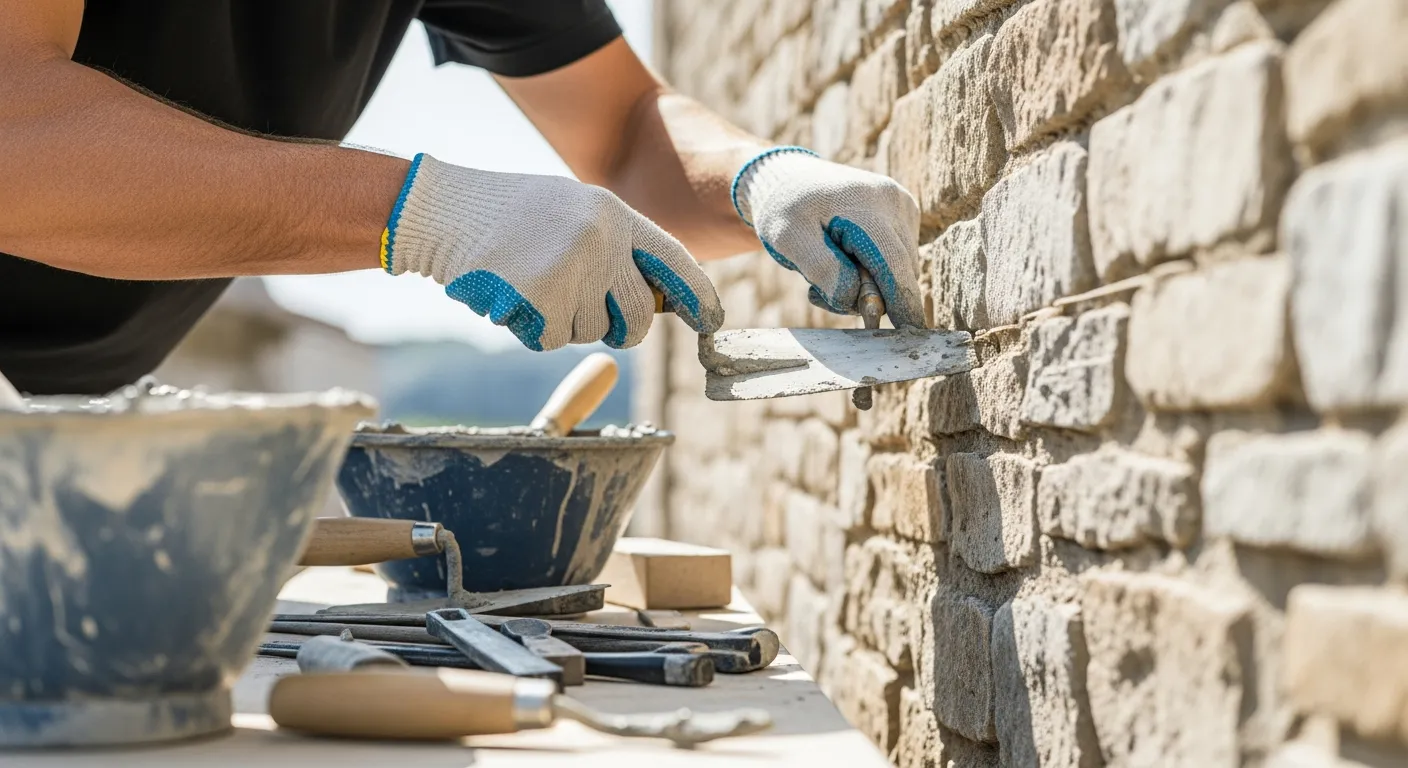
Selecting the right tools and materials is crucial for achieving a successful and durable mortar application. A variety of tools are available to assist in the process, each designed for specific tasks.
These tools include pointing trowels for applying mortar, jointing tools for shaping the mortar joints, and brushes for cleaning and preparing the surfaces. The choice of materials is equally important.
Using high-quality mortar mixes, aggregates, and additives can significantly enhance the performance and longevity of the repair. It’s important to consider factors such as the mortar’s workability, setting time, and compatibility with the existing stone.
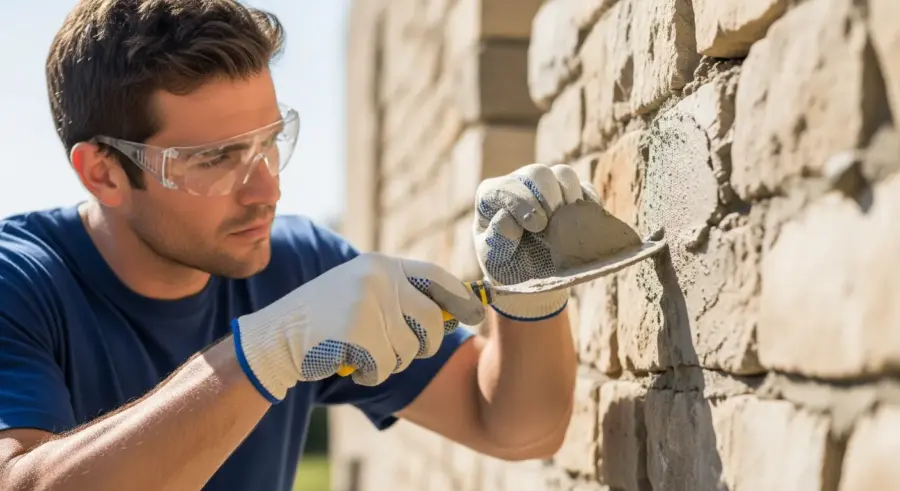
Additionally, safety equipment such as gloves, goggles, and dust masks should always be worn to protect against potential hazards during the mixing and application process. Proper tools and materials are essential.
Pointing trowels come in various sizes and shapes, allowing for precise application of mortar in different joint widths. Jointing tools, also known as joint finishers, are used to create the desired profile of the mortar joint. Brushes are essential for removing loose debris and dust from the joints, ensuring proper adhesion of the mortar.
The selection of aggregates is crucial for achieving the desired color, texture, and workability of the mortar. Different types of sand, such as sharp sand, fine sand, and washed sand, can be used to create different mortar characteristics. Additives, such as pigments and pozzolans, can be used to modify the mortar’s properties.
When working with lime mortar, it is important to use clean, potable water for mixing. Impurities in the water can interfere with the carbonation process and weaken the mortar. The mixing process should be carefully controlled to ensure that the mortar is properly hydrated and has a consistent consistency.
Safety is paramount when working with mortar. Gloves should be worn to protect the skin from the alkaline nature of lime and cement. Goggles should be worn to protect the eyes from dust and splashes. A dust mask should be worn to prevent inhalation of dust particles. Proper ventilation is also important to minimize exposure to dust and fumes.
Conclusion
Choosing the right type of mortar for stone repair is a critical decision that impacts the longevity and appearance of the structure. Lime mortar, cement mortar, and hydraulic lime mortar each offer unique properties that make them suitable for different applications.
Understanding the composition, characteristics, and application techniques of each mortar type is essential for making an informed choice. By carefully considering these factors, you can ensure a durable and sympathetic repair that preserves the historic and aesthetic value of the stone structure.
The long-term performance of a stone structure is directly linked to the careful selection and application of mortar. A well-chosen mortar will not only provide structural stability but also protect the stone from the elements. A poorly chosen mortar, on the other hand, can accelerate the deterioration of the stone and lead to costly repairs.
Historic preservation is a delicate balance between preserving the original fabric of a building and ensuring its continued use and enjoyment. The choice of mortar is a key factor in achieving this balance. By using compatible materials and appropriate techniques, we can ensure that historic stone structures are preserved for future generations.
The information provided in this article is intended as a general guide and should not be considered a substitute for professional advice. It is always recommended to consult with a qualified conservator or building professional before undertaking any stone repair project. They can assess the specific conditions of the building and recommend the most appropriate mortar and techniques.
Ultimately, the goal of stone repair is to preserve the historic and aesthetic value of the structure while ensuring its long-term stability. By carefully considering the factors discussed in this article, you can make an informed decision about the type of mortar to use and ensure a successful and durable repair.