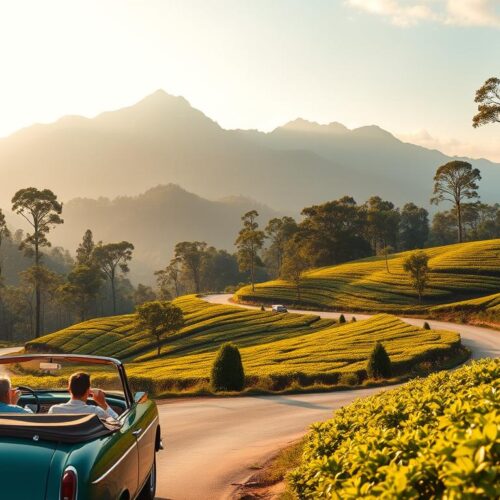

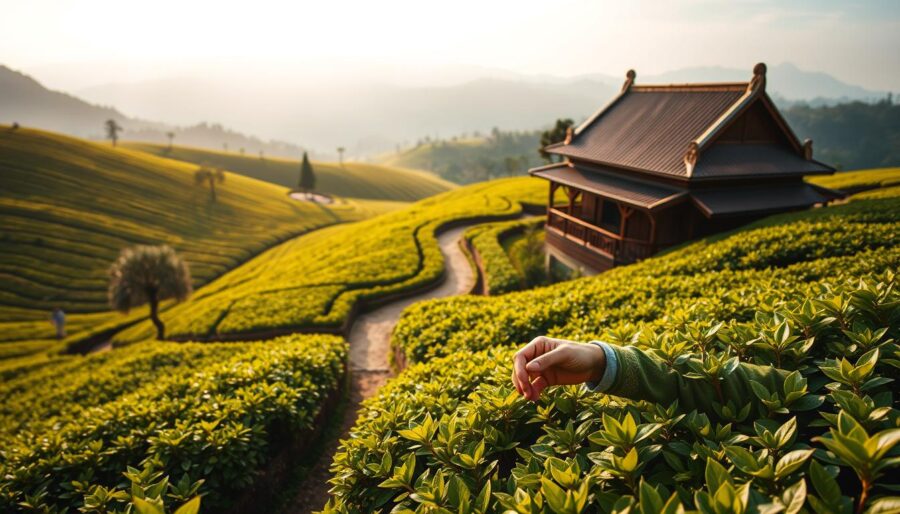
Start a tea tourism journey and see how tea travel opens doors to culture, history, and landscapes. Visiting tea plantations and teahouses teaches you about social rituals and local health traditions.
Tea is more than a drink; it brings people together, marks special events, and tells stories of colonial and national history. Seeing places like Darjeeling gardens or Ceylon estates shows how regions built their reputations and farming methods.
This guide takes you on a global tea adventure. From Gorreana in the Azores to Taiwan’s high-altitude oolong terraces and Argentina’s yerba mate routes. You’ll find practical tea journeys with tours, tastings, ceremonies, and scenic train rides.
Tea tourism covers many types, from black and green to oolong, pu-erh, rooibos, and mate. You’ll learn about top destinations, signature teas, cultural rituals, and unforgettable experiences for your next tea trip.
Why tea tourism matters for curious travelers
Tea tourism is all about exploring places where tea is made. You visit tea farms, teahouses, and festivals. It’s a way to learn about people, places, and tea rituals.
Tea journeys offer a deep dive into history. You learn how tea trade changed Sri Lanka and India. You follow paths that connected China, Japan, and Europe, making each sip special.
Visiting tea farms gives you a peek into agriculture. You see how tea is grown and processed. This knowledge helps you appreciate the flavors and supports fair trade.
Tea travel also enhances your senses. You taste different teas like Darjeeling and matcha. Tours at places like Dambatenne show you how tea is made, so you understand the flavors better.
What makes tea travel unique? You can join traditional tea ceremonies in Kyoto or try bubble tea in Taiwan. These experiences let you see local traditions up close.
When you travel for tea, think about the people and places involved. Learn about the history of tea plantations and support small farmers. Respect local customs, like accepting tea in Turkey. These actions help preserve tea culture and communities.
Who benefits from tea travel? It’s for anyone curious about food, culture, or history. Your trip can be filled with learning and relaxation, not just sightseeing.
| Focus | Experience | Why it matters |
|---|---|---|
| Plantation visits | Walk rows, meet pickers, see harvesting | Shows agricultural methods and labor context |
| Factory and museum tours | Observe processing, drying, and grading | Explains how flavor and quality develop |
| Guided tastings | Compare Darjeeling, Assam, matcha, oolong | Builds sensory vocabulary and appreciation |
| Traditional ceremonies | Participate in Japanese tea ritual or Moroccan pouring | Connects you to cultural meaning and etiquette |
| Local teahouse life | Observe social rituals at places like Chengdu teahouses | Reveals daily customs and community rhythms |
China: visit the birthplace of tea and historic teahouses
China is where tea first grew, thousands of years ago. You can see ancient Yunnan tea trees in Lincang, over 3,000 years old. These hills are famous for pu-erh tea, perfect for slow tasting.
In Hangzhou, try Longjing, or Dragonwell tea. This green tea is known for its unique taste. Fujian is home to oolong tea traditions that influenced Taiwan.
Chengdu’s teahouse culture is a must-see. The city has more teahouses than most places in China. People enjoy green tea, mahjong, and performances for hours.
On tea travel, taste different teas like jasmine and oolongs. Visit plantations and watch how tea is made. You’ll learn about the unique flavors and textures of each tea.
For a real experience, go to historic teahouses. Try teas like Dragonwell or Keemun. Visit during spring or tea festivals to see tea picking and processing.
When traveling for tea in China, visit Yunnan, Hangzhou, Fujian, and Sichuan. This journey connects you to the history of Chinese teahouses and the teas they serve.
Japan: green tea farms and the Japanese tea ceremony
Make Japan tea travel the heart of your green-tea journey. Begin in Shizuoka, where 40% of Japan’s green tea grows. You’ll see fields with Mount Fuji views and enjoy the Ichibancha spring harvest festival.
Try chakabuki to test your taste by identifying different sencha and regional leaves. Farm tours show how Matcha, Gyokuro, sencha, and other teas are made. You’ll see the steps from picking to tasting.
In Kyoto, book the Japanese tea ceremony to learn about its history and etiquette. You’ll learn how ceremonial Matcha is different from everyday tea. You’ll also discover why Gyokuro has a unique umami taste.
Visit tea museums and workshops to grind Matcha and taste rare leaves. Compare brewing methods and pair visits with nearby temples and gardens. This will deepen your cultural understanding and help you enjoy slow tasting.
Plan your trip in spring for harvest events and book ceremonies early. Use tea tourism to meet local growers and join small-group tastings. This will give you a true insider’s look at Japan’s tea culture.
India: Darjeeling, Assam, Nilgiri and the heritage of chai
Your journey in India tea tourism takes you from misty Himalayan slopes to sunlit southern hills. Darjeeling tea is prized for its light, floral character, often called the “champagne of tea.” Visit hill-station gardens, stay in colonial-era hotels such as Windamere, and ride the Darjeeling Himalayan Railway to taste estate life.
Glenburn Tea Estate offers guided walks and estate stays that let you see plucking, with tea plantations stretching across terraced slopes. You will notice how elevation shapes flavor; higher gardens yield delicate notes while lower slopes deliver bolder cups.
Assam tea gives you a contrast with strong, malty brews that define many breakfast blends. Plan estate tours in the Brahmaputra valley to learn about CTC processing and try a hot, robust cup straight from the factory. Estate visits often include tastings and a chance to meet tea workers who carry generational knowledge.
Nilgiri in the south blends aromatic floral tones with bright liquor. Centers like Ooty and Coonoor host accessible plantation walks and the Dodabetta Tea Museum & Factory, where you can follow leaves through withering, rolling, and firing. Local tea rooms offer formal tasting sessions that sharpen your palate.
Chai culture threads through every region. Street stalls serve masala chai with spices and milk, while family kitchens offer regional variations that reflect local ingredients. You will find chai is both a daily ritual and a social glue, inviting conversation at dawn markets and evening gatherings.
To plan your trip, combine plantation tours, factory visits, tastings, and heritage stays. Respect visiting hours at estates, book guided tours ahead, and dress for varied weather on high slopes. You will return with clear tastes and stories from Darjeeling tea gardens, Assam tea estates, and Nilgiri plantations that shape India’s tea legacy.
Sri Lanka: Ceylon tea landscapes and scenic train journeys
Start your Sri Lanka tea adventure in the central highlands. Here, Ceylon tea has changed the landscape and local life. Nuwara Eliya is surrounded by cool hills and estates. It offers tasting sessions and guided tours.
At the Dambatenne Tea Factory, learn about tea production and machinery. From there, hike to Lipton’s Seat, a favorite spot of Sir Thomas Lipton. Arrive early to see the sunrise over the tea fields without mist.
Experience scenic train journeys through green terraces. These rides offer stunning views of rolling fields. You’ll see workers picking tea leaves and can take photos of the hills.
Book a high-elevation estate tour for lighter, fragrant teas. Estate hosts might serve teas without milk. You can even try hand-picking for a small tip.
Combine tea visits with cultural stops in Kandy and Nuwara Eliya. Check the harvest seasons to see the most activity. This will make your trip more memorable.
Practical tips: wear layers for cool mornings, carry rain protection, and have cash for small fees. This will make your trip smoother.
Taiwan: bubble tea origins and mountain-grown oolongs
The story of bubble tea starts in 1980s Taiwan. It was born in Tainan’s Hanlin Tea Room and Taichung’s Chun Shui Tang. Vendors mixed milk, tea, and tapioca pearls, creating a hit.
Today, you can find bubble tea in night markets and stores across Taiwan. At Shilin or Raohe Night Market, try different flavors and learn about Taiwanese tea culture.
Taiwan’s high-mountain oolong attracts tea lovers. It’s grown in cool, misty mountains. These teas offer floral and creamy tastes that are best savored slowly.
Visiting Alishan or Lishan lets you see how oolong is made. You can watch leaf processing and taste fresh oolong at family-run tea houses.
Sun Moon Lake has its own tea story. Introduced by the Japanese, it grows unique black teas. Here, you can taste local blends and scenic views.
Your trip to Taiwan should include both hands-on and social activities. Try tea workshops, guided tastings, and mountain hikes. Night markets offer quick bubble tea tries, while tea houses provide a calm setting for premium oolong.
For tips, try different bubble tea flavors and ask about oolong’s production. When visiting Sun Moon Lake, book tours in spring or autumn for the best experience.
Vietnam: Moc Chau and northern tea country
Start your Vietnam tea journey in Moc Chau District. It’s a highland area with soft hills, mist, and small tea fields. Here, Moc Chau tea grows in cooler air, showing a quieter side of tea travel.
The region is about five hours west of Hanoi, near Pu Luong National Park. It’s a great day trip or overnight stay on northern Vietnam itineraries. Thai Nguyen, east of Moc Chau, is another key center for green tea production.
Visit small farms to see pickers at work and join tours of local processing houses. You’ll learn about leaf sorting, withering, and rolling. Then, taste the tea, which has a floral, fresh flavor.
Try lotus tea, a favorite in the region. It’s made by scenting green leaves with lotus blossoms overnight. This gives the tea subtle floral notes. You can try it at family-run stalls and factory tastings.
Moc Chau’s farms are intimate and hands-on. Expect friendly invites to observe or try picking. Look for local guides who offer tea visits, hill tribe homestays, nature walks, and more.
When packing, bring sturdy shoes for muddy rows and a light jacket for morning mist. Pair your Moc Chau stop with time in Thai Nguyen or nearby towns. This will deepen your understanding of Vietnam tea tourism and its long history.
Portugal’s Azores: Europe’s tea plantations and Gorreana
Explore São Miguel tea country, home to Europe’s only commercial tea plantations. The story started two centuries ago with seeds from Brazil. They grew on volcanic slopes.
Visit the Gorreana Tea Factory and Porto Formoso to see how tea is made. These factories use old methods and organic practices. They produce black teas like Black Leaf, Pekoe, and Orange Pekoe.
Green tea varieties also thrive here. The focus is on small batches and sustainable methods. This is what makes Azores tea tourism special today.
Plan to take factory tours at Gorreana Tea Factory and Porto Formoso. You’ll see withering, rolling, and drying. Guided walks let you see how the land shapes the tea’s flavor.
Don’t miss Chalet da Tia Mercês in Furnas to learn about local traditions. Volcanic springs there can turn Azorean green tea purple. This is due to iron and acidity.
Visit during the harvest season, April–October, for the best experience. You’ll see busy factory floors. Pair your tea visits with São Miguel’s beautiful sights, like crater lakes and coastal views.
For a more interactive trip, choose tours that include walks, tastings, and mill visits. Azores tea tourism offers a unique blend of history and hands-on learning. It’s perfect for those interested in Europe’s tea plantations.
Morocco and Granada: North African tea rituals in the Mediterranean
In Morocco, you’ll find Moroccan mint tea everywhere. It became popular in the 18th century. This tea combines Gunpowder green tea, nana (spearmint), and lots of sugar.
When brewing, hosts pour the tea from high up. This makes each cup taste different.
In Marrakesh, tea is a big part of daily life. It brings people together. A local saying teaches us to enjoy the tea’s journey: the first cup is gentle, the second is strong, and the third is bitter.
Granada, Spain, also loves this tea tradition. You can find teterias in the Albayzín and along Calle Calderería Nueva. These places offer a taste of Morocco in Spain.
Visit places like Teteria Ali Baba and Rincón Del Sabor to buy mint tea. Pair this with a trip to the Alhambra. It’s a great way to see Moorish architecture and gardens.
Here are some tips for enjoying tea in Morocco and Granada: always accept tea when offered, try different teterias, and buy loose-leaf tea to take home. These small actions make your tea experience unforgettable.
| What to try | Where to find it | Why it matters |
|---|---|---|
| Traditional Moroccan mint tea (Maghrebi mint tea) | Marrakesh riads, souks, Granada teterias | Shows local hospitality and historic tea rituals |
| Loose-leaf Gunpowder and nana blends | Rincón Del Sabor, tea shops in Albayzín | Allows you to recreate authentic flavors at home |
| Teteria experience | Calle Calderería Nueva, Albayzín teahouses | Combines sensory ritual with Moorish décor |
| Tea and cultural pairing | Alhambra visits, guided walking tours | Gives historical context to tea travel Mediterranean |
Turkey: çay culture, tulip glasses, and tea hospitality

In Turkey, Turkish tea welcomes you everywhere. It’s a sign of friendship. Saying no can feel like missing out on a connection.
Tea is strong and black, served in a tulip glass with sugar. In Istanbul’s Grand Bazaar, vendors offer you a glass as a friendly gesture. Sometimes, you might get Turkish Delight too.
The Black Sea is where most Turkish tea comes from. Visiting Rize or nearby tea farms lets you see how tea is made. You can even buy local tea blends to take home.
Tea is a big part of daily life in Turkey. You’ll find it at work, in cars, and at shops. Saying yes to tea can start a conversation and lead to new experiences.
Here are some tips: always accept tea in bazaars, try fruit teas like apple or pomegranate, and hold the tulip glass by the rim. For a deeper experience, join a tea tour in the Black Sea region.
Drinking Turkish tea is more than just tasting it. It’s a way to connect with Turkish culture and hospitality. It makes your Turkey tea travel unforgettable.
South Africa: Rooibos country and unique red-bush experiences
Plan your tea journey around Rooibos in the Cederberg mountains near Clanwilliam. This area is known as the Rooibos Capital. It’s where the red-bush plant grows, making a caffeine-free tea with a sweet flavor and health benefits.
In Clanwilliam, you can see the fields and meet the producers. Learn how the timing of harvest and fermentation affect the taste. The House of Rooibos has exhibits on growing, processing, and the global popularity of Rooibos.
Visiting Clanwilliam adds depth to your Rooibos experience at home. Rooibos is sold worldwide, but seeing it grown in the Cederberg shows you the quality. You’ll see how pruning, sun-drying, and grading make it special.
For the best South Africa tea tourism, plan for dry, warm days. Don’t miss the Rooibos museum and try Rooibos-infused foods in local tea rooms. Combine your trip with Cape Town or a Cederberg hike for more culture and nature.
| Visit | What you learn | Best time |
|---|---|---|
| Clanwilliam town center | Local history, markets, entry point to farms | March–September |
| House of Rooibos | Processing demonstrations, tastings, retail | Year-round (check opening hours) |
| Cederberg farms | Planting, harvesting, sun-drying practices | Summer harvest season |
| Rooibos museum and tea rooms | History of Rooibos, culinary pairings, blends | All seasons with seasonal menus |
When planning your trip, focus on real experiences. This way, you’ll truly appreciate Rooibos. Tea travel in the Western Cape turns a simple cup into a story of place, craft, and community.
Argentina and South America: the ritual of mate and yerba traditions
Yerba mate comes from the Guaraní people and is Argentina’s favorite drink. You make it by steeping dried leaves in hot water. Then, you drink it from a gourd called a mate using a metal straw called a bombilla.
Drinking mate is a social activity. People pass the gourd around in a circle. It’s like sharing coffee or beer, bringing everyone together.
People say mate has health benefits like antioxidants and vitamins. It’s enjoyed hot or cold, for its taste and a gentle buzz. You can try different flavors to find your favorite.
For a unique experience, take the Ruta de la Yerba Mate in Corrientes and Misiones provinces. This route shows you where yerba mate is grown and made. You can also visit museums and see how it’s made.
On this route, you’ll taste various yerba mate flavors. Visit places like La Cacho, Unión, or Amanda to see how it’s processed. This helps you understand why mate is important in South America.
Here are some tips for your trip. Learn how to hold the gourd and when to pass it back. Try tereré in hot weather and take some yerba mate home as a gift.
Your visit will make you appreciate the mate ritual and South America’s tea culture more. It connects you to history, community, and the flavors of Argentina.
United Kingdom: afternoon tea, historic tea rooms, and British blends
The United Kingdom is a top spot for those interested in afternoon tea and British tea blends. Here, you’ll find a rich tea culture. English Breakfast and Earl Grey are served alongside sweet treats.
British tea travel offers a mix of rituals, history, and flavors. Each region and tea room has its own unique offerings.
London is the heart of United Kingdom tea tourism. Make sure to book ahead for iconic spots like Fortnum & Mason and The Ritz. You’ll enjoy finger sandwiches, warm scones, and precise service.
Outside of London, historic tea rooms await in market towns and villages. Here, locals prefer strong black teas like Yorkshire Tea and PG Tips. It’s a chance to taste different blends and styles.
For a great British tea experience, try a traditional afternoon tea. Sample English Breakfast with and without milk. Also, book tables at popular spots early.
Below is a table comparing afternoon tea, common blends, and where to find them in the United Kingdom.
| Experience | What to Expect | Recommended Venue |
|---|---|---|
| Traditional afternoon tea | Three-tier stand, finger sandwiches, scones with clotted cream and jam, small cakes | The Ritz, Fortnum & Mason |
| Classic blends | Strong black teas such as English Breakfast; fragrant Earl Grey for a lighter finish | Historic tea rooms and department store tea counters |
| Everyday tea culture | Milk in black tea, quick kettles, social chat in cafes and pubs | Local cafes, village tea rooms across England |
| Sampling tips | Try blends with and without milk; compare brewing times and water temperature | Tea shops and tasting sessions in London and regional towns |
Russia: samovars, teahouses, and long tea sessions
Exploring Russia’s tea culture starts with the samovar. These metal devices keep water warm and are key to social gatherings. Often, they are beautifully made of brass or copper, designed for sharing.
Walking into a Russian teahouse, you’ll find large tables and slow conversations. These places were once hubs for business talks, poetry, and politics. Tea rituals here can last for hours, filled with repeated infusions and quiet stories.
To truly experience it, visit cultural centers or historic teahouses in Moscow, St. Petersburg, or Suzdal. Staff will teach you about the samovar and offer traditional pairings like jam, honey, or pirozhki. These pairings show regional traditions and enrich your tea journey.
Planning a visit? Look for places with local crowds, ask about the samovar’s history, and try different teas. Visiting in winter adds to the experience, as hot tea warms you after cold walks.
| What to look for | Why it matters | Local example |
|---|---|---|
| Working samovar on display | Shows live tea preparation and shared pouring customs | Museum teahouses in St. Petersburg |
| Traditional accompaniments | Highlights regional tea rituals and flavors | Jam and pastries in Suzdal teahouses |
| Long, unhurried service | Allows multiple brews and social exchange | Town teahouses across the Golden Ring |
| Guided cultural sessions | Gives historical context about samovar and tea travel | Workshops at cultural centers in Moscow |
United States tea travel highlights: Southern sweet tea and Charleston Garden

In the South, iced sweet tea is a summer staple. It started as a luxury because tea and sugar were expensive. The first recipe is in Marion Cabell Tyree’s Housekeeping in Old Virginia (1879). This history shows why sweet tea is a Southern symbol.
Visit the Charleston Tea Garden on Wadmalaw Island. It’s the only large-scale tea farm in the U.S. Bigelow runs it, and they offer tours and exhibits. You’ll learn how tea grows in the U.S. and how it’s made.
Traveling the Southeast, try different sweet tea recipes. Cities like Savannah and Asheville have their own versions. These variations show how tea recipes change in different places.
Remember, tea estates have a complex history. Charleston Tea Garden dropped the “Plantation” name to acknowledge this. Visiting these sites, think about the history of slavery involved.
Visit tea places with other cultural spots for a full experience. Pair a Charleston Tea Garden tour with historic sites or local food. This will help you understand the South’s tea culture better.
For a better trip, try tea at roadside stands and ask for recipes. Schedule a tour at Charleston Tea Garden to see how tea is made. Your trip will be more meaningful when you learn about Southern tea culture and its history.
Conclusion
Tea tourism takes us on a journey across continents, linking culture, history, and taste. You can stand under ancient tea trees in China’s Yunnan or watch a Japanese tea ceremony in Uji. In Taipei, you can sip bubble tea where it started, share mate in Buenos Aires, or learn about rooibos farming near Clanwilliam.
When planning tea travel, choose based on what interests you. If you like rituals, pick ceremonial places. For production insight, go for plantation tours. For tasting, try classes, and for socializing, visit teahouses.
Remember to make responsible choices. Support small farmers, respect local traditions, and consider the history of labor in places like Assam and Sri Lanka.
Next steps: pick a few places from this guide and check the best times to visit. Book tours and ceremonies early. Be ready to taste and learn with an open mind. Tea journeys are a mix of education and sensory pleasure.
Start your tea tourism adventure to find the world’s best tea plantations and experiences. It’s a journey of discovery and delight.