
Tea can be a simple way to bring calm into your day. It combines the sensory ritual of brewing and sipping with mindfulness practices. This helps you stay present, reduce reactivity, and sharpen focus.
Tea also supports your body’s balance. L-theanine in green and black teas promotes relaxation. Caffeine offers gentle stimulation without the jittery feeling coffee can cause. Antioxidants in tea also boost overall well-being, making it easier to keep up a regular practice.
Tea is easy to fit into any routine. You can meditate with tea before seated meditation, enjoy mindful drinking during a work break, or make a calm tea ritual part of your evening wind-down. Groups like the Global Tea Initiative at UC Davis and mental health organizations like NAMI often include tea in their programs. This shows how tea can support professional help.
This article will help you choose the right tea, brew it with attention, and make each cup a mindful moment. This way, your day will stay steadier and more centered.
Introduction to Tea and Mindfulness
So, what is mindfulness? It’s about focusing on the present moment. Jon Kabat-Zinn made it famous with Mindfulness-Based Stress Reduction (MBSR). Teachers like Denise Dempsey, M.Ed., use simple rituals, like a cup of tea, to help students stay in the moment without judgment.
Tea helps in two ways. It has L-theanine, which makes you calm but not sleepy. And it has a bit of caffeine to keep you alert. This mix is great for meditation and staying focused.
Herbal teas offer more ways to relax. Chamomile, lavender, rooibos, and turmeric are calming and full of antioxidants. They help your mind and body feel better. A warm cup of tea can be a simple way to reduce stress.
Make tea a part of your day to take intentional breaks. Drink it mindfully by slowing down, noticing the smell and warmth, and feeling how it changes in your body. These small moments can calm you down and get you ready for deeper mindfulness.
The History of Tea in Mindfulness Practices
The history of tea starts in ancient China. It began as a daily habit and a support for long spiritual practices. Buddhist monks used tea to stay alert during meditation. This link shaped early tea traditions in East Asia.
The connection between meditation and tea grew as Buddhism spread from India to China and Japan. In Japan, the chanoyu or Japanese tea ceremony became a refined practice. It blends ritual, aesthetics, and quiet attention, reflecting the essence of tea meditation and mindfulness.
Tea traditions evolved into both formal ceremonies and simple household rituals. In China and Korea, tea bridged scholarly life and contemplative practice. The slow, deliberate preparation of tea created a natural context for pause and awareness in everyday life.
Academic work connects these ancient roots to modern wellness programs. The Global Tea Initiative studies how tea links culture and well-being. Campuses like UC Davis use tea programs in student wellness efforts. These efforts show how tea meditation and mindfulness origins remain active in contemporary life.
You can use these historical threads to inform your own practice. Understanding tea traditions gives context to mindful sipping. It offers a long view that blends ritual, focus, and calm into a simple cup.
Choosing the Right Tea for Mindfulness
Start by picking a tea that fits your needs. Think about the tea you like, the time of day, and your caffeine sensitivity. Each type of tea has its own caffeine and antioxidant levels.
Green tea has a good amount of caffeine and L-theanine for calm alertness. Black tea is bolder and has more caffeine, perfect for mornings. Oolong is a balance for mid-day, while white tea is low in caffeine and delicate. Pu-erh offers a rich, earthy taste with unique fermentation benefits.
Herbal teas are great for caffeine-free evening or bedtime mindfulness. Chamomile and lavender calm the nervous system and aid sleep. Peppermint aids digestion and clears the mind before meditation. Rooibos and honeybush are antioxidant-rich and gentle in the evening.
Turmeric blends add anti-inflammatory benefits and warm spice flavors. Look for turmeric with black pepper for better absorption. Rooibos, honeybush, and turmeric teas are caffeine-free options for mindfulness.
Choose a tea that matches your schedule, caffeine tolerance, and taste. Opt for organic and sustainable brands for ethical mindfulness. Try new teas in small amounts to find the best for your calm ritual.
Rotate a few trusted teas to keep your practice interesting. Keep notes on aroma, mouthfeel, and mood effects. This will help you refine your tea choices and deepen your mindfulness.
Brewing as a Mindful Activity
Find a quiet spot for your practice. Gather a teapot, gaiwan, bowl, fairness cup, tray, and a cloth. Having a special place makes brewing more mindful and intentional.
Start with the water. Heat it to the right temperature for your tea leaves. Listen for the first signs of steam. The sound of boiling water helps you stay focused on tea mindfulness.
Measure the leaves carefully. Look at their color, texture, and smell. Gently put them in the pot or bowl. Watching the leaves unfurl is a small but rewarding ritual.
Use breathing cues while you work. Inhale when you lift the kettle. Exhale when you pour. Add an extra breath for each re-steep. These cues help keep your focus during mindful brewing.
Notice the color change when water meets leaves. Smell the first aroma that rises. Feel the warmth of the vessel in your hands. These details help you stay present and deepen your tea mindfulness.
Pour with care and intention. For loose leaf in a bowl, pour on the side to avoid splashing. For a teapot or gaiwan, watch how the water fills the chamber and frees the leaves. Slow, precise motions make every step a mindful moment.
Take breaks between steeps. Count a breath before adding hot water again. This pacing teaches patience and shows how a simple brewing sequence can become a daily calm tea ritual.
Drinking Tea Mindfully
Start by holding your cup and taking a slow breath. Feel the warmth and smell the scent. This helps you focus on the moment.
Drink small, intentional sips. Stop between each sip to feel the temperature, texture, and taste. If your mind wanders, just notice it and come back to the tea. This is the essence of enjoying tea.
Use the tea aroma wheel to describe what you smell. Hold the cup up and breathe in. Try to name the scents you smell, like floral or citrus. Naming them helps you enjoy the tea more.
Notice how the scent and taste change with each steep. See if the sweetness grows or the bitterness fades. Keep your observations short. This helps you pay attention and improve your taste.
Try simple exercises to make mindful drinking a habit. Start with a silent moment before talking. Drink slowly for a minute, then pause for a breath before the next sip. Each steep is a new experience with the tea.
Drink the tea in multiple infusions. Add a breath before pouring each time. You’ll notice the flavors and scents change with each pour. This teaches you patience and awareness.
| Exercise | Steps | Benefit |
|---|---|---|
| Silent Centering | Pour tea, hold cup, breathe twice, sip slowly for one minute | Calms the mind and sets intention for mindful drinking |
| Aroma Naming | Lift cup, inhale, identify 1–3 notes from aroma wheel | Expands sensory vocabulary and deepens tea mindfulness |
| Steep Awareness | Add one breath before each re-steep, note changes across infusions | Heightens attention to flavor evolution and texture |
| Savoring Pause | Take tiny sips, pause between each, notice aftertaste | Improves concentration and appreciation of every sip |
Integrating Tea into Your Mindfulness Routine
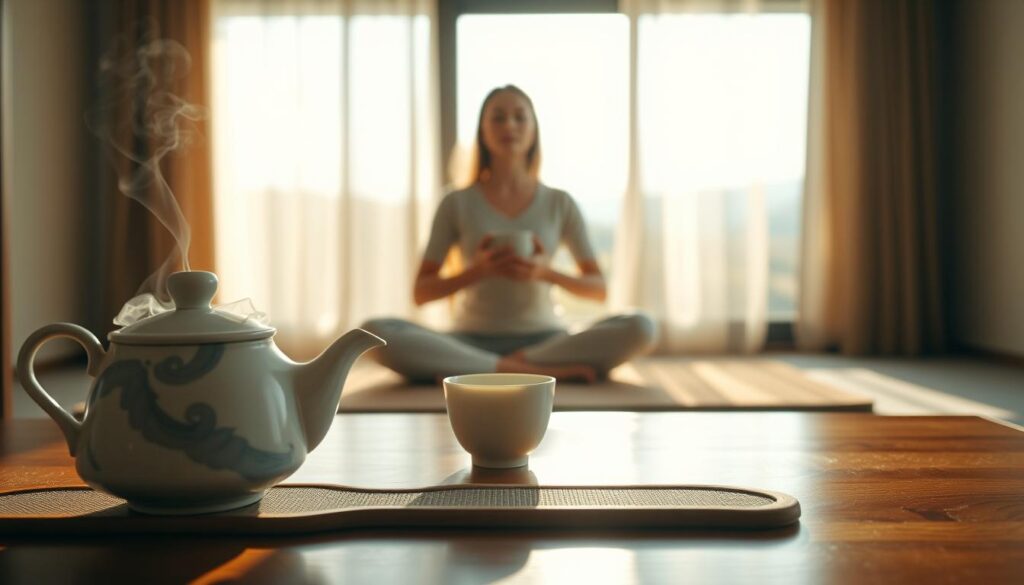
You can make a simple tea ritual for your day. Choose a quiet spot and a favorite tea. Set a gentle intention and prepare the cup with care. A morning cup can start your day, a midday pause can help you focus, and an evening brew can calm you down.
Make drinking tea a mindful act. Slow down and notice the aroma, warmth, and taste. Sip slowly, focusing on each moment. Let each sip help you stay present.
There are two ways to combine tea with mindfulness, taught at UC Davis. The simple bowl method involves steeping, holding the bowl, breathing, and drinking. The flowing method uses a teapot or gaiwan, preparing and pouring slowly to keep your focus.
Pair tea with short breathing exercises. Breathe in for three counts, out for three. Take a sip on the exhale. Reflect on the journey of the tea, from leaf to cup, and the people involved.
Use guided tea meditation audio or video to help your practice. Short recordings can anchor a pause or structure a longer session. Sip between tracks to keep your practice steady.
UC Davis and practitioners like Denise Dempsey show how to add tea mindfulness to programs. You can adapt these ideas for classrooms or workplaces. Lead a group pause, a tasting, or a weekly mindful drinking routine.
Begin small and be consistent. Set a reminder and choose a method. Practice for a week and see how it changes your day. Over time, these small acts will deepen your mindfulness and make quiet moments more accessible.
Mindfulness and the Tea Ceremony
The tea ceremony is deeply rooted in mindfulness. It values harmony, respect, purity, and tranquility. These principles guide every action, keeping the focus on the present.
It’s a training in focused attention. You notice details like the sound of water and the feel of a tea bowl. This builds mindfulness and awareness of the moment.
The ceremony has simple stages. First, clean the space to welcome calm. Then, heat water and measure tea with care. Next, pour and serve with purpose. After, enjoy a moment of silence before talking.
Tools like tea bowls and bamboo whisks help stay present. They guide your posture and breathing. These small actions become mindful practices.
You can make these rituals part of your daily life. Try a moment of silence before talking. Serve tea slowly, focusing on each sip. Use a simple tool to keep the practice focused.
Adopting these rituals brings mindfulness into your day. They can be short and repeated, making mindfulness easy to practice every day.
Tea and Stress Relief
Tea can be a simple way to reduce stress. Green and black teas have L-theanine and caffeine. This mix helps you stay alert but calm.
L-theanine research shows it helps reduce tension. Caffeine keeps you focused. Herbal teas like chamomile and lavender offer calmness or clarity.
Drinking tea is more than just a drink. It’s a moment to pause and breathe. This break helps you focus and listen better.
Studies back up these benefits. L-theanine has been linked to less stress and better focus. Green tea boosts brain function. Chamomile has shown to help with anxiety.
The Global Tea Initiative and UC Davis are studying tea’s mental health benefits. They see tea as a helpful, affordable tool for managing stress.
Adding anti-anxiety tea to your day is easy. Try brewing tea before studying or meetings. Share a calming cup in public spaces or clinics. Tea can mark the start or end of a busy day.
Having tea around is a simple way to handle stress. Thanks to L-theanine research and studies, tea is a reliable ally in managing tension.
Mindfulness Activities with Tea
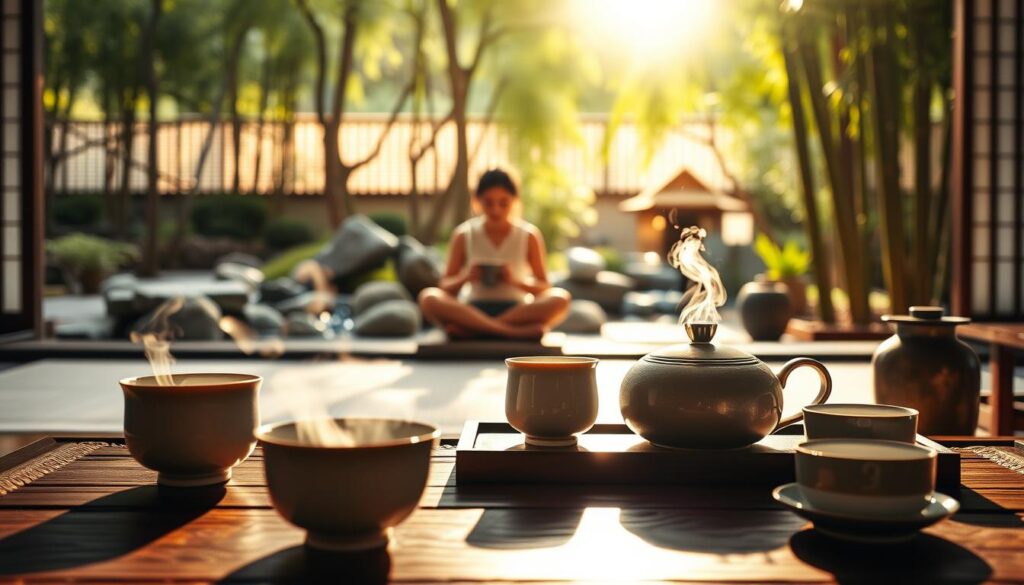
You can create short practices for your morning or break. Try journaling with tea by noting the first aroma, changes across steeps, and one intention for the day. Keep entries brief so you can return to the page tomorrow.
Use prompts like: What does the cup feel like in my hands? How does the flavor change from the first sip to the last? Who helped bring this tea to my cup and what am I grateful for? These prompts make journaling with tea concrete and easy to repeat.
Guided tea meditation works well with clear cues. Use a recorded track or a written guide that tells you to inhale, lift your head, exhale and relax. Focus on the brewing steps: pouring water, timing the steep, and watching the leaves unfurl. This structure supports focused presence.
Try a short guided tea meditation that lasts five to ten minutes. Start with breath awareness, then sensory scanning of aroma and temperature. Finish with a simple intention. Repeat the practice after each steep to observe subtle changes in attention and stress.
Practice mindful drinking by slowing each sip. Notice texture, temperature, and how your body responds. Pause between sips. When your mind wanders, bring it back to the cup without judgment. This reduces reactivity and trains steady attention.
Use simple tools to enrich practice. Consult the International Tea Masters’ Association tea aroma wheel for descriptive vocabulary during sensory work. Play educational recordings from tea programs for guided formats. Look at Numi Tea’s mindful-blend suggestions to select teas suited to relaxation.
Mix activities into a short routine. Start with brewing as a tactile ritual, then do a five-minute guided tea meditation. Finish with a one-page journaling with tea prompt. This sequence creates repeatable tea mindfulness activities that fit into busy days.
Keep sessions short and track changes in focus and mood over a week. Gentle repetition helps you notice benefits from mindful drinking and builds a practical, sustainable habit.
Sharing Tea in a Community Setting
When you gather people around a cup of tea, it becomes a way to listen and find calm. Choose a quiet spot without distractions. Ask everyone to sip in silence for a moment to focus on tea mindfulness.
Plan how to talk. After the quiet time, let each person share their thoughts once they’ve finished their tea. The host waits until everyone has spoken. This makes everyone feel more at ease and encourages listening.
For a mindful gathering, remember a few things. Make sure there’s enough tea, offer refills, and replace the pot when the flavor goes. Keeping things tidy shows you care and helps everyone stay present.
Tea can connect people in many ways. At UC Davis, it’s used in student wellness programs to build friendships. Therapists use it in college groups to help students speak more thoughtfully in a relaxed setting.
Tea has real benefits. It helps us stay present, builds stronger relationships, and teaches us how to communicate better. These skills are useful in many areas of life, like work, therapy, and friendships.
If you’re planning regular tea gatherings, mix things up. Try a listening circle one week, a tasting the next, and then an open share. Changing things keeps the tea time interesting and strengthens the bond of being together with purpose.
Conclusion: Embracing Tea for Mindfulness
Embracing tea mindfulness is a simple practice that grows over time. It combines the benefits of L-theanine and antioxidants with small changes in behavior. These changes improve your focus, reduce stress, and help you stay on track.
Sharing tea also enhances your senses and strengthens relationships. You can start mindful drinking by leading a silent tea round or teaching how to brew tea. Brands like Numi Tea and the Global Tea Initiative offer resources to help you begin and keep up with this habit.
Start with just one mindful cup today. Pick a tea, set an intention, and follow the steps in this article. Keep a journal or lead a tea meditation to track your progress. This will also encourage others to join and enjoy the benefits.