
Using a simple tea ritual can calm and focus your day. Brewing tea requires slowing down. You need to pick quality leaves, heat water just right, and time the steeping.
This process helps you practice mindfulness and stay present. Enjoying the aroma and taste helps you notice small joys. A mindful sip can turn into a moment of reflection, supporting your emotional well-being.
Choose teas that fit your mood, like hojicha for calm or matcha for energy. Engage all your senses while preparing it. Take a deep breath before your first sip and think of something you’re grateful for.
Sharing tea with loved ones strengthens bonds and creates a space for thanks. Tea gratitude also means appreciating the journey from soil to your cup. It’s about the health benefits too, like less stress and a stronger immune system.
The Power of Tea in Mindfulness Practices
When you carefully pick a tea leaf, heat the water, and steep it, you’re doing more than just making a drink. You’re practicing mindfulness. Each step helps you stay in the moment. This makes mindfulness with tea a simple yet powerful practice.
Engage your senses to enhance your experience. Notice the steam, the tea’s aroma, and its color. Let the first sip guide your breathing. This turns drinking tea into a moment of calm and reflection.
Make a daily habit of tea and gratitude. Before drinking, think of something you’re thankful for. Say it to yourself as you breathe in. This habit boosts your emotional wellness by making gratitude a regular part of your life.
Choose teas based on your mood. Matcha for focus, chamomile for calm, and kuromamecha for a cozy moment. This makes your tea practice personal and effective.
Turn off screens and use a timer to stay focused. Repeat sensory cues like aroma and warmth to make the ritual automatic. Over time, tea and gratitude will become a natural part of your day.
Gratitude: A Simple Yet Powerful Practice
Use a cup of tea to start your daily gratitude practice. Before you sip, think of one small thing you’re thankful for. This simple act can change your focus from worry to the present moment.
Try combining breathwork with your tea. Breathe in for four counts, then out for six. Think of something or someone you value. This rhythm helps you stay calm and focused while you enjoy your tea.
Keep a small note next to your tea. Write down one thing you’re grateful for today. Doing this regularly helps you stay aware of the good things in your life, even when you’re not drinking tea.
Many cultures celebrate gratitude with special meals and tea ceremonies. You can do the same by setting aside time each day to be thankful. This makes gratitude a regular part of your life, not just an occasional feeling.
Herbal teas can enhance your gratitude practice. For example, a mix of rooibos, lemon balm, or lavender can calm your mind. These flavors are perfect for reflecting on kindness, memories, and peace.
Regularly practicing tea gratitude can improve your emotional well-being. It helps you focus and reduces stress. With time, tea becomes a simple yet powerful tool for finding peace in your daily life.
Creating Your Own Tea Ritual
Start by setting a clear goal. Choose high-quality leaves and prepare your tea with care. This act shows your commitment to being present and makes your tea ritual special.
Match your tea to your mood and needs. For calm, try chamomile. For energy, matcha is great. Jasmine Pearl or Be Happy Rooibos can lift your spirits.
Use your senses while brewing. Listen to the kettle, smell the steam, watch the leaves, and feel the warmth. This makes brewing a mindful experience.
Make time for daily gratitude. Find a quiet spot or take your cup for a walk. A short, regular pause will grow your tea gratitude.
Turn off your devices during your ritual. Silence your notifications for a few minutes. This break enhances your emotional wellness and makes each sip more special.
Try seasonal teas to connect with nature. Desert Rose herbal is perfect for autumn, and green spring teas are fresh for mornings. Change your teas to keep your ritual exciting.
Keep your ritual simple and consistent. You don’t need fancy tools, just intention and habit. By starting small, tea gratitude and emotional wellness become part of your daily life.
The Role of Senses in a Tea Ritual
Tea can make small moments feel big. Look at the leaves, watch the steam, and listen to the water hitting the teapot. These actions help you stay in the moment and grow your mindful tea practice.
Feel the warmth of the cup in your hands. Take a deep breath to catch the tea’s aroma. As the tea cools, the scents change. This practice helps you appreciate the tea more.
Slowly tasting the tea is key. Let the liquid sit on your tongue and identify the flavors. This trains your senses and makes you more present, improving your emotional well-being.
Use scents to calm or uplift you. Jasmine Pearl’s fragrance can soothe, while Rooibos with peach can brighten your mood. Blends with rose, lavender, and lemon balm can also help reduce stress and improve memory.
Make a checklist for your tea ritual: look at the leaves, listen to the water, smell the tea, feel the cup, and enjoy each sip. Doing this every day strengthens your mindful tea habits and gratitude.
With time, tea becomes more than just a drink. It becomes a way to notice and appreciate the small things in life. You carry a sense of gratitude with you, even outside of your tea time.
Tea and Community: Sharing Gratitude
Turning a simple tea gathering into a way to build connection is easy. Tea has been key in many cultures, from Japan to England. Hosting a community tea ritual lets everyone listen and appreciate each other.
Choose teas that fit the mood of your gathering. Jasmine Pearl adds elegance, Be Happy Rooibos boosts spirits, and Desert Rose connects to place. These teas help conversations flow naturally, focusing on gratitude.
Ask guests to put their phones away. Start with a brief breathwork exercise or a mindful tea pause. This practice sharpens senses, making it easier to share what we value.
Use simple prompts to start conversations: something joyful today, someone you appreciate, or hopes for the season. These prompts keep the conversation flowing smoothly, allowing everyone to share without feeling rushed.
Plan seasonal gatherings around holidays like Thanksgiving or spring solstice. A special tea menu and a gratitude circle add warmth to these moments. It’s a chance for emotional wellness for everyone.
If you host often, keep things comfortable and fresh. Try new teas, invite different people, and keep it brief. Over time, this practice will strengthen relationships and make gratitude a regular part of your community.
Seasonal Teas and Reflecting on Change
Choosing seasonal teas connects you to the earth. It reminds you that each leaf is shaped by soil, sun, and water. This turns a simple cup into a moment of reflection.
In spring, try lighter greens like Jasmine Pearl to celebrate new beginnings. For cooler months, choose grounding blends like Be Happy Rooibos. These support emotional wellness and calm.
Make tea choices that match your mood. Opt for caffeine-free herbs when you need rest. Choose blacks or oolongs for warmth. This small choice is a daily act of gratitude.
Take short pauses for tea reflection in November and around Thanksgiving. Daily gratitude windows help you appreciate all month, not just on holidays.
Create a seasonal ritual. Note the aromas, track changes in the cup, and write a sentence of gratitude. This habit helps you adjust to change and supports emotional wellness.
Journaling With Tea: A Perfect Pairing
Turning a simple steep into a steady practice of tea journaling can strengthen awareness and calm. Start by making space for quiet. The ritual creates moments perfect for tea reflection. These quiet moments help you notice small comforts that often go unnoticed.
Before or after you sip, take a few mindful breaths. Write one short line in your gratitude journal. Use breath-guided tea meditations to center your attention. This helps you capture sensory impressions, memories, or names of people who matter.
Use seasonal prompts tied to your cup. Ask what the aroma reminds you of, which memory jasmine evokes, or who comes to mind with rooibos and herbal blends. These cues link tea and gratitude, making entries rich and personal.
Keep entries brief and regular. A five-minute gratitude journal habit during your “gratitude window” makes thankfulness a routine, not an event. Over time, this steady tea journaling reduces rumination and supports emotional wellness.
If you prefer structure, try a simple prompt list:
- What scent or flavor do I notice first?
- What memory did that bring up?
- Who am I grateful for right now?
- One small win from today.
Let mindful tea moments anchor your writing. You will build a clearer sense of appreciation and a lasting habit of tea and gratitude that fits into everyday life.
The Art of Tea Brewing as a Metaphor
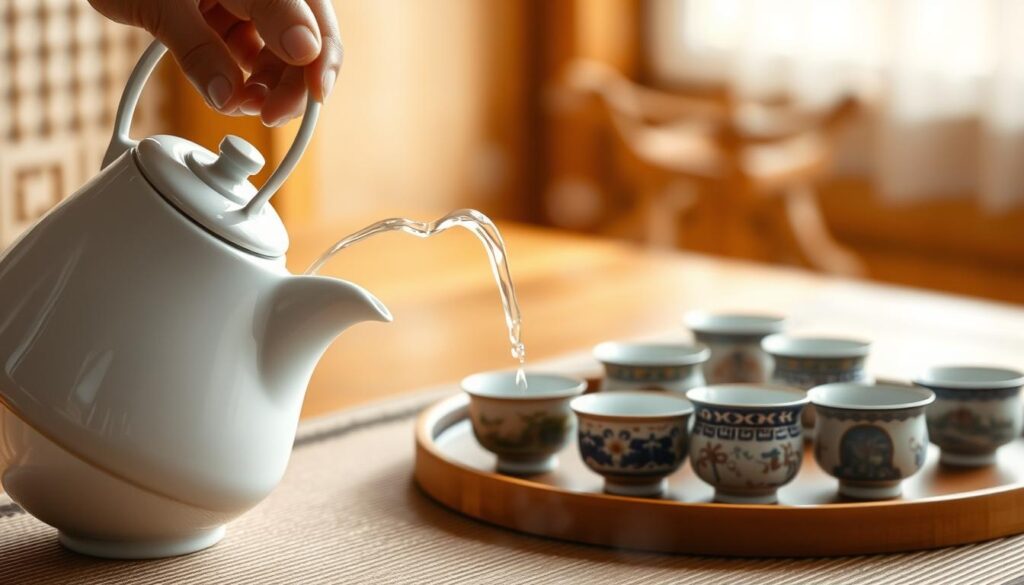
Your morning routine can teach you patience. Measuring leaves, watching water heat, and timing the steep are all about focus. These simple steps help you develop mindful habits and a sense of gratitude.
Slow brewing is a chance to pause and breathe. The sound of water, the wait for color, and the aroma as you lift the lid bring you into the present. Use this moment to notice small gifts, which supports tea gratitude and emotional wellness.
Tea-making offers clear metaphors for life. Short steeping is like quick choices, while longer infusion is about patient growth. Choosing a blend helps you think about priorities and relationships, a way to weigh what matters.
Try a short ritual: measure, steep, and reflect for one minute before you sip. Repeat this habit to turn tea brewing into a daily practice in presence. You build calm focus and lasting gratitude.
Below is a quick guide to link brewing steps with personal practice. Use it to spark small changes that lift mood and support emotional wellness.
| Brewing Step | Practical Action | Life Parallel |
|---|---|---|
| Measure leaves | Pause to choose quality and amount | Make deliberate choices in relationships |
| Heat water | Attend to timing and temperature | Prepare patiently for change |
| Steep | Watch the color and aroma develop | Allow growth without rushing |
| Serve | Sip mindfully and note sensations | Celebrate small outcomes and practice tea gratitude |
Tea Varieties and Their Stories
Every cup of tea tells a story. The soil, altitude, and season of harvest all play a part in its flavor. Learning about these details makes your tea experience more meaningful and connects you to the people who grew the leaves.
Choosing a tea with care can change your experience. Matcha from Japan brings a sense of ritual and focus. Jasmine Pearl from China has a scented history tied to spring. Rooibos from South Africa is caffeine-free and offers comfort, linking you to a unique place.
Regional blends share fascinating stories. Hojicha from Japan has roasted barley-like notes. Desert Rose blends mix Western U.S. botanicals with Mediterranean herbs, painting a picture of dry, sunlit landscapes. These stories encourage you to enjoy your tea more mindfully and with gratitude.
As you try different teas, take time to reflect. Notice the aroma, texture, and memories they evoke. This practice grows your appreciation for the craft and culture behind tea, turning a simple break into a moment of mindfulness.
Keep a list of your favorite teas and their origins. Use it to guide your purchases and spark conversations with friends. Knowing where your tea comes from enriches your ritual and deepens your sense of gratitude.
Gratitude and Tea in Different Cultures
In Asia, tea is more than a drink. It’s a way to reflect and be thankful. In Japan, the chanoyu ceremony teaches the importance of being present. It shows how to appreciate every moment with careful attention.
In China, gongfu cha is all about slow, mindful sips. It’s about enjoying the aroma and honoring the tea leaf. In India, chai is a symbol of friendship and community. It brings people together, reminding us of the power of gratitude.
Wellness experts recommend taking deep breaths while sipping tea. This practice, inspired by ancient traditions, helps us focus on the present. It’s a simple way to add mindfulness to our daily lives.
Seasonal festivals around the world celebrate harvests and togetherness. Tea is often at the center, symbolizing welcome and thanks. Whether it’s Mid-Autumn or Thanksgiving, tea brings people together in moments of gratitude.
To make your tea time more meaningful, start small. Choose a special tea, pay attention to the warmth of your cup, and share it with someone. By blending sensory experiences with cultural awareness, you can create a personal tea ritual that honors tradition and fosters gratitude.
Overcoming Challenges with Tea Rituals
When days feel overwhelming, a short tea ritual can create a clear pause. Brewing a cup gives you structure and a moment away from tasks. This simple act supports emotional wellness by slowing your breath and lowering tension.
On stressful mornings, pick calming blends like chamomile or rooibos. Choose a stress relief tea that suits your taste. Before sipping, take three slow breaths. Use the warmth, aroma, and texture to ground your attention in the present.
If screens crowd your time, set a five-minute tea window. Turn off notifications and focus on tea and gratitude. A brief expression of thanks while you sip shifts perspective and steadies your mood, even on busy days.
During holidays or peak seasons, keep gratitude daily. Try a grounding blend such as rooibos with mood-supporting botanicals. The scent and flavor give sensory cues that invite tea reflection and resilience.
When impatience or doubt arises, practice mindful tea steps: measure leaves, notice color, feel warmth, and name one thing you appreciate. This method makes mindful tea a reliable tool for steadying thoughts and building emotional wellness over time.
Use a small table to track what works for you. Note the blend, time of day, and one sentence about your mood. Over weeks, patterns will show which stress relief tea and rituals best support your routine and deepen tea and gratitude practices.
| Challenge | Small Tea Action | Expected Benefit |
|---|---|---|
| Rushed mornings | Chamomile steeped for 3–5 minutes, three deep breaths | Slows pace, reduces anxiety |
| Screen overload | Five-minute tea break, phone on Do Not Disturb | Improves focus, resets energy |
| Holiday stress | Daily gratitude window with rooibos blend | Prevents postponing gratitude, stabilizes mood |
Small habits add up. Even a five-minute mindful tea routine can shift your day and enhance tea reflection. Use these steps to make rituals practical, not perfect, and to keep emotional wellness within reach.
Bringing it All Together: A Daily Ritual
Make brewing a short, steady practice for emotional wellness. Pick a tea like Jasmine Pearl in spring or Be Happy Rooibos in winter. Set aside just five minutes each day. This simple ritual anchors your focus and starts a habit easily.
Engage your senses before the first sip. Notice the aroma and warmth. Savor each mouthful. Use brief guided belly-breathing meditations as anchors. Stay away from devices during this time. These steps turn mindful tea into a calming habit that strengthens tea and gratitude in your routine.
Finish the ritual with a quick reflection. Name one thing you appreciate. Acknowledge tea’s health benefits. Note how it affects your mood. Try different seasonal blends to keep the ritual exciting and tied to nature’s rhythms. This helps make the habit last and deepens emotional wellness over time.