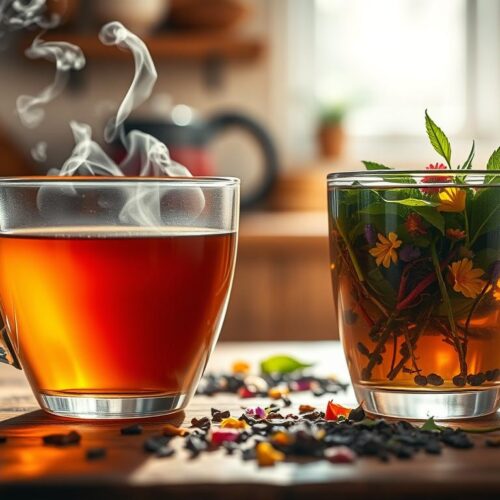

Are you trying to decide between single-estate and blended teas? Single-estate teas come from one farm or area. They show off the unique taste of that place and the tea plants grown there. Blended teas mix leaves from different places and might have extra flavors to make a consistent taste.
This article will guide you in choosing the right tea for you. It covers flavor, price, how to brew it, health benefits, and more. You’ll learn how to find the best tea that fits your taste, budget, and values.
It’s not about which one is better. The quality of tea depends on where it’s from, how it’s made, and its grade. Single-estate teas offer unique flavors from their origin. Blended teas give a balanced taste with complex notes. Remember, single-estate vs blends and single-origin teas are key when picking your favorite.
Understanding Single-Estate Tea
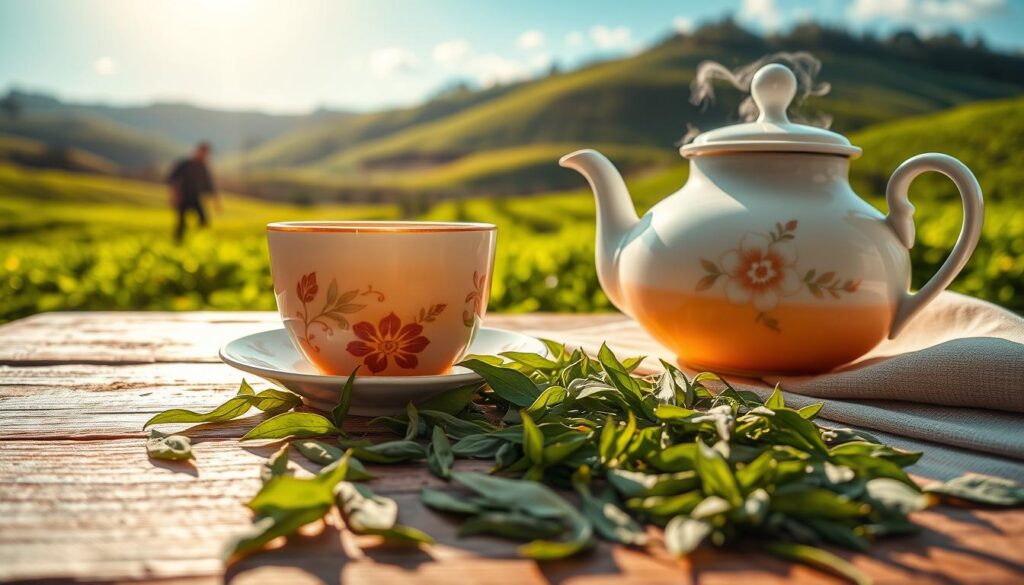
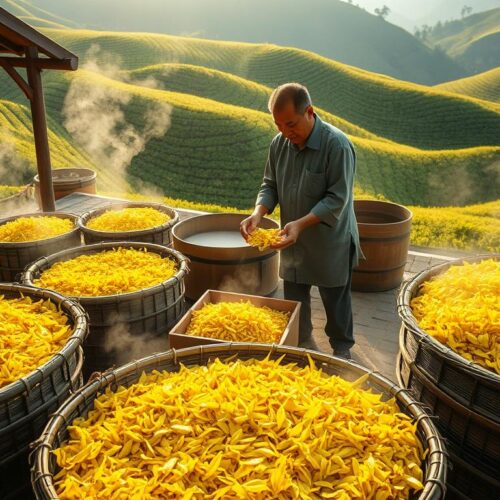
Single-estate tea comes from one place, like a garden or farm. It’s often called single-origin tea to highlight where it’s grown and how it’s made.
Some teas are both single-estate and single-cultivar. A cultivar is a special type of plant, like Yabukita or Saemidori. These plants are grown to be the same, affecting taste and how well they handle cold.
Let’s look at examples. A Darjeeling tea from the first flush shows spring’s freshness and a sweet taste. In Japan, Uji sencha with Okumidori cultivar and the farm’s name shows both origin and type.
Buying single-estate tea has its perks. You know where it comes from and can support fair trade or organic farming. It’s a pure taste of the land and season, best enjoyed without milk or sugar.
But, there are downsides. These teas cost more because they’re picked carefully and made in small batches. Weather and soil changes can also change the taste, so it might not always taste the same.
Just because it’s single-estate doesn’t mean it’s organic or fair trade. Always check the labels and what the producer says. This way, you know if it’s really from a single plant or just one garden.
The Appeal of Blended Teas
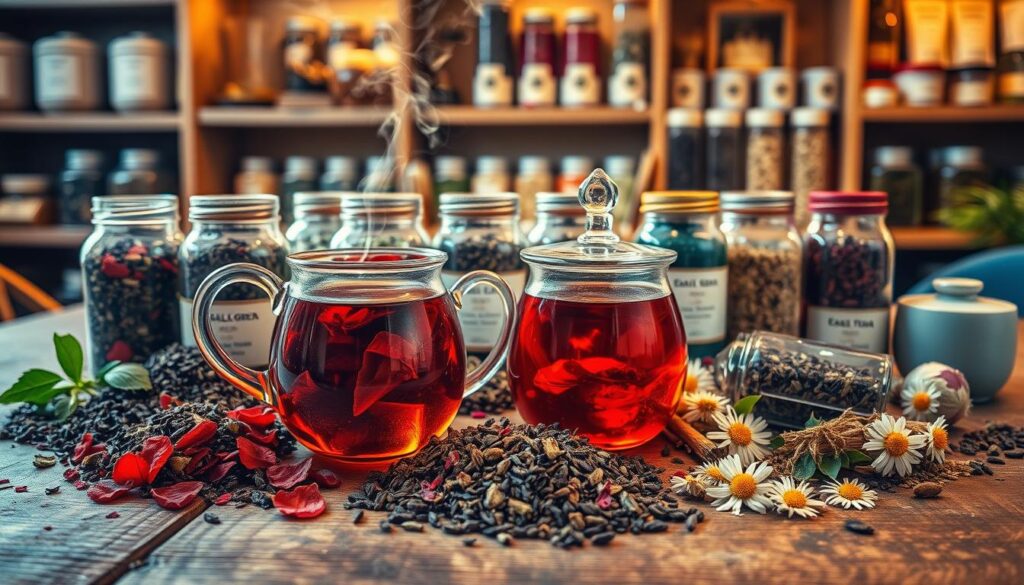
Blended teas mix leaves from different places. They can include flavors like bergamot or lavender. This variety offers many choices, from simple to complex blends.
Blenders use their skill to create the taste you enjoy. They mix teas like Assam for body and Kenyan for color. This makes blends like English Breakfast consistent.
Blends have practical benefits too. They offer reliable flavor and can be more affordable. You can find everything from strong breakfast teas to scented varieties like Earl Grey.
Blending is common in the tea world. Most grocery teabags and big brands use blends for consistent taste. Even in Japan, matcha producers blend to keep flavor steady.
How much you know about a blend can vary. Some labels share where the tea comes from, but many don’t. You might trust a brand’s reputation more than knowing the exact source.
Comparing Flavor Profiles
Single-origin flavor is like a snapshot of a place and time. Darjeeling first flush has light, floral notes and a muscatel lift that changes with the harvest. Assam is known for its malty, full-bodied tones, perfect for a morning cup.
Japanese single-cultivar sencha often has green, umami edges or a brisk astringency. This depends on the cultivar and pick.
Blends aim for consistency and appeal to many. An English Breakfast blend is robust and great with milk. Earl Grey, with bergamot, creates a citrus-floral character that many love.
Blends combine lots from different regions or seasons. This masks annual variance, making your favorite cup consistent.
Sensory variability is a key contrast. Single-estate leaves can surprise you from year to year. You might notice unique terroir-driven notes one season and a different profile the next.
Blended teas smooth out this variability. This way, your favorite cup stays familiar, sip after sip.
Complex blends offer layered results that reward repeated tasting. A well-made blend balances body, aroma, and finish by pairing complementary components. This gives you a different kind of depth than single-origin flavor, which focuses on purity and clarity of origin.
- Examples to try: Darjeeling first flush for light floral nuances.
- Earl Grey for scented, citrus-floral appeal among popular tea flavors.
- Matcha blends, made from multiple tencha lots, for steady umami and sweetness.
Your choice may also depend on format. Loose leaf vs bagged tea affects extraction and clarity of notes. Loose leaf often offers clearer terroir cues and more dynamic flavor profiles.
Bagged tea, on the other hand, is convenient and uniform. This suits many blended formulas.
Pricing Perspectives
Tea prices are influenced by several factors. Single-estate teas are pricier because they offer traceability and labor-intensive processes. This includes hand-rolling and first-flush plucks. Limited yields and estate branding also contribute to their higher cost.
Blended teas, on the other hand, have a different pricing model. They are made by mixing cheaper base teas with a bit of higher-grade leaves. This approach keeps costs low. Brands like Red Rose use bulk sourcing and standardization to offer consistent, affordable options for everyday tea drinkers.
When considering quality tea, think about your needs. A premium single-estate tea might impress at a tasting. But, an affordable blend can provide consistent flavor for your daily cup. Sometimes, it can even outshine a pricey single-estate in taste.
- Cost drivers for single-estate: traceability, hand labor, limited yields, branding.
- Cost drivers for blends: bulk sourcing, mixing for consistency, lower transparency.
- Value tip: match purchase to use — gifting and tasting favor single-estate price points; routine brewing favors affordable blends.
Looking at the cost of the best tea varieties, you’ll see a big difference. Specialty shops charge more for named estates and rare harvests. But, grocery and supermarket brands focus on stable pricing and broad appeal, not single-estate traceability.
Your budget and taste preferences are more important than the price. Try samples, buy small amounts from trusted sellers, and compare how each tea tastes. Don’t assume a higher price always means better flavor.
Brewing Techniques Compared
Start with the basics: water temperature, leaf amount, and steep time. These factors shape every cup. Use a digital thermometer and a scale to repeat results. You’ll get a clean cup when you match heat and time to the leaf.
For steeping single-origin teas, aim for lower and shorter times. Delicate teas like Darjeeling and Japanese sencha need 160–175°F for one to three minutes. Use one teaspoon per six ounces for finer leaves, a bit more for larger leaves.
Matcha brewing is unique. It requires whisking with a bamboo chasen in hot, not boiling, water. Use about one gram per ounce for a thin pour-over style, or two grams for a thicker koicha. Whisk briskly in an M shape until froth forms.
Blended tea brewing is more forgiving. Breakfast blends and robust black mixes take boiling water and longer steeps. Steep for three to five minutes and add milk or sugar without losing body. Flavored blends, like Earl Grey, brew like their base tea but may benefit from a slightly shorter steep to preserve aromatics.
When choosing between loose leaf and bagged tea, consider your method. Loose leaf offers nuanced flavors. Bagged tea infuses quickly, so steep times are shorter and results are simpler.
- Tip 1: Use filtered water for clarity of taste.
- Tip 2: Preheat your teaware to keep temperature steady.
- Tip 3: Adjust leaf amount if the cup tastes weak or bitter.
Practical adjustments matter. If a single-origin cup tastes vegetal, shorten the steep. If a blend tastes thin, raise the temperature or add more leaf. Your palate will guide minor tweaks.
Experiment with these methods to find what you prefer. Blended tea brewing tolerates bold changes. Precise control rewards steeping single-origin and matcha brewing. Over time, you’ll learn the sweet spot for aroma, body, and balance.
Health Benefits of Each Type
Tea has compounds that affect your body and mind. Caffeine and theanine work together to boost alertness without jitters. Polyphenols are found in all teas, with green tea’s catechins and black tea’s theaflavins being key.
Choosing between single-estate and blended teas doesn’t change the health benefits if the leaf type is the same. A single-estate green tea will have the same benefits as a blended one, as long as it’s processed and stored well. Some estates offer organic options if they’re certified.
Blends combine the strengths of their parts. A mix of oolong and black leaves will give you a unique antioxidant profile. But flavored blends might add calories or allergens, so always check the ingredients.
- For lower caffeine, choose green varieties and shorter steeps.
- For stronger antioxidant intake, pick high-quality green or robust black brews.
- If you worry about pesticides, seek organic tea options with clear certification.
Matcha is a concentrated mix of caffeine and theanine because you drink the whole leaf. It’s great for sustained focus. But remember, matcha packs more active compounds per cup than steeped tea.
To get the most out of your tea, choose single-estate or blended based on taste and quality. Opt for certified organic if you’re concerned about pesticides. Adjust steep time and leaf grade to control caffeine and enhance the benefits of green or black tea.
Environmental Impact
Your tea’s origin tells a story of traceability and environmental care. Single-estate teas show you the farm’s practices, labor conditions, and certifications. This lets you see if the tea is organic or fair-trade.
Blended teas might taste the same, but their origins can be hidden. Blends from different places make it hard to know where each leaf comes from. This can make it difficult to find sustainable tea options.
Choosing the right plants and how they’re grown matters for the environment. Some plants, like Yabukita in Japan, need fewer pesticides. Hand-rolling tea uses more labor but less energy than machines. Think about these when judging a tea’s environmental impact.
- Choose organic tea for fewer synthetic inputs and better soil and water protection.
- Opt for fair-trade tea if you care about social responsibility and worker welfare.
- For blends, look for brands with multi-origin details or third-party certifications for more transparency.
There are practical steps to support sustainability. Look for brands that share farm maps or stories of their producers. If you prefer blends, choose ones with Rainforest Alliance, Fair Trade, or organic certifications. This way, you can find tea that aligns with your values.
Availability and Accessibility
You can find single-estate teas in specialty shops, online, and directly from farms. These teas are often from small batches or seasonal harvests. So, you might only have a short time to buy certain vintages.
Mainstream tea brands are everywhere in supermarkets and convenience stores. If you’re looking for something quick, you’ll find English Breakfast and Earl Grey in teabags. Brands like Twinings and Lipton are common.
When deciding between loose leaf and bagged tea, think about your needs. Loose leaf is more common in specialty teas and single-estate releases. Bagged tea is better for everyday use and is found in mainstream brands.
Your choice depends on how you plan to use the tea. For daily drinking, blends are easy to find and affordable. For special tastings, single-estate teas offer a deeper experience. You can find these in specialty stores or online from estates that share their story.
- Where to buy single-estate: specialty stores, estate websites, and tea festivals.
- Where to buy blends: supermarkets, big-box stores, and most online marketplaces.
- Disclosure: blends often omit estate-level sourcing while single-estate products usually list provenance and processing details.
When choosing between availability and preference, pick what fits your lifestyle. If you love the story behind the tea, look for single-estate options. For convenience and value, mainstream brands and blends are a good choice.
How to Choose Based on Your Preferences
First, think about what you want from your tea. If you like a steady taste and value, blends are great. They work well with milk or sugar and are perfect for busy days.
If you’re up for a taste adventure, single-estate tea is the way to go. It lets you explore different flavors and changes with each harvest. You’ll find variety, not the same taste every time.
Here are some simple tips to help you decide:
- Taste adventure vs consistency — pick single-estate for exploration or blends for predictability.
- Budget — blends often stretch a dollar farther for daily drinking.
- Brewing habits — blends handle milk and sugar best; single-estate shines with careful, plain infusion.
- Interest in provenance and sustainability — seek sellers who disclose origin and farming practices.
- Frequency of drinking — choose an everyday blend and reserve single-estate for tastings.
Try a mix of both. Use a dependable blend for your morning and save single-estate for special tastings. Small tins and samplers make trying new teas affordable.
When shopping, choose trusted dealers and well-known brands. Look for names like Marukyu Koyamaen or Ippodo. They offer high-quality tea with clear origins.
For tips on choosing tea, start small and keep notes. Try different steep times and leaf weights. Pair tastings with plain water to clean your palate. For complex flavors, try several single-estate teas. For daily reliability, test a few blends until you find the right one.
Storage and Shelf Life
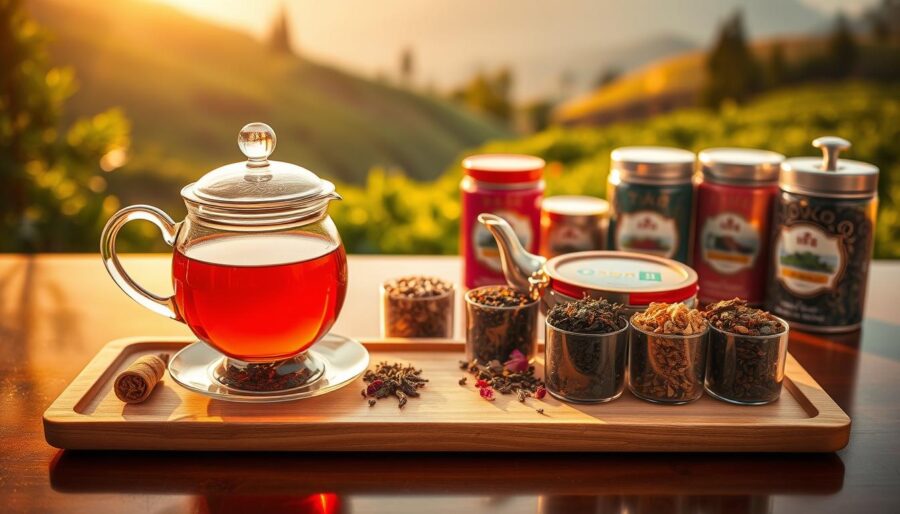
To keep your tea tasting great, protect it from light, heat, moisture, and strong smells. Use containers made of tin, stainless steel, or dark glass. Store them in a cool, dark place like a pantry or cupboard, away from the stove or sunlight.
For teas like first flush Darjeeling or Japanese sencha, brew them within months to a year for the best taste. These teas spoil faster, so buy small amounts and store them carefully to keep their aroma.
Black blends and many commercial teas last longer. Their flavor stays good because they don’t spoil as quickly. Bagged tea’s shelf life depends on the packaging; unopened foil pouches keep it fresher than paper boxes.
- Matcha and powdered teas spoil fast. Store them airtight and follow the vendor’s advice on refrigeration.
- Buy smaller amounts of single-origin teas to avoid stale ones.
- Keep herbs and spices away from your tea to preserve its flavor.
When you open a package, write down the date and use the tea within the suggested time. For loose leaf storage, use dark jars and avoid bright shelves. Rotate your tea so older tins get used first and fresher ones stay good.
Tea blends in teabags use fannings that age better but can lose some flavors over time. For longer storage, choose sealed containers and cool places. Small actions like these can greatly improve your tea’s flavor for daily enjoyment.
Conclusion: Choosing Your Ideal Tea
When picking tea, think about what matters most to you. Do you prefer the unique taste of single-estate tea or the consistent flavor of blends? Single-estate teas let you taste the distinct flavors of a specific place. For example, a first flush Darjeeling or a named Japanese sencha.
On the other hand, blends are great for everyday drinking. They offer a mix of flavors that many people enjoy. Classic breakfast blends are a perfect example.
Quality in tea isn’t just about where it comes from. It’s also about the skill of the producer and the quality of the leaves. In the debate between single-estate teas and blends, neither is better. A well-made Assam blend can be more enjoyable than a low-quality single-estate tea.
For everyday drinking, blends are a good choice. They offer a consistent taste. But for a unique tasting experience, single-estate teas are the way to go. They let you explore the flavors of different places.
Try a reliable breakfast blend for your morning tea. Then, taste a first flush Darjeeling or a quality sencha side-by-side. Use the right brewing techniques to see how they differ.