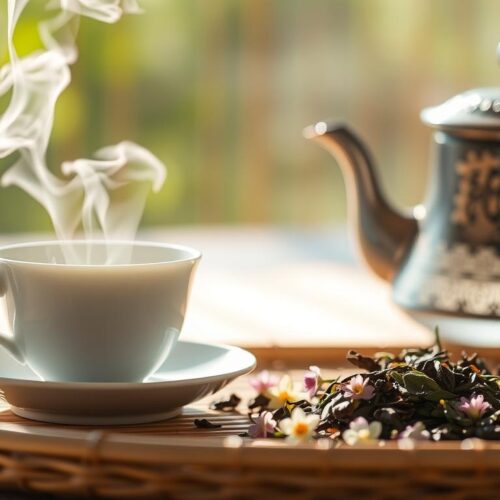


Your morning tea ritual is a special practice that brings calm and energy to your day. It’s a small act of self-care that lets you breathe and notice your surroundings. It helps you set your intentions before the day gets busy.
Designing your morning tea ritual is like creating a daily tradition inspired by the Wake Up Call series. It makes the morning feel sacred and turns everyday tasks into meaningful moments. A warm cup of tea offers scents, warmth, tastes, and a comforting weight in your hands, reminding you to stay present.
Try out different tea blends, including those made with organic fruits, flowers, and herbs. Brands like Bonne Maman offer handmade herbal blends. Find flavors that match your mood by sampling a few.
Pairing your tea with a simple Ricotta and Raspberry Toast adds to the experience. It combines whole-milk ricotta, honey, sourdough, and Bonne Maman Raspberry Preserves. This turns your ritual into a feast for your senses, nourishing both your body and mind.
This article will help you choose the right tea, set the perfect timing, and create the right ambiance. We’ll also cover the tools you need, how to brew your tea, and the importance of mindfulness. We’ll talk about nutrition, the social side of tea, personalizing your ritual, and how to evaluate your experience. Follow these steps to create a morning tea ritual that fits your life and becomes a cherished daily habit.
The Importance of a Morning Tea Ritual
Starting your day with a tea ritual can bring calm. It’s about setting a routine that signals to your brain it’s time to relax. Sitting in the same spot, using the same cup, or kettle, tells your body it’s time to unwind.
Tea rituals offer more than just a calm mood. They help manage anxiety, backed by science. They turn tea into a moment for meditation, journaling, or deep breathing. These short breaks can stop worries and bring balance to your day.
Regular tea habits train your nervous system. Doing the same thing in the same place links calm to that spot. Over time, this ritual prepares your mind for calm, even before you start drinking.
Marie Kondo takes breaks for tea up to three times a day. Use your own tea breaks to mark the start or end of tasks. A short tea habit can signal a change in your day.
Tea gives you steady focus without the highs and lows of other stimulants. True teas have L-theanine, which smooths out caffeine’s effects. This makes your mind clearer and calmer, without the crash later.
| Ritual Element | How It Helps | Practical Tip |
|---|---|---|
| Consistent spot | Builds context for calm and lowers stress responses | Choose a chair by a window and use it only for tea |
| Same teaware | Creates sensory cues that trigger relaxation | Pick a favorite mug or teapot you enjoy touching |
| Short rituals | Turns tea into a mindfulness anchor during transitions | Try five minutes of breathing or a quick journal note |
| Tea choice | Supports steady tea energy and clearer focus | Opt for green or black tea for L-theanine benefits |
Choosing the Right Tea for Your Ritual
First, understand the difference between true teas and herbal tea. True teas, like black, green, and white, have caffeine and L-theanine. This mix gives you alertness without the jitters. Herbal tea, or tisane, is usually caffeine-free and is better for a gentle start.
Choose based on what you need. For a boost, go for black or green tea. They offer steady energy for focus and activity. For calm or mood support, pick teas like peppermint, chamomile, lemon balm, or rooibos.
Try named blends to help decide. Bonne Maman Vitality blend is great for a lively start with its peppermint, hibiscus, and rosehip. For comfort, Contentment blend with star anise and lemon balm is soothing.
Consider caffeine sensitivity. Even decaf teas might have a bit of caffeine. If caffeine bothers you, choose caffeine-free herbal teas or rooibos.
Use your senses to refine your tea habits. Close your eyes, breathe in different scents, and see what feels right each morning. This helps you pick the perfect tea and makes your morning ritual special.
Selecting the Best Time for Your Tea
Find a moment that clearly marks the start of your day. You can make tea after cleaning up, after eating, or as your first quiet moment. This helps your brain adjust and makes your tea time special.
Marie Kondo suggests a short tea break after morning tasks to center yourself. She recommends three teas a day—morning, afternoon, and before bed—to stay balanced. Use this as a guide to plan your tea times.
If you need a boost at work, choose a strong tea like Assam or black. For focus mid-morning, try a gentler green or low-caffeine tea. Save herbal teas for later to keep your sleep good and maintain tea energy all day.
Try different tea frequencies. You might drink tea daily, several times a day, or only occasionally. Regular tea times train your brain to associate them with calm and clarity.
Set up different spots for morning and afternoon or evening teas. A bright kitchen table can signal work time. A cozy armchair invites rest. Having specific places helps you feel the right mood for each tea.
Keep a simple checklist to test your tea times. Note how alert you feel, how work goes, and how sleep is. Adjust your timing and tea type until it fits your rhythm. Small changes can lead to big improvements in focus and calm.
Setting the Perfect Ambiance
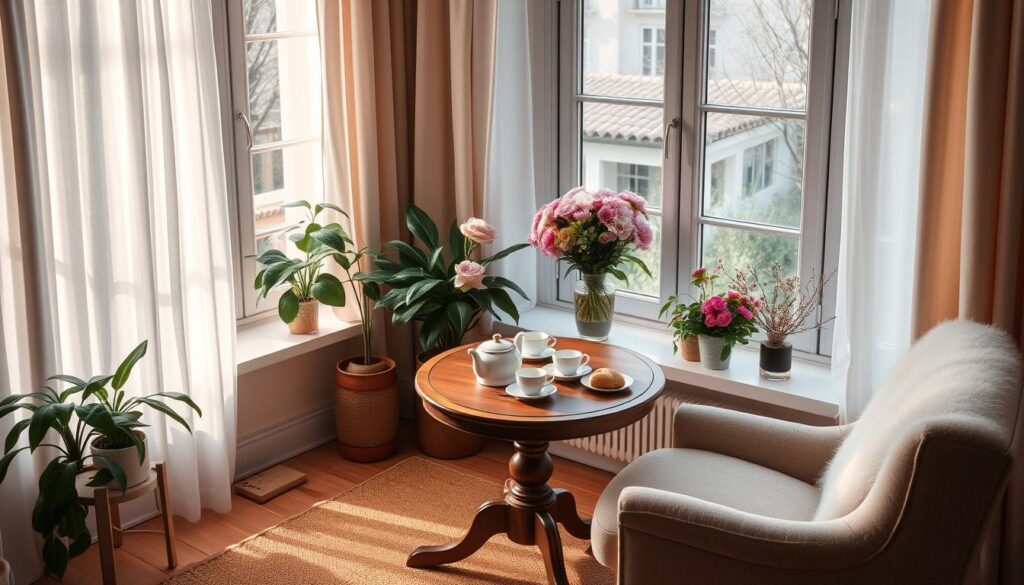
Your senses set the stage for a calm morning. Light from a window, a favorite mug, soft sounds, and a subtle scent shape how your tea feels. Aim for gentle natural light and a short playlist to center your attention on the moment.
Choose a dedicated spot for your ritual. A kitchen nook, a chair by the window, a porch, or a small shelf corner can act as a reliable cue. When you return to the same place each morning, the morning tea ritual ambiance becomes a habit that invites steadiness into your day.
Low-cost touches lift the mood without much effort. Place seasonal flowers like tulips or sunflowers, keep a candle or an essential-oil diffuser, and set a small tray with your teapot and mug. These items create visual order and boost the tea energy you feel while sipping.
If your home is noisy or full of activity, make small adjustments. Steal five minutes to hold your mug, breathe, and be present. Short, focused pauses deliver self-care tea benefits and can lower stress even when time is tight.
Minimize distractions to protect the ritual. Put your phone out of reach, silence notifications, and let this be a pocket of silence. Your attention is the key ingredient that turns tea into a real reset for body and mind.
| Element | Simple Options | Why It Works |
|---|---|---|
| Light | Window light, soft lamp | Natural light supports alertness and calm, shaping the morning tea ritual ambiance. |
| Sound | Short playlist, piano, nature sounds | Soft audio reduces stress and enhances tea energy without pulling focus. |
| Scent | Candle, diffuser, fresh flowers | Pleasant scents anchor the moment and make self-care tea feel sacred. |
| Visuals | Tray, favorite mug, neat shelf | Ordered visuals calm the mind and reinforce the act of intentional sipping. |
| Practical tips | Phone away, brief timer, consistent spot | Small rules protect the ritual and help sustain tea energy across busy mornings. |
Essential Tools for Your Morning Tea
First, get a good kettle, either electric or stovetop. It heats water fast. A timer or clock is key for the perfect steeping time. These basics are the heart of your morning tea setup.
Choose teaware that makes you happy and fits your morning. A teapot or a tea infuser mug is great for quick mornings. Use a favorite mug for calm mornings and a sturdy one for busy days.
For loose-leaf tea, a good tea strainer and infuser are essential. Stainless steel or silicone infusers are perfect for daily use. A ceramic or glass teapot adds a touch of elegance to your slow, mindful brews.
If you love matcha, get a matcha whisk and bowl. Marie Kondo says matcha ceremonies are meditative. Choose tools that help you relax and enjoy your self-care tea time.
Think about practical choices too. An all-in-one infuser mug saves time, a small teapot is great for sharing, and a matching set adds to the ceremony. Teabloom offers eco-friendly teaware for those who care about the planet.
Use specific cups for different rituals. A special cup for calm signals your brain to slow down. Your teaware and mug choices help make your morning ritual a habit.
Brewing Techniques for Optimal Flavor
Learn the basics of water temperature, steep time, and leaf-to-water ratio for the best morning tea. True teas like green, white, oolong, and black need different temperatures. Green tea likes cooler water, while herbal tisanes can handle boiling.
Use a teaspoon or kitchen scale to measure your loose-leaf tea. Start with 2 to 3 grams per 8-ounce cup. This ratio helps keep flavors balanced and prevents bitterness.
Steeping time is key. Short steeps give a lighter flavor, while longer ones add body but can be astringent. Remove the leaves right at the end of the recommended time to avoid over-extraction.
Watch the leaves unfurl as a mindful cue. Pour near-boiling water into your mug or teapot, observe the steam and movement, then start your timer. This small ritual links brewing techniques for optimal flavor with quiet focus.
Experiment with brew strength to match your mood. Choose a stronger infusion for sharp morning focus. Pick a lighter brew for a gentle awakening. Adjust steep time and leaf weight in small steps until you find the perfect balance.
Use quality ingredients for cleaner flavor. Opt for organic, non-GMO blends when possible. Brands like Harney & Sons and Celestial Seasonings offer reliable herbal and classic options that support a pure morning tea ritual.
| Tea Type | Water Temp (°F) | Steep Time | Leaf-to-Water Ratio | Best Use in Ritual |
|---|---|---|---|---|
| Green Tea | 150–175 | 1.5–3 minutes | 2 g / 8 oz | Light, calming start to your morning tea ritual |
| White Tea | 160–185 | 2–4 minutes | 2.5 g / 8 oz | Delicate flavor for mindful sipping |
| Oolong | 185–205 | 3–5 minutes | 3 g / 8 oz | Balanced energy with complex aroma |
| Black Tea | 200–212 | 3–5 minutes | 3 g / 8 oz | Strong brew for focused mornings |
| Herbal Tisane | 212 | 5–7 minutes | 3–4 g / 8 oz | Soothing, caffeine-free option |
Enhancing Your Tea Experience
Pairing tea with a small, thoughtful bite makes your morning ritual feel richer. Try Ricotta and Raspberry Toast on sourdough with Bonne Maman raspberry preserves, a drizzle of honey and fresh basil. This turns a simple cup into a multisensory start.
Little luxuries lift mood and focus. Edible flowers on a chamomile or hibiscus cup add color. Light a soy candle you love. Play a calm playlist and serve tea on a special tray to celebrate the moment as self-care tea time.
Experiment with seasonal blends so your tea energy shifts with the year. Mix dried fruit, rose petals, and hibiscus in summer. Blend cinnamon, orange peel, and cloves for cooler months. These herbal bouquets keep the ritual fresh and surprising.
Customize additions to match the tea type. Add milk or a splash of cream to robust black teas. Stir honey into floral or fruit blends. A squeeze of lemon lifts green tea. These small choices enhance aroma, mouthfeel, and balance.
Sharing tea turns solo practice into a gentle social ritual. Invite a friend or partner for a short pause. A shared cup encourages conversation and cultivates connection while preserving the calm you built with your self-care tea habits.
Mindfulness Practices During Tea Time

Set aside five to fifteen minutes each morning for your tea. See this time as a special morning ritual. Turn off your phone and ignore notifications. This helps you focus on the moment and enjoy your tea as a self-care act.
Start with deep breaths as you hold your cup. Notice the smell and feel the warmth. Pay attention to the taste, texture, and temperature. These actions help you stay present and make tea time a regular mindfulness practice.
After a few sips, try journaling for a minute. Write about your feelings or list three things you’re thankful for. This practice connects your tea time to feelings of calm. Over time, your tea time becomes a signal for relaxation.
Try meditative tasks like whisking matcha. This requires focus and rhythm. It’s like a simple meditation that slows you down and makes you more aware of the moment.
Use tea time to transition between activities. It can help you reset and focus. These small rituals add structure to your day and improve your concentration.
Integrate creative activities like reading a poem or sitting in silence. Change up your practices to keep things interesting. Consistency is key; regular rituals make it easier to stay present, even when life gets busy.
| Practice | Duration | Purpose | How to Start |
|---|---|---|---|
| Deep breathing with aroma | 1–2 minutes | Center attention, reduce stress | Inhale slowly, note scent, exhale fully |
| Sensory scanning | 2–4 minutes | Increase presence, savor flavor | Focus on taste, texture, warmth |
| Short journaling or gratitude | 3–5 minutes | Shift mindset, boost mood | Write one line or three gratitudes |
| Matcha whisking | 3–7 minutes | Practice mindful movement | Whisk slowly, notice rhythm |
| Silent reflection or poetry | 5–10 minutes | Calm the mind, spark creativity | Read a short poem or sit quietly |
The Role of Tea in Morning Nutrition
Tea can wake you up gently, unlike coffee. It has L-theanine, which smooths out the caffeine effect. This helps you stay focused without the crash coffee can give. It’s a great way to start your day with energy.
Green tea is full of antioxidants like catechins. Black tea has tannins that add flavor and health benefits. Herbal teas with rosehip or hibiscus add vitamin C and fruity tastes. These make tea a great choice for breakfast.
Pair tea with foods that keep your energy up. Try ricotta on whole-grain toast, Greek yogurt with nuts, or almonds. These foods work well with tea and help avoid energy drops later.
Be careful with the temperature and timing of your tea. Drinking very hot tea after acidic or sweet foods can hurt your throat or upset your stomach. Let your tea cool a bit and balance the flavors for a comfortable pairing.
Think about how much caffeine you can handle before choosing a tea. If you’re sensitive, go for a low-caffeine black tea, a lightly oxidized oolong, or a caffeine-free herbal tea. These options help you sleep well at night while giving you the morning energy you need.
| Tea Type | Key Benefits | Best Food Pairings | Caffeine Note |
|---|---|---|---|
| Green Tea | High in catechins, supports alertness with L-theanine | Oatmeal, ricotta toast, fruit | Moderate caffeine; gentle lift |
| Black Tea | Robust flavor, tannins, steady energy | Whole-grain bread, eggs, yogurt | Higher caffeine; pair with protein if sensitive |
| Oolong | Balance of flavor and antioxidants | Nuts, seeds, light cheeses | Variable caffeine; mid-range energy |
| Herbal Tisane (hibiscus, rosehip) | Vitamin C, caffeine-free options, flavorful | Fresh fruit, yogurt, whole-grain muffins | Usually caffeine-free; best for late mornings |
Social Aspects of Morning Tea
Tea invites us to share quiet, thoughtful moments. It’s different from coffee, which can be more lively. This makes tea perfect for gentle chats with loved ones or guests.
Marie Kondo says tea meetings are more relaxed than office ones. Hosting a morning tea can turn the focus to enjoying simple things like food and calm conversations.
Start small rituals to bring people together. A weekend brunch with friends, paired with Bonne Maman preserves and herbal teas, is a great idea. Sharing a morning cup with your partner can also create a special bond.
Make sure everyone can enjoy tea. Offer caffeine-free options for kids or those who can’t handle caffeine. Use teaware that’s easy for groups, like a medium teapot and matching cups, to make sharing tea a breeze.
Be flexible with your tea habits. Some days, you might enjoy a quiet moment alone. Other days, sharing a cup of tea can bring people closer and strengthen relationships.
Personalizing Your Morning Tea Ritual
You can make your morning tea fit your life and mood. Start by picking teas that feel right for you each day. Keep Japanese green, black, white, and herbal teas in a spot you can easily reach.
Make small rituals to add comfort and continuity. Use a special cup, write in a journal for five minutes, or add a small seasonal flower. These small acts make your tea time special.
Try different blends, brewing methods, and pairings. For energy, try peppermint-hibiscus. For calm, use star anise with lemon balm. For focus, whisk matcha. For a gentle release, steep in a teapot. Swap a scone for fresh fruit to see what works best for you.
Match your tea time to your schedule. Short, daily habits work better than long sessions you skip. Keep things simple with an infuser mug or ready blends for busy mornings.
Track what works best and change weekly. Note which teas make you feel good, which tools save time, and which rituals bring joy. Personalizing your morning tea means adjusting everything to fit your mood and routine.
| Element to Personalize | Simple Option | Elevated Option |
|---|---|---|
| Tea selection | Ready herbal blend | Curated drawer: Japanese green, Darjeeling, white, herbal |
| Brewing method | Infuser mug | Teapot steeping or matcha whisking |
| Time | 3–5 minutes on busy days | 15–20 minutes for slow mornings |
| Small rituals | Designated cup | Journaling, seasonal flowers, mindful breaths |
| Food pairing | Toast or fruit | Light baked goods, yogurt, savory bites |
| Accessibility | Pre-measured blends | Loose-leaf selection with storage jars |
Evaluating and Adjusting Your Ritual
To keep your morning tea ritual fresh, start by tracking it. Note how you feel after drinking tea. Check for energy, calm, and focus. Record what helps you stay present and what gets in the way, like time or distractions.
Make small changes to improve your ritual. Try a new tea, adjust the time, or change where you sit. These small steps help you find what works best for you without changing too much.
Consistency is key, as it trains your brain to connect the ritual with calm. Even brief rituals are beneficial. Refresh your ritual now and then with new teas or settings to keep it exciting.
See your ritual as something that grows and changes. Regularly check and tweak it to match your wellness goals. Over time, these small changes will make your tea ritual a reliable part of your day.