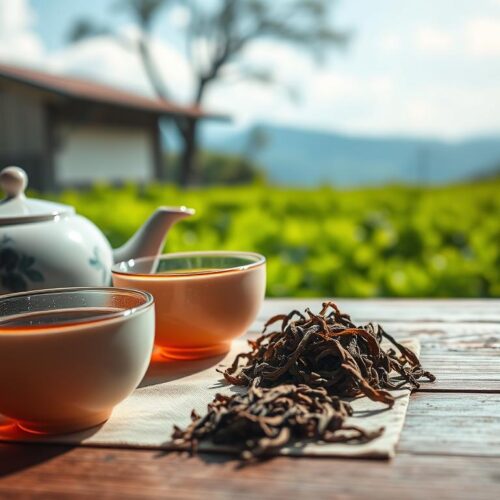

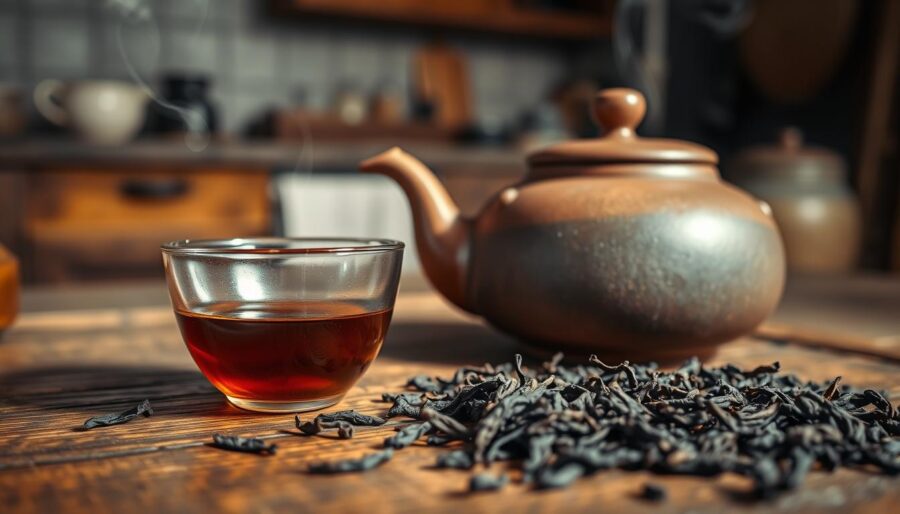
Smoked teas come in many forms, from well-known favorites to rare finds. This piece begins with Lapsang Souchong smoked tea. It highlights what makes smoked black tea special.
Lapsang Souchong is a top-notch black tea from Fujian province, mainly from the Wuyi (Wu Yi Shan) mountains. Producers dry big leaves over pine wood smoke in bamboo baskets for eight to ten hours. This process makes the leaves lose about 95% of their water and gain a unique smokey taste.
Smoked tea styles vary: pine is traditional, but some use spruce or cypress. Lapsang Souchong is also known as Zhengshan Xiaozhong or Russian Caravan in different places.
Next, you’ll discover about flavor profiles, brewing methods, health benefits, cultural importance, food pairings, sourcing, and storage. Whether you’re looking for the best smoked tea for your collection or a unique gift, this guide is here to help. It covers high-quality and organic options for tea enthusiasts in the United States.
Introduction to Smoked Teas
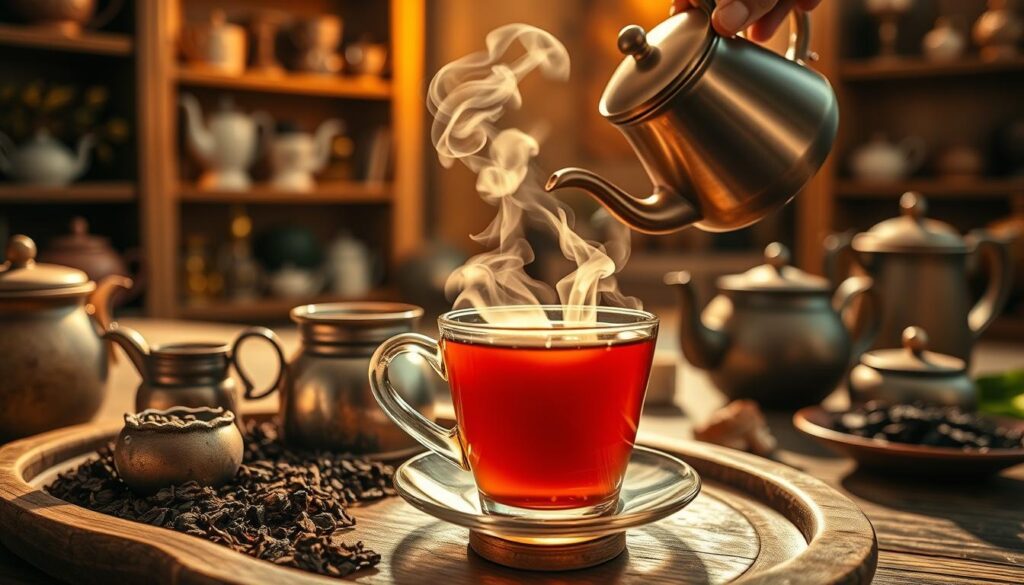
Smoked teas are known for their unique scent. They get their wood-fire aroma during drying or processing, not from added flavorings. Lapsang Souchong is the classic example of a smoked black tea.
There are two stories about how smoked teas started in China. One is about producers in Fujian drying leaves over pine smoke to meet a late shipment to England. The other is about workers drying leaves over an open fire during an attack.
Smoked black tea is special in the world of food and tea. It has a strong, savory taste and a long-lasting finish. Many tea fans find it luxurious and intriguing.
These teas are grown near the Wuyi mountains in Fujian. But, you can also find them in other parts of China and Taiwan. Artisanal tea makers make small batches to keep the smoke flavors.
When you try smoked tea, expect a mix of smokiness and a solid black tea taste. You might also notice some fruit hints and a lasting aftertaste. These are common in specialty teas.
What is Lapsang Souchong?
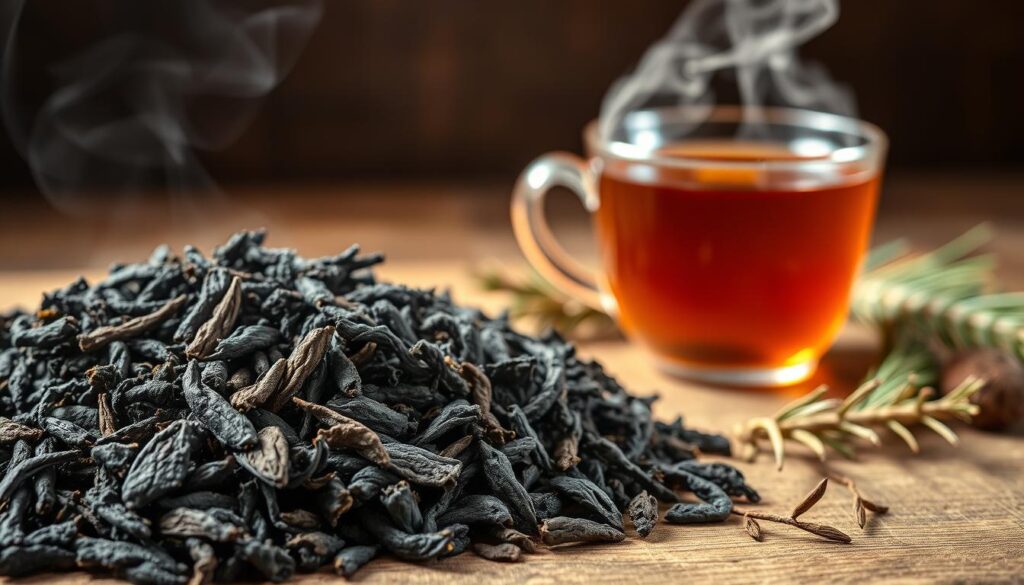
Lapsang Souchong, also known as Zhengshan Xiaozhong, is a smoked black tea from Wuyi Shan in Fujian Province, China. It has a bold, smoky taste that makes it stand out from other black teas.
In markets and tea shops, it’s often called Russian Caravan smoked tea or just smoked tea. These names are used to describe blends that capture the long, campfire-like aroma of classic Zhengshan Xiaozhong.
Tea production starts with picking large lower leaves from the tea plant. These leaves are then withered, rolled, and oxidized to create a full black-tea flavor.
Next, the leaves are placed in bamboo baskets and exposed to a pine fire for 8–10 hours. The smoke dries the leaves, losing about 95% of their water and gaining a smoky aroma.
While pine is the traditional fuel, some producers use spruce or cypress to add different smoky notes. These changes alter the taste but keep the tea’s core identity.
High-quality Lapsang Souchong smoked tea is loved in Europe and the Americas for its strong smoke and thick body. Its strong, lasting finish makes it unforgettable in any tasting.
Flavor Profile of Lapsang Souchong
When you first smell the tea, you’ll notice a strong pine-smoke aroma. This smoky scent sits on top of a strong black-tea base. It makes the tea stand out compared to Darjeeling, Ceylon, or Assam.
The taste is rich and bold, with a thick body that fills your mouth. You’ll feel some bitterness and astringency, but they don’t overwhelm you. The smoky, sweet, and savory flavors balance out the harsher notes, leaving a smooth finish.
Underneath the smokiness, you might find hints of fruit. This depends on when the tea was picked and how it was stored. You could also taste spruce or resin if pine or cypress wood was used for drying.
- Pronounced pine-smoke aroma that defines the tea
- Robust black-tea base for depth and structure
- Thick body with a long-lasting aftertaste
- Subtle fruit and resinous hints beneath the smoke
The unique smokey flavor of Lapsang Souchong is great for more than just drinking. You can add a bit to broths, soups, or vegetable purees. It adds a wood-fire taste without using heavy oils or liquid smoke. Chefs and home cooks love it for this reason.
Health Benefits of Lapsang Souchong
Lapsang Souchong is a warm black tea with many benefits. It has compounds that help your heart and metabolism. These are thanks to its antioxidants.
This tea has less caffeine than others, so it won’t keep you awake at night. If you’re worried about caffeine, try steeping it for less time. Also, use cooler water to get even less caffeine.
The smoky smell comes from burning pinewood. It doesn’t add vitamins or minerals. But, if you’re concerned about pesticides, choose organic tea.
You can enjoy it on its own or mix it with other teas. Adding ginger or cinnamon can make it even more comforting. It’s great for digestion and feeling cozy.
- Antioxidant properties: supports cellular protection and a healthy inflammatory response.
- Low theine tea option: suitable for multiple daily cups for many tea drinkers.
- Flexible use: works well as a plain brew or mixed into herbal blends for taste and mild benefits.
But, if you have lung issues or are sensitive to smoke, be careful. Always talk to a doctor first. And choose the best organic tea for a clean cup every day.
Brewing Lapsang Souchong
For the best taste, use loose-leaf Lapsang Souchong. Loose leaf keeps the smoky flavor and full body that tea bags often miss. Keep your leaves in an airtight container, away from light, to preserve the scent.
For a true Gong Fu style, use glass or ceramic teaware Gaiwan. This lets you see the tea’s color. Use about 3 g (1½ teaspoons) for each infusion. Heat the water to 100°C (212°F) for this strong black tea.
Here’s a quick steeping guide for Gong Fu style:
- First steep: 1 minute
- Second steep: 1–2 minutes
- Third steep: 3 minutes
- Fourth steep: 4–5 minutes
With this method, you can get four great infusions. Each steep brings out different flavors, from smoke and pine to sweet malt.
If you prefer a regular cup, steep for 2–3 minutes in a teapot or infuser. Use water that’s just off boil. Adjust the steep time to your liking for intensity and smoke.
Hot water is key for many teas, but Gong Fu for Lapsang Souchong uses boiling water. This is because of the leaf’s structure.
Loose-leaf is better for full flavor. A glass or ceramic teapot or gaiwan shows the tea’s color. It lets you adjust steeping times. Gong Fu style with short steeps brings out nuances, while a standard cup gives a bold taste.
Types of Smoked Teas
There’s a wide range of smoked teas, from traditional to new. Classic Lapsang Souchong, known as pine-smoked Zhengshan Xiaozhong from Fujian, is a key example.
Russian Caravan blends mix Lapsang with Keemun and other blacks. These blends take you on a journey to Russia, with a smoky flavor to enjoy.
Smoked oolong is rare, coming from Taiwan and some Fujian producers. It combines wood-fired notes with oolong’s natural flavors, like floral and fruity.
Modern makers create unique smoked teas with woods like spruce or cypress. You can find black teas and oolongs with a light or strong smoky taste.
- Fujian (Wuyi) — the home of many pine-smoked teas and high quality tea.
- Taiwan — known for small-batch smoked oolong and roasted teas.
- Boutique tea shops — they often label teas as “smoked,” “Russian Caravan,” or by origin.
Smoke intensity and wood type create different tastes. Lapsang is strong and resinous, while smoked oolong is subtle. You can pick the smokiness you like, from bold to light.
When buying, look for clear labels and sources. Small producers and trusted shops offer tasting notes and origin info to help you choose.
Exploring Rare Smoked Oolongs
Rare smoked oolongs blend oolong craftsmanship with a hint of smoke. These teas are partially oxidized, rolled carefully, and smoked lightly. This process is milder than Lapsang Souchong.
The taste of smoked oolong tea is rich and floral or roasted. A soft smoke adds depth, making the flavors layered. It’s complex but not overpowering.
Artisanal tea makers in Taiwan and China create these rare oolongs in small batches. They use gentle woods or controlled smoke. This preserves the tea’s floral and fruity notes while adding depth.
To brew, treat smoked oolong like premium oolongs. Use short gong fu steeps to enjoy its changing flavors. Each sip can go from floral to toasty, with a subtle smokiness.
When trying these teas, look for balance. The best smoked oolongs enhance food and conversation without hiding delicate scents. Small-batch teas offer a nuanced taste experience.
The Cultural Significance of Smoked Teas
The story of Lapsang Souchong is filled with tea legends. One legend says producers dried leaves over pine smoke to meet a late shipment to England. Another tale tells of workers saving a harvest by drying leaves over a wood fire during an attack. These stories add to the history of smoked tea and its mythic origins in Chinese tea culture.
For centuries, Lapsang Souchong was seen as a luxury. British merchants loved its strong aroma, and it was a favorite among European connoisseurs. It became popular in the United States and other places, while keeping its artisanal charm in many tea circles.
The history of Russian Caravan links smoked tea to long trade routes. Caravan drivers and tea traders preferred bold, smoky teas for their travels. This helped spread Lapsang Souchong worldwide, making it famous among travelers and collectors.
Today, smoked tea is found in fancy kitchens and in experimental cooking. Chefs use it to add a smoky flavor to sauces, butter, and marinades. This shows how tradition and innovation come together in modern cooking, blending Chinese tea culture with new culinary trends.
- Tea legends give Lapsang Souchong cultural depth and storytelling value.
- The history of smoked tea maps trade, taste, and technique across continents.
- Russian Caravan history explains part of the tea’s rise to international fame.
Exploring smoked teas connects you to a living tradition. The culture of Lapsang Souchong, found in markets and tea rooms, inspires brewers, cooks, and tea enthusiasts. They all appreciate the bold flavors and rich history of smoked teas.
Pairing Smoked Teas with Food
Smoked tea can be the star of your meals. It pairs well with grilled or smoked fish. The tea’s smoky flavor complements the char, making the dish even better.
For red meats and barbecue, smoked tea is a perfect match. Try it with steak, lamb, or slow-smoked brisket. The tea’s smokiness holds up against strong flavors.
Charcuterie boards and strong cheeses are also great matches. Smoked tea pairs well with creamy cheeses like Camembert or aged cheddar. Add sweet elements like quince paste or honeyed nuts to balance the smokiness.
Smoked tea can also be used as an ingredient. Steep Lapsang Souchong in broths or purees for a wood-fire aroma. Use it to make reductions, brines, or finishing sauces for meat and vegetables.
Smoked tea is also great for marinades and glazes. Brew a strong infusion, cool it, then mix with soy, vinegar, or maple. This creates a glaze for pork or roasted carrots.
- Smoked tea with meat: brine chicken or duck with tea for subtle smoke.
- Soup and puree: steep leaves for a smoky vegetable or mushroom soup.
- Dessert balance: serve with slightly sweet cakes or chocolate for contrast.
Timing is key when enjoying smoked tea. Its low-theine properties make it perfect for late-afternoon or evening meals. Enjoy it with barbecue or wood-fired pizza for a great flavor match.
When pairing tea with food, aim for balance. Match the intensity and add sweetness or creaminess if needed. Experiment with using the tea in sauces. You’ll discover new flavors for your cooking and entertaining.
Where to Buy Smoked Teas
Start by visiting specialty tea boutiques and online marketplaces known for Chinese and artisanal teas. Look for vendors that share the tea’s origin, like Wuyi Shan or Fujian, and harvest dates.
For Lapsang Souchong smoked tea, choose tins or loose-leaf that mention leaf grade and quantity. For example, a 50 g tin caddy makes about 25 cups. Tins help keep the tea’s aroma and smoke fresh.
Look for premium black tea retailers like Harney & Sons or Teavana stockists. Independent shops also sell single-origin batches and small-run smoked oolongs. These sellers often detail processing methods and show whole leaves in photos.
- Check for organic smoked tea labels if you prefer certified farming practices.
- Prefer loose whole-leaf options over bagged, flavored blends to avoid artificial smoke flavoring.
- Verify seller reviews and return policies before buying rare or expensive lots.
Boutique sellers and auction-style platforms offer rare smoked oolongs. Expect to pay more for artisanal processing and careful import. Quality and scarcity are reflected in the price.
When searching for smoked teas, look for origin, whole-leaf grade, harvest year, and if it’s organic or hand-processed. These details help you find quality tea and avoid low-quality versions.
Remember, freshness and leaf integrity are more important than brand. Many premium black tea retailers offer sample sizes for shipping. This way, you can test the flavor before buying more.
If you’re looking for Lapsang Souchong or organic smoked tea, compare packaging and read tasting notes. Choose sellers who provide clear origin information and photos of the dry leaf.
How to Store Smoked Teas
To keep your smoked leaves fresh, use an airtight container. Tin caddies, sealed tins, or dark glass jars are great. They block light and keep the scent in.
Store Lapsang Souchong and other smoked teas in a cool, dry spot. Keep them away from sunlight. The smoky smell can fade or mix with other smells if the container is not good.
Portioning is key to keeping tea fresh. Store most in airtight containers and use a small tin for daily tea. This limits air and keeps the smoky aroma for months.
- Use opaque tins to shield tea from light.
- Seal jars tightly after each use to avoid aroma loss.
- Avoid plastic bags for long-term storage; use tins or dark glass instead.
Smoked black tea can stay flavorful for months with proper storage. Remember, freshness also depends on when it was harvested and how it was processed.
If you buy rare smoked oolongs, get them in small amounts. This way, you can enjoy them at their best. For organic tea, make sure the container is clean and safe to avoid off-flavors.
Conclusion: Embracing Smoked Teas
Lapsang Souchong smoked tea offers a bold, comforting taste that’s both historic and easy to enjoy. Its smoky flavor comes from traditional Fujian methods, making each sip rich and complex. It’s perfect for those who love savory foods and want to add depth to soups or purees.
For the best experience, try different brewing methods. Use Gong Fu for strong, concentrated cups or the regular method for everyday drinking. If you prefer a lighter smoke, look for smoked oolong from small-batch producers. This will help you notice the differences in aroma and taste.
Begin by finding a high-quality Lapsang Souchong from Fujian or a tin-caddy from a trusted tea shop. Choose loose-leaf for more flavor and the chance to steep it multiple times. Keep your teas in airtight containers, away from light and strong smells, to keep their flavor intact.
Exploring smoked teas is a journey that rewards curiosity and practice. With a bit of experimentation and the right brewing techniques, you’ll broaden your taste and see why smoked teas are a special part of the tea world.