
Get ready to dive into High Mountain Oolong tea, a top pick for tea enthusiasts. It’s known for its floral notes and complex taste. Grown high up, it offers tea leaves with a smooth body and a long-lasting flavor.
This guide uses insights from shops like Floating Leaves Tea and Tea From Taiwan. You’ll see how different shops highlight different aspects of High Mountain Oolong. Some prefer its light, airy notes, while others enjoy its earthier side.
High Mountain Oolong is carefully picked and made under cool, misty conditions. This process slows down leaf growth and boosts flavor. You’ll discover varieties like Lishan and Jinxuan, known for their unique tastes.
As you continue reading, you’ll learn about where it comes from, how it’s grown, and its health benefits. You’ll also find out how to brew it, what foods it pairs well with, and where to buy it in the US.
What is High Mountain Oolong Tea?
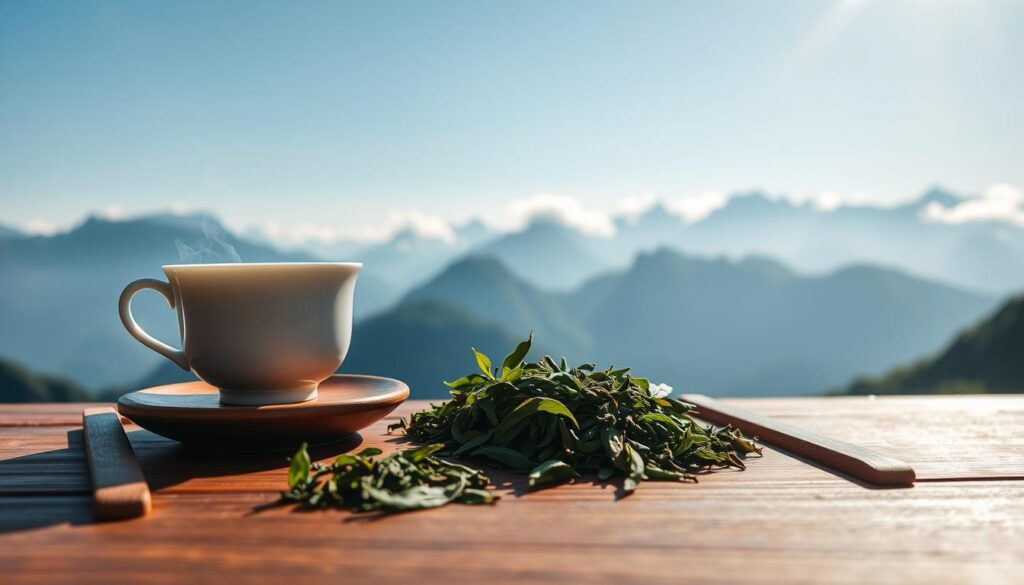
High Mountain Oolong tea grows in Taiwan’s top upland areas. Places like Nantou, Alishan, and Lishan are famous for it. The leaves are picked in spring, around Qingming, for the best flavor and aroma.
This tea is semi-oxidized, ranking high among Taiwanese teas. Its leaves are rolled into tight shapes. When brewed, it offers a clear, orange-yellow cup with floral and fruity notes and a sweet aftertaste.
The tea plants grow slowly on steep slopes. This slow growth enhances the tea’s flavor. The cooler nights and thinner air make the tea’s aromas more delicate and its texture richer.
Tea makers use old methods to keep the tea’s scents pure. They hand-pick the leaves and roast them gently. You can also find organic oolong for a cleaner taste without additives.
- Origin: Taiwan’s mountainous pockets produce the classic Gaoshan profile.
- Appearance: Plump, dark-green leaves, often with mixed hues at high grades.
- Flavor: Floral, green-fruity, slightly sweet, with long-lasting freshness.
- Processing: Semi-oxidized, hand-picked, and shaped into tight pellets.
The Growing Process of High Mountain Oolong
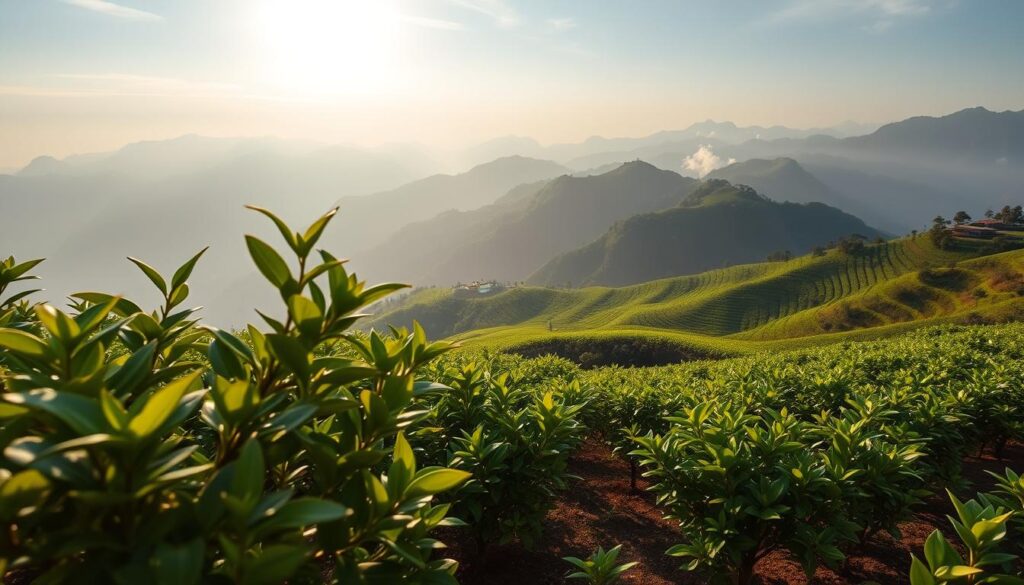
High altitude oolong grows above 3,000 feet. Cool nights, mist, and cloud cover slow down the tea plant. This slow growth makes the tea sweeter and more aromatic.
Soil and climate make each harvest unique. Places like Lishan, Da Yu Ling, and He Huan Shan have their own flavors. Some teas taste mineral, while others are green and floral.
Many farmers now use sustainable methods to protect the land. Organic farming is common among small producers. This way, the tea’s natural flavors shine through.
Harvesting is key. Leaves are picked by hand to choose the best ones. Spring harvests, like Qingming, are the freshest and age the best. This careful selection makes the tea special.
- Withering reduces moisture and readies leaves for shaping.
- Bruising or gentle rolling promotes partial oxidation and builds complexity.
- Fixation stops oxidation at the desired level, preserving floral notes.
- Shaping and careful drying lock in aroma and shelf life.
Small-batch producers and single-farm teas let you taste the farmer’s skill. Choosing high altitude oolong supports both quality and conservation.
Flavor Profile of High Mountain Oolong
When you pour hot water over the dry leaves, you’ll smell something amazing. The scent can be like orchids or fresh green fruit. This is why many say High Mountain Oolong tea has a clean and bright floral taste.
The tea feels silky and cool in your mouth. It might remind you of melted pearls and leaves a sweet aftertaste. Tea from high places often tastes more refined than others.
As you taste it, you might find hints of asparagus or fresh grass. Some teas have creamy or light milk notes, like Jin Xuan. Others have warm, malty flavors or a hint of citrus.
Steeping it gong fu style means you can enjoy it for a long time. You can get flavorful cups from six to eight infusions. This makes premium oolong tea a great choice for long sessions.
- Top notes: orchid, honey, green fruit
- Mid notes: light cream, vegetal freshness
- Base notes: malt, mineral, gentle citrus
Compared to rock oolongs like Da Hong Pao, Gaoshan is lighter and greener. It has less roast and more floral clarity. Compared to Baozhong or Oriental Beauty, high-mountain teas are more rounded and full.
Health Benefits of High Mountain Oolong
High Mountain Oolong tea is packed with polyphenols and catechins. These are powerful antioxidants. They help protect cells from damage and boost overall health when you drink it often.
Studies show oolong might help with metabolism. Drinking High Mountain Oolong with a healthy diet and exercise could lead to weight loss. It combines caffeine and antioxidants to increase alertness and burn fat.
Drinking oolong tea may also improve cholesterol and blood lipid levels. This is good for heart health. If you have heart issues or take medication, talk to your doctor about caffeine in tea.
Opt for organic oolong or eco-friendly leaves to avoid pesticides. Be mindful of caffeine intake if you’re sensitive. This info is meant to guide your choices, not replace medical advice.
- Antioxidant properties from tea polyphenols for cellular support
- Potential weight loss benefits when combined with healthy habits
- Heart health implications suggested by improved lipid markers
- Prefer organic oolong to reduce chemical residue
How to Brew High Mountain Oolong Tea
Brewing premium oolong tea requires patience and small adjustments. You can choose gong fu brewing for deep, layered cups or a western-style infusion when you need speed and convenience.
For gong fu brewing, use a 100 ml gaiwan or small Yixing. Measure 6–7 grams of leaves per 100 ml. Start with a quick rinse of 5–10 seconds to wake the leaves. Then follow short steeps: first and second 10–15 seconds, third 30–60 seconds, fourth about 3 minutes, then longer infusions as the session progresses. Fans of gong fu brewing enjoy the evolving aroma and the long lifespan of the leaves.
If you prefer a single stronger brew, try 5 g per 100 ml at about 205°F for roughly 70 seconds. This gives a bold cup without losing clarity. For travel or thermos use, steep 3–5 grams per 8–12 oz at around 200°F for 3–5 minutes. Those leaves will yield multiple re-steeps.
- recommended water temperature: most Gaoshan do best near 195–205°F (90–96°C). Delicate Baozhong or very refined harvests may want a slightly lower heat to protect floral notes.
- steeping times: short, repeated infusions in gong fu brewing bring balance; western-style infusions run 3–5 minutes depending on your strength preference.
- leaf dose: increase dose for fuller teas like Da Yu Ling; start lighter for Floating Leaves–style finesse.
Use spring or filtered water low in chlorine to let the tea shine. Porcelain gaiwans give clean flavor, Yixing clay adds depth over time, and glass shows leaf movement if visual brewing matters to you.
- Gong fu guideline: 6–7 g / 100 ml — rinse 5–10s; 1st 10–15s; 2nd 10–15s; 3rd 30–60s; 4th 3 min; later steeps extend to 8, 16, 35+ minutes as preferred.
- Western single-brew example: 5 g / 100 ml at 205°F for ~70s for a concentrated cup.
- Thermos method: 3–5 g per 8–12 oz at ~200°F; steep 3–5 minutes; re-steep as needed.
Adjust the variables to match the harvest and your taste. With slow experiments, you learn how to brew High Mountain Oolong tea that brings out floral highs, honeyed midnotes, and a lasting sweet finish.
Food Pairings for High Mountain Oolong
Pair High Mountain Oolong with dishes that highlight its floral notes. Choose light to medium flavors so the tea can shine. Steamed fish, scallops, sushi, and sashimi are great choices. Their mild flavors complement the tea’s green and fruity notes.
Grilled chicken with citrus or mild vegetables is a good savory option. Bamboo shoots, lightly sautéed greens, or citrus salads are also good. Use the tea to refresh your palate between courses.
- Light seafood: steamed white fish, scallops, shrimp sashimi
- Poultry: grilled chicken with lemon or orange
- Vegetables: sautéed bok choy, bamboo shoots, citrus-dressed salads
- Snack pairings: lightly seasoned rice crackers, edamame
For dessert, choose items that match the tea’s sweetness and floral hints. Almond cookies, mochi, poached pears, and citrus-tinged panna cotta are perfect. These desserts enhance the tea’s sweetness without overwhelming its aroma.
Jin Xuan or creamy oolong teas pair well with mild dairy desserts. A honey- or fruit-based pastry brings out the tea’s creamy notes. This keeps the after-dinner experience light and balanced.
Consider serving this premium oolong tea during afternoon breaks or after a light dinner. It’s great with small plates or pastries, where you want aroma and nuance, not heavy tannin or spice.
Comparing High Mountain Oolong to Other Teas
High Mountain Oolong tea and green tea are quite different. Green tea is unoxidized and tastes grassy and vegetal. High Mountain Oolong, on the other hand, is partially oxidized. It offers a mix of green freshness and floral, honey, and fruit notes.
When you brew them, the method matters. Green tea needs cooler water to avoid bitterness. High Mountain Oolong, known as Gaoshan, can handle hotter water. This makes it perfect for multiple infusions, revealing a smooth texture and evolving aroma.
Looking at high mountain oolong vs black tea, the oxidation level is key. Black tea is fully oxidized, giving strong, malty flavors. High Mountain Oolong, being partially oxidized, has a lighter body with bright, floral notes.
Caffeine levels and brewing methods also vary. Both oolong and black teas can have similar caffeine levels. Black tea is often enjoyed as a single, strong brew in the morning. Gaoshan, with its delicate flavors, is best enjoyed in a multi-infusion ritual.
- Texture: Gaoshan often feels silkier than typical green tea.
- Flavor arc: Expect green freshness, then tea with floral notes and gentle sweetness.
- Versatility: Premium oolong tea works well for tasting flights and pairing with lighter foods.
Regional styles also play a role. For example, Oriental Beauty has a warmer, higher-oxidized profile. Classic Gaoshan, from high altitudes, keeps its clarity and delicate floral perfume. Your choice depends on whether you prefer bold morning energy or a refined, aromatic cup.
The Importance of Quality in High Mountain Oolong
Spotting real value means looking at the tea’s origin and harvest notes. Real High Mountain Oolong is labeled clearly, showing Taiwan and specific peaks like Lishan. Producers who mention spring or Qingming harvests and single-farm details show they care about quality.
Before buying, examine the dry leaves. High-quality leaves are plump, tightly twisted, and glossy. The dry aroma should be clean, with hints of orchid, green fruit, honey, or vegetal notes. These signs show the tea was made with care and reflects the mountain’s terroir.
When you brew, premium oolong tea should be clear and have a layered aroma. The liquor should be bright and aromatic, with a long, pleasant aftertaste. Good leaves can be steeped multiple times, showing how the flavor changes.
Decide what style you like before buying more. For refined clarity, look for vendors like Floating Leaves. For warmer, fuller notes, Tea From Taiwan is a good choice. Try small amounts to find your taste without spending too much.
- Check seller transparency and tasting notes from trusted specialty shops.
- Choose hand-picked tea lots when you want consistent leaf quality and freshness.
- Compare price to potency; some premium oolong tea costs more but needs less leaf per brew.
Use reviews and vendor details to guide your purchases. Recognizing authentic High Mountain Oolong and choosing quality leaves saves you from bad deals. Start small, try different teas, and choose reputable sellers for the best results.
Storage Tips for High Mountain Oolong
To keep your High Mountain Oolong fresh, store it in an airtight, opaque container. Use sealed tin canisters or dark glass jars with tight lids. This blocks light and limits air contact.
Store the container in a cool, dry place like a pantry or a dedicated tea cabinet. Don’t store it in the fridge for daily use. Moisture and strong odors from food can spoil the taste.
- Protect from heat, moisture, and sunlight.
- Keep away from spices, coffee, and aromatic foods to prevent flavor contamination.
- Avoid thin plastic bags that can impart odors to the leaves.
If you buy bulk premium oolong tea, portion it into smaller airtight containers. This reduces repeated air exposure and helps maintain aromatic notes each time you open a jar.
Note the shelf life: premium Gaoshan tastes best within a year for bright floral aromatics. Some oolongs are meant to age, but typical High Mountain styles shine when fresh.
When you find certified organic oolong, follow the same practices to preserve purity. If tea arrives vacuum-sealed, transfer open leaves into a tight canister for daily storage.
For regular use, buy smaller quantities so you can enjoy peak character. These simple habits will help you preserve the nuance of premium oolong tea and maintain freshness sip after sip.
Unique Cultivation Regions for High Mountain Oolong
The soul of Taiwanese tea is found in specific slopes and microclimates. These areas shape the tea’s texture, aroma, and clarity. Altitude, mist, and soil play a big role.
Lishan is known for its bright, vegetal notes. It has a cool, refined character. If you like green-vegetal clarity and long infusion life, Lishan is perfect.
Da Yu Ling is a peak expression of Gaoshan. It offers crystal-clear balance, a glowing green hue, and a smooth texture. This tea survives many brews.
He Huan Shan is warmer in profile. Expect malty sweetness and spinach-like vegetal tones. It has a hint of brisk astringency that adds structure.
- Shan Lin Xi and Jin Xuan plantings lean floral or fruity.
- Jin Xuan lots may show faint milk and floral scents for a softer finish.
Your choice of region should match the flavor you seek. Pick Lishan or Da Yu Ling for refined clarity. Choose He Huan Shan or selected Shan Lin Xi and Jin Xuan lots for fuller, warmer character.
Understanding these terroirs helps you buy with confidence. Enjoy each infusion as a distinct expression of Taiwanese tea.
The Cultural Significance of High Mountain Oolong
High Mountain Oolong is at the core of Taiwanese tea culture. It connects farms, families, and communities over generations. This tradition is rooted in careful tea crafting.
At places like Floating Leaves or Teamasters, you see the effort put into every cup. Hand-picked tea and precise processing make each sip special. Buying small-batch teas supports local farmers and their craft.
Gong fu tea sessions are perfect for enjoying the tea’s subtleties. You’ll use a gaiwan or Yixing pot for many short infusions. This method brings out the tea’s complex flavors and aromas.
Being a guest or host at tea tastings is important. Serving High Mountain Oolong shows respect for tradition and quality. Tea competitions and specialty shops highlight the best of this craft.
- Every stage of traditional tea crafting is a story: growing, selecting, and roasting.
- Producers often climb mountains to pick the best flavors for their teas.
- Hand-picked tea shows the care and dedication that goes into each cup.
Next time you enjoy tea, think about its cultural and ceremonial background. High Mountain Oolong is more than a drink; it’s a window into Taiwanese culture and the skill of its makers.
Where to Buy High Mountain Oolong
Wondering where to find High Mountain Oolong tea in the U.S.? Start with specialty vendors known for their clear sourcing and small-batch lots. Brands like Floating Leaves Tea, Tea From Taiwan, and Ten Li Tea offer selections from farms like Lishan and Da Yu Ling. They provide harvest dates and tasting notes, helping you choose by season and terroir.
Online retailers make it easy to get premium oolong tea. Many vendors, including those mentioned above, have secure shops for ordering. Look for detailed origin descriptions, tasting notes, and customer reviews to compare and choose.
Local tea shops and Asian-market sources are great for hands-on tasting. In cities like Los Angeles, stores in Little Saigon and tea houses offer brewing guidance. You can ask about infusion counts, leaf weight, and whether it’s organic or sustainably farmed.
When buying, look for transparency and try samples. Prices vary: rare lots like Da Yu Ling or premium He Huan Shan are pricier but offer many infusions. Start with small purchases to find your favorites, then buy more from trusted vendors for quality and value.