
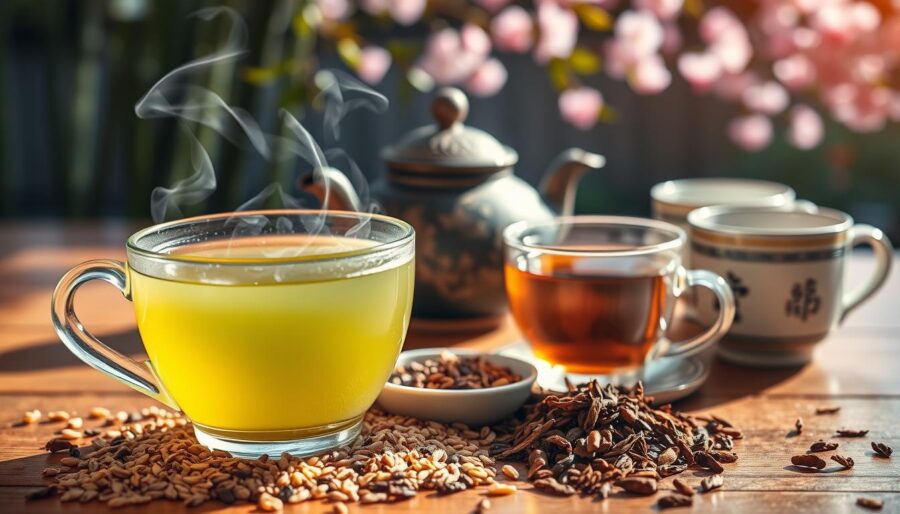
In this tea comparison, we’ll look at two popular Japanese green teas: genmaicha and hojicha. They both come from the Camellia sinensis plant but are processed differently. Genmaicha mixes steamed green leaves with toasted brown rice. Hojicha, on the other hand, uses roasted leaves, often from bancha or kukicha.
This difference affects their aroma, color, and caffeine levels. You’re reading from the United States. We aim to help you understand their origins, production, flavors, health benefits, and how to brew them. You’ll also learn where to find the best Japanese tea for you.
Both teas are roasted green tea styles with low caffeine. They’re great for those new to tea or seasoned fans. You’ll get brewing tips, a comparison of caffeine and antioxidants, and flavor notes. Plus, we’ll share tips on finding organic or specialty options.
What Is Genmaicha?
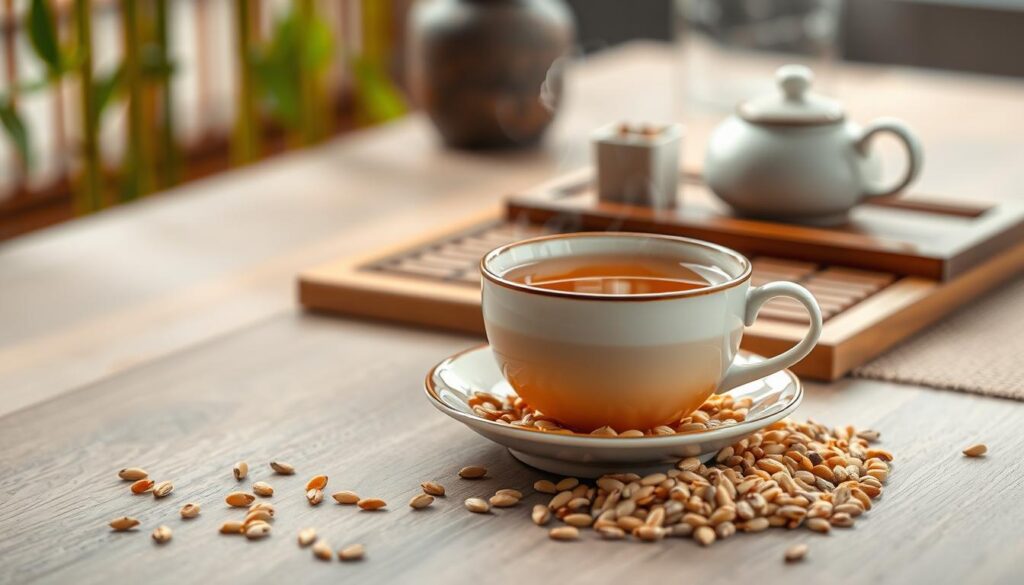
Genmaicha comes from Japan, where it was made to stretch tea supplies. Families mixed green tea with toasted brown rice. This was a tradition among the working class, using bancha or sencha leaves with roasted rice.
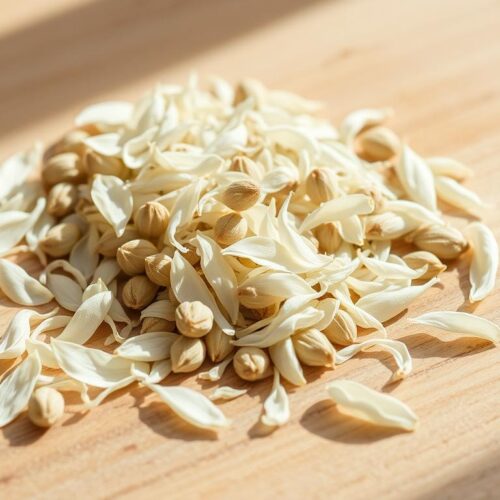
Genmaicha is unique in its making. It combines unroasted green tea with toasted rice. The rice is baked until it smells nutty. The tea stays green, while the rice adds a toasted flavor and some GABA.
Genmaicha tastes mild and comforting. It has notes of nuts, cereal, and sweetness. It’s like popcorn, softening the tea’s green taste. It’s gentler than Hojicha, great for meals or when you want less caffeine.
- Caffeine: typically about 10–25 mg per cup, varying by leaf and steep.
- Common bases: bancha or sencha green tea.
- Texture: warming, grain-forward mouthfeel.
Genmaicha is good for you too. It has green tea’s antioxidants and rice’s soothing taste. It’s perfect for regular drinking and those who prefer less caffeine but want flavor.
What Is Hojicha?
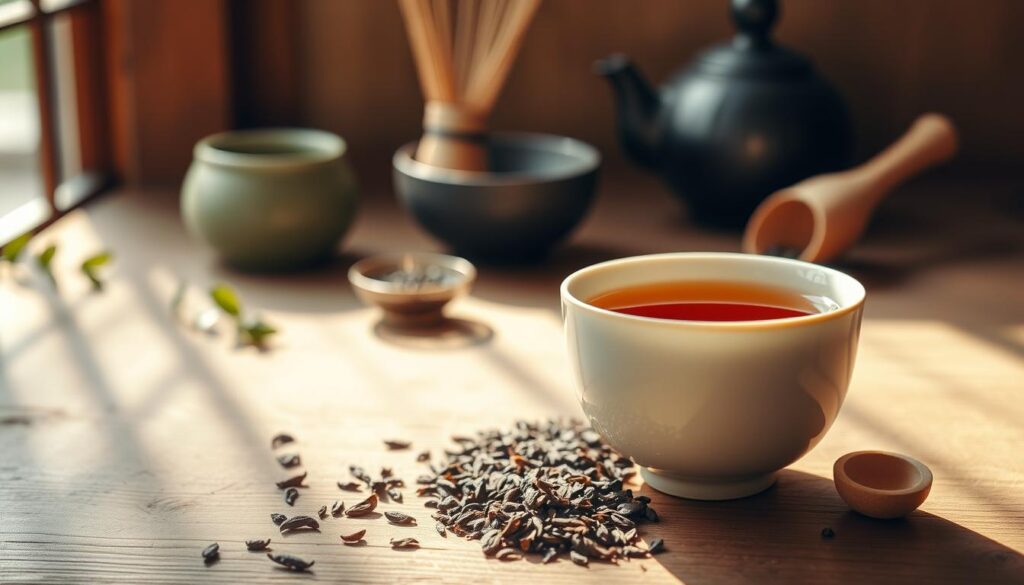
Hojicha comes from Japan, where tea makers roast lower-grade leaves. They use bancha and kukicha leaves to make a cozy drink. Roasting lets them use older leaves and stems, creating a new taste that’s comforting.
First, they steam, roll, and dry the leaves like other green teas. But then, they roast them at high heat. This process changes the taste, making it less grassy and more caramel-like.
Hojicha has a warm brown color and a smooth feel. It tastes like toasted nuts and has hints of toffee and smokiness. It’s low in caffeine, making it perfect for an evening drink or a coffee substitute.
- Origins: rooted in Kyoto and other tea regions, adapted from bancha and kukicha.
- Processing: steamed and dried, then roasted to develop aroma and color.
- Flavor: warm, toasty, caramel and coffee hints that define hojicha flavor.
Genmaicha and Hojicha are different. Genmaicha has green tea and roasted rice for a nutty taste. Hojicha uses roasted leaves for its rich flavor. This difference affects how you brew and enjoy each tea.
Key Differences Between Genmaicha and Hojicha
Looking at the ingredients, genmaicha combines unroasted green tea like sencha or bancha with toasted brown rice. Hojicha, on the other hand, uses roasted leaves or stems, often bancha or kukicha, without any rice.
The rice in genmaicha adds starch, a toasty aroma, and less caffeine. Hojicha gets its flavor from the roast, which creates deeper, coffee-like notes.
- Brewing techniques differ to bring out the best in each cup.
- Genmaicha is best brewed at 80–85°C (176–185°F) for 1–3 minutes to preserve its green and rice flavors.
- Hojicha can handle higher temperatures, around 90–95°C (194–203°F), and shorter steeps of 30 seconds to 2 minutes due to its roasted nature.
Cold-brewing both teas offers a unique taste. Use 5–6 g per 500 ml and steep for 4–8 hours in the fridge. Cold-brewed hojicha is sweet and smooth, while genmaicha is refreshing and grain-forward.
Hojicha is bold and roasted, with caramel or chocolate notes and a smoky intensity. Genmaicha is nutty, cereal-like, mildly sweet, and light, making it perfect for meals.
Caffeine levels vary by leaf grade and source. Genmaicha usually has 10–25 mg per cup, while hojicha has 15–35 mg. Both have less caffeine than sencha or matcha, ideal for evening teas.
Health Benefits of Genmaicha
Genmaicha is a mix of green tea and toasted rice. It offers a smooth taste and a blend of nutrients. The green tea base is rich in antioxidants, while the rice adds minerals and a comforting taste.
Genmaicha is good for your digestion. It uses older leaves with less tannin, which is easier on your stomach. The rice in it can also calm your digestive system, making it a great choice after meals.
The antioxidants in genmaicha are not as high as in matcha or gyokuro. But they are enough to help protect your cells and support your health when part of a healthy diet.
Many people find Genmaicha helps with stress relief. It has less caffeine and contains rice-derived GABA, which can calm your nerves. Enjoy it in the evening or when you need to relax without feeling jittery.
- Gentle antioxidants from green tea and toasted rice
- Supports digestive health after meals
- Lower caffeine for mild stress relief and better sleep options
- Minerals from rice that add a soothing, nutty quality
Choosing genmaicha means you’re picking a tea that’s both tasty and gentle on your body. Try it as part of your daily routine to enjoy its calming effects and smooth flavor.
Health Benefits of Hojicha
Hojicha has a warm, toasty taste from roasting older leaves and stems. This roast makes pyrazines and Maillard-derived molecules. These compounds give hojicha a comforting aroma and a gentle mouthfeel.
Your stomach might like hojicha better than strong green teas or coffee. Roasting lowers catechin levels and acidity. This makes hojicha smoother and less likely to upset sensitive stomachs.
Hojicha has less caffeine than most green teas. The type of leaf and roast used affect the caffeine level. A cup usually has about 7–35 mg of caffeine.
Hojicha is great for enjoying in the evening or for mindful breaks. It has L-theanine, which helps you stay calm and focused. Cold-brewed hojicha tastes sweeter and less bitter, perfect for a mellow afternoon drink.
- Gentle on digestion thanks to reduced acidity and lower catechins.
- Support for relaxation through aroma compounds and L-theanine.
- Low Hojicha caffeine content makes it suitable for evening drinking.
- Roasted green tea benefits include a distinct flavor profile that feels comforting and warm.
Genmaicha vs Hojicha shows clear differences. Genmaicha blends toasted rice with green tea. Hojicha’s roast and leaf selection make it low in caffeine and unique in aroma. This helps you choose the right tea for calm evenings or a stomach-friendly daily ritual.
Popular Uses for Genmaicha
Genmaicha is great for everyday drinking and cooking. It’s a Japanese green tea that’s soft and smooth because of the toasted rice. You can enjoy it warm in the morning or chilled in the afternoon.
In cooking, genmaicha can be used to flavor broths or to cook rice. It adds a unique taste to cookies, cakes, and shortbread. Chefs also mix it into custards and panna cotta for a savory twist.
Genmaicha pairs well with many foods. It goes great with sushi, onigiri, and light seafood. It’s also good with bento items, mild cheeses, and simple pastries. Its low caffeine makes it perfect for evening meals and family gatherings.
- Daily tea: sip plain or cold-brewed as a table tea.
- Cooking: use brewed tea for rice, broths, and poaching liquids.
- Baking: fold into doughs, creams, and glazes for baked goods.
- Drinks: make lattes or iced teas when you want to highlight the toasted grain.
When using genmaicha in recipes, aim for balance. The toasted notes should enhance, not overpower. This way, you can enjoy the Japanese green tea’s true flavor while exploring new ways to use it at home.
Popular Uses for Hojicha
Hojicha is great for drinks and desserts because it’s bold yet gentle. Try a warm hojicha latte with oat milk for a creamy, toasty drink. It brings out the tea’s caramel notes beautifully.
Cold-brewed hojicha makes a smooth syrup perfect for custards, panna cotta, and ice cream. This method is key in many hojicha dessert recipes. It swaps coffee for a nutty, subtle flavor.
For baking, steep hojicha in milk or cream to flavor cakes, cookies, and quick breads. The roast balances well with butter and sugar. Your pastries will have a clear, toasty taste without bitterness.
- Hojicha lattes: steamed or iced, with dairy or plant milks.
- Ice cream and gelato: reduce cold-brewed hojicha into a custard base.
- Syrups and sauces: pour over pancakes, flans, or toasted pound cake.
- Baked goods: hojicha-infused batters for muffins, rolls, and cookies.
Your hojicha pairings can range from chocolate and milk-based desserts to savory roasted vegetables and grilled fish. The tea’s warmth complements both sweet and umami-rich dishes.
Try simple tiramisu variations with hojicha instead of espresso. Many hojicha dessert recipes make this swap. It creates a softer, rounded finish that tea and coffee lovers both enjoy.
When planning a menu, use hojicha in ways that let its roasted green tea notes shine. Pair it with creamy textures, caramel flavors, and roasted proteins for balanced, memorable dishes.
Where to Buy Genmaicha and Hojicha
You can find genmaicha and hojicha at local stores in many U.S. cities. Look for Japanese grocery stores, independent tea shops, and farmers markets. These places often have single-origin options.
Stores that sell Sencha or matcha usually have genmaicha blends and roasted hojicha too.
When shopping online, you can buy hojicha from tea merchants and direct-from-Japan vendors. Look for details like roast level, leaf base, and brewing notes. These help you find the right caffeine and flavor for you.
Choose quality brands by looking for origin regions like Shizuoka, Kyoto, or Miyazaki. Also, check if they show cultivation practices. Organic genmaicha from Shizuoka and small-batch hojicha from Kyoto are highly recommended.
- Local specialty stores: try neighborhood Japanese markets and tea houses for small-batch options.
- Online retailers: choose vendors that provide roast level and origin for transparency.
- Quality tips: favor producers that disclose farming methods and region.
Prices can help guide your choices. Genmaicha costs between $10 and $30 per 100 g. Hojicha is usually $12 to $35 per 100 g. Organic options are pricier but offer cleaner flavors and less pesticide exposure.
For specific buying steps, start with small amounts. Compare the aroma and roast levels before buying more. This way, you can find the best Japanese tea without wasting money.
Brewing Tips for Genmaicha and Hojicha
Begin by measuring 5–6 g of tea for every 500 ml of water for a clear cup. Use an electric kettle with temperature control to get the perfect water temperature for each tea. For genmaicha, aim for 80–85°C (176–185°F) to preserve the green notes. For hojicha, set the temperature to 90–95°C (194–203°F) because the roast can handle hotter water.
Be mindful of steeping time. For genmaicha, steep for 1–3 minutes on the first infusion. You can re-steep once or twice, as the flavor drops quickly. For hojicha, steep for 30 seconds to 2 minutes on the first infusion. Then, re-steep 2–3 times, adding 15–30 seconds each time.
Try cold brew to explore different flavors. Use the same 5–6 g per 500 ml ratio and refrigerate for 4–8 hours. Cold-brewed hojicha becomes very sweet and smooth. Cold-brewed genmaicha highlights the grainy, refreshing notes.
Use simple tea tools for consistent results. A kyusu or small infuser helps with precise dosing and good leaf circulation. Electric kettles with temperature settings make heating easier. A milk frother and fine-mesh sieve are useful for lattes and blended infusions.
- Quick rinse: a 15-second rinse, specially for hojicha, wakes up leaves and releases aroma.
- Small teapots: better control over steeping time and temperature retention.
- Fine-mesh sieve: useful when frothing milk into a hojicha or genmaicha latte.
Keep a simple brewing log. Note the water temperature, steeping time, and tools used. This helps you refine each cup and master brewing tips for genmaicha and hojicha, ensuring tasty results.
Conclusion: Choosing Between Genmaicha and Hojicha
When deciding between genmaicha and hojicha, think about what you like in a tea. Hojicha is great for those who want a strong, roasted taste with little caffeine. It’s perfect for evening or as a coffee substitute. On the other hand, genmaicha offers a milder, nutty flavor that’s great with breakfast or meals.
Consider how you like to enjoy your tea. Some people prefer hojicha for relaxing afternoons or with desserts. Others like genmaicha for their morning cups or with savory foods. Both teas are easy to brew, affordable, and show the variety of Japanese tea culture.
Ultimately, neither genmaicha nor hojicha is healthier, but they each have unique benefits. Genmaicha keeps more catechins and has a sweet rice taste. Hojicha, on the other hand, has low caffeine and calming roasted notes. Try different origins, roast levels, and blends to find your favorite daily tea.