
GABA tea, also known as Smooth Tea, is special because it has more gamma-Aminobutyric Acid (GABA) than regular tea. This is thanks to a unique processing method that uses nitrogen and oxygen-free conditions. This method was first used in Japan in the 1980s to increase GABA levels.
In 1984, Dr. Tsushida Tojiro at the National Research Institute of Tea in Japan found something interesting. He discovered that fresh tea leaves exposed to high-nitrogen, oxygen-free conditions could build up GABA. This breakthrough started the science behind GABA tea, which you can now buy in Japan and Taiwan.
GABA is a neurotransmitter that helps you relax, sleep better, and keeps your nerves calm. Low levels of GABA have been linked to anxiety and even seizures. That’s why people are interested in GABA tea for its natural stress relief benefits.
To be considered effective, GABA tea should have at least 150 mg of GABA per 100 grams of dry leaves. This standard helps both producers and consumers know if a GABA tea is good for its health claims.
This article talks about how GABA tea is made, its benefits like reducing stress and anxiety, and improving sleep and focus. It also gives tips on how to use it, lists things to watch out for, and suggests good brands and places to buy it. GABA tea is not well-known in the U.S., but this guide aims to help Americans looking for natural ways to manage stress and improve their sleep.
What is GABA Tea?
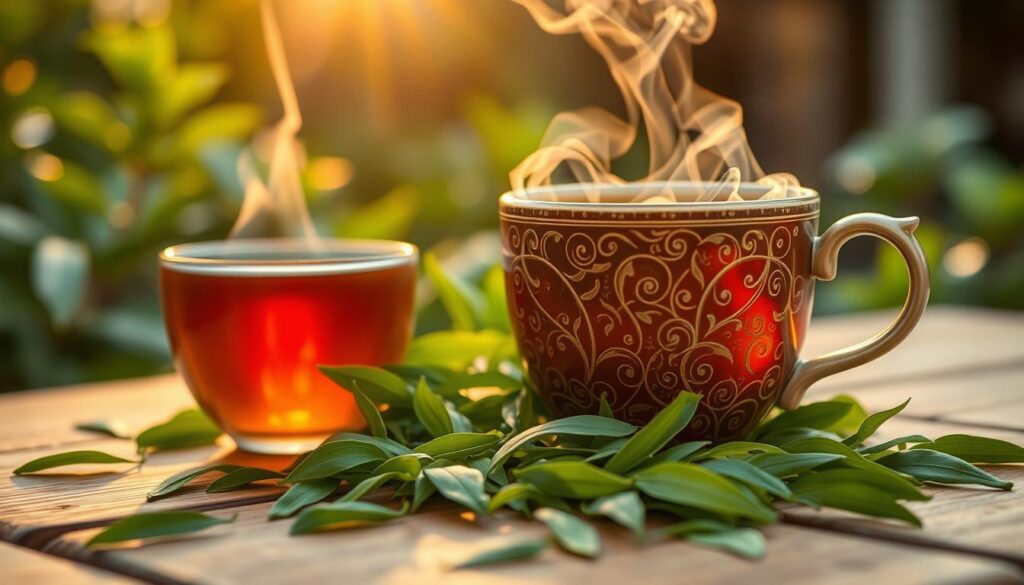
GABA tea is a special type of tea. It’s made to have more gamma-Aminobutyric Acid in the leaves. This process makes the tea smooth and less bitter.
Tea enthusiasts sometimes call it gabacha. They like its calm and mellow taste.
The story of GABA tea started in 1984. Dr. Tsushida Tojiro was studying how tea lasts longer. He found that using nitrogen could increase GABA levels by up to ten times.
This method changes the leaves’ chemistry. It gives the tea its unique, soft flavor.
Production began in Japan and later moved to Taiwan. Taiwanese makers use special equipment and control the temperature. This helps them make tea with high GABA levels.
They prefer teas with more glutamic acid. This acid turns into GABA during processing. Oolong leaves and some special varieties work best.
High-quality materials make the tea’s aroma and mouthfeel richer. Fresh GABA tea might smell a bit like ammonia. But this smell goes away as the tea ages.
The tea tastes smooth. It can have flavors like dried fruit, sweet spice, or even baked sweet potato. It’s often compared to black tea in its body.
- Definition: tea enriched in gamma-Aminobutyric Acid
- Origin: discovered in Japan in 1984
- Method: nitrogen-processed tea, also called gabacha or Smooth Tea
- Common types: oolong and other teas with high glutamate
GABA and Its Role in the Body

GABA, short for gamma-Aminobutyric Acid, is your brain’s main inhibitory chemical. It lowers how often neurons fire by blocking or reducing how they talk to each other. This helps stop too much activity that can cause anxiety or seizures.
When GABA function increases, neurons fire less often. You might feel your muscles relax and find it easier to fall asleep. It also means you might feel less stressed and have fewer anxious thoughts.
Scientists are not sure how much GABA from food reaches the brain. Some studies say it doesn’t get through the blood-brain barrier well. Others suggest it might work through the gut’s nervous system. More research is needed to understand this.
Tea compounds can work together to shape how you feel. L-theanine, found in many teas, helps with relaxation and clearer focus. A little caffeine can help keep you alert, which is why some people use GABA tea for focus.
- Research from University College London found regular tea intake lowered post-stress cortisol and increased reported relaxation over six weeks.
- Other trials show improved heart rate variability and reduced stress scores after consuming GABA-enriched tea.
For your GABA tea mental health goals, consider the whole drink, not just GABA. Mixing L-theanine and a bit of caffeine creates a balanced effect. This helps with calmness, better sleep, and staying focused.
Health Benefits of GABA Tea
Reports show GABA tea can help reduce anxiety and bring calm. A study from South China Agricultural University found it helped mice avoid depression-like behaviors. A 2019 study by Hinton et al. showed it lowered stress and improved heart rate in adults.
GABA tea is known for reducing stress. A 2019 study with kids on the autism spectrum found it improved anxiety and motor skills. It suggests GABA tea can help with relaxation and motor control.
Some people use GABA tea to control blood pressure. Studies say it relaxes blood vessels, which can lower blood pressure. This has made it popular in Japan and Taiwan for managing high blood pressure.
GABA tea may also help with sleep and focus. Michael J. Breus, Ph.D., and sleep research suggest it can improve focus during the day. At night, it can help you relax and sleep better.
But, the benefits of GABA tea are not fully proven yet. Most studies are small or short-term. More research is needed to understand its effects and safety.
If you’re thinking about trying GABA tea, consider the evidence and talk to a doctor. They can help if you have high blood pressure or sleep issues. Ongoing research will help us understand how to use GABA tea for stress and sleep.
GABA Tea and Anxiety Relief
GABA tea can calm you down by affecting your brain’s chemistry. It acts as a calming neurotransmitter, reducing the excitement in your brain. This helps stop feelings of panic and makes you feel more relaxed.
Studies show that GABA tea can help with anxiety. People who drank it felt less stressed and had better heart rates. A study at University College London found that it lowered stress hormones and made people feel more relaxed.
In Japan and Taiwan, GABA tea is a part of everyday life. It’s given to kids to help them stay alert and focused. Adults drink it to manage stress during the day. You might want to try it after work or before studying to see how it makes you feel.
The mix of ingredients in tea is important. L-theanine works with GABA to help you stay calm and focused. A little caffeine keeps you alert, while L-theanine prevents you from feeling too sleepy. This makes GABA tea a great choice for everyday use.
But be careful if you’re taking other medications for anxiety or sleep. GABA tea might make you feel drowsier or affect your blood pressure. Always talk to your doctor before trying GABA tea to make sure it’s safe for you.
GABA Tea vs. Traditional Tea Types
When you look at how GABA tea is made, it’s different from traditional teas. Green, black, and oolong teas go through oxidation and firing. But GABA tea leaves get a special treatment with nitrogen to boost GABA levels before they’re finished.
GABA tea stands out in terms of what’s inside. It has more GABA than regular teas, but it also keeps L-theanine and some caffeine. The quality of the leaves and how much glutamic acid they have affects the GABA levels.
The taste of GABA tea is smooth and lacks bitterness. It’s often compared to black tea but has its own unique flavors. These can include dried fruit, sweet spice, or roasted sweet potato, depending on how it’s roasted and the base tea used.
Looking at how GABA tea affects you, it’s all about relaxation and stress relief. It might also help with blood pressure. Traditional green tea, on the other hand, is packed with antioxidants and can help with metabolism. Both teas have their own health benefits, but they work in different ways.
- If you’re looking for calm and sleep support, GABA tea is the better choice.
- For antioxidant-rich and metabolism-focused benefits, go with green tea.
- Try a mix: use GABA tea at night and green tea during the day.
Knowing the difference between GABA tea and other teas helps you choose the right one for you. GABA tea is great for relaxation and stress relief. Traditional teas, like green tea, are better for antioxidants and metabolism.
The Science Behind the Nitrogen Processing
Tea leaves’ response to low oxygen is key to nitrogen processing GABA tea. In anaerobic tea fermentation, proteins break down faster, and free glutamate increases. This glutamate then turns into GABA through a process driven by enzymes that work under stress.
The GABA production process is connected to plant metabolism. With less oxygen, the TCA cycle slows, and succinate builds up. The GABA shunt helps plants manage carbon and nitrogen. Also, GABA builds up because GABA-transaminase activity is low when oxygen is scarce.
Understanding how GABA tea is made in Taiwan and Japan is easier now. Tea plants are shaded for about ten days before harvest to increase glutamic acid. Then, they harvest premium Maocha and put fresh leaves in stainless steel vacuum drums.
In these drums, nitrogen replaces oxygen, and temperatures stay above 40°C for about eight hours. This process converts leaves to GABA. Producers often switch between anaerobic and aerobic conditions. Steps like spinning, rolling, and heating break cell walls and enhance flavor.
- Shade plants pre-harvest to boost glutamate.
- Harvest Maocha and load into vacuum drums.
- Flush with nitrogen and maintain warm, low-oxygen conditions.
- Alternate anaerobic and aerobic phases with rolling and heating.
- Finish with firing, rolling, drying, compression, re-rolling, and roasting.
The final steps—firing and roasting—are key for the flavor you expect from GABA oolong. The process includes compression into blocks and repeated rolling to refine aroma and mouthfeel. Each step is carefully controlled for taste and GABA yield.
Producing GABA tea comes with challenges. You need to precisely control nitrogen insertion and accept longer fermentation times. Fresh batches might smell slightly of ammonia, but this smell usually goes away with storage and aging.
Quality and regulation are important for producers. Japanese standards require a minimum GABA content for health claims, usually around 150 mg per 100 g of dry leaves. This helps you compare products and trust labeled GABA levels when looking at nitrogen processing GABA tea.
Preparing GABA Tea at Home
Begin by using 1–2 grams of GABA oolong or tea for every 6–8 oz of water. Adjust the amount based on the tea’s strength and your taste preferences.
Temperature is key for flavor. For oolong-based GABA teas, aim for 175–195°F. For lighter GABA greens, use lower temperatures. If you’re new, start with 185°F for a good balance.
Steeping times are important. Start with 1–2 minutes for the first infusion. Then, increase each infusion by 30–60 seconds. GABA oolong often supports multiple infusions with evolving flavors.
- Cold-brew option: place leaves in cold water and refrigerate for 6–12 hours.
- Cold-brew yields a smooth, mellow infusion that brings out delicate notes and cuts bitterness.
Keep your GABA tea fresh by storing it properly. Store dry leaves in an airtight container away from light, heat, moisture, and strong odors. A cool, dark pantry is ideal. For longer storage, consider refrigeration.
Watch for scent changes. New GABA tea might have a mild ammonia-like smell that fades with time. If the smell is off-putting, let the tea rest briefly.
Make brewing a calming ritual. Spend 10–20 minutes brewing and sipping mindfully. Pair it with deep breathing or a short meditation to enhance stress relief.
Experiment with brewing techniques to find your favorite. Adjust leaf weight, temperature, and steep time. Proper brewing improves taste and preserves benefits.
When packing GABA tea for travel, follow storage rules. Use small airtight tins or vacuum-sealed bags to keep aroma and potency intact during transport.
GABA Tea: Dosage and Recommendations
There’s no one-size-fits-all GABA tea dosage. It depends on the tea’s GABA content. Some teas aim for at least 150 mg per 100 g of dry leaves. But, brewed cups usually have less than supplements.
Start with one cup of GABA tea a day. See how it makes you feel. A single cup in the evening can help with relaxation or sleep.
For stress or mild anxiety, you might want 1–3 cups a day. Spread them out to avoid feeling too sleepy. Try having a cup in the afternoon for calm without affecting your sleep.
- Check labels for GABA content when possible.
- Expect brewed tea to be weaker than supplements; multiple cups may be needed to match study doses.
- Avoid heavy morning intake or drinking before driving if you are sensitive to sedative effects.
Be careful if you have low blood pressure. GABA can lower blood pressure further.
Children, pregnant people, and those breastfeeding should talk to a doctor before using GABA tea regularly. If you’re on blood pressure or sedative meds, talk to your doctor to avoid too much effect.
For sleep, drink GABA tea an hour or two before bed. If you’re worried about sleepiness, test it on a weekend day.
Keep a log of your GABA tea use for a week. This log helps you and your doctor find the right amount for you.
Potential Side Effects and Precautions
Most people experience mild side effects from GABA tea. Some might feel drowsy or sleepier, which can happen if you drink it in the morning. This is not good for tasks that need you to be alert, like driving.
Some folks might see their blood pressure drop. If you already have low blood pressure or take meds for it, watch your blood pressure closely. Talk to your doctor about using GABA tea safely.
GABA tea might smell like ammonia when it’s fresh. This smell usually goes away as you store it properly. It’s more of a smell issue than a health problem.
Be careful if you’re taking medications that make you sleepy. GABA tea can make these effects stronger. This might make you feel even sleepier.
Medicines for high blood pressure might not mix well with GABA tea. This could lead to very low blood pressure. Always check with your doctor or pharmacist about any interactions.
- Pregnant or breastfeeding women should talk to their doctor before trying GABA tea.
- Children in Japan might drink a little, but always check with a pediatrician first.
There’s not a lot of research on GABA tea’s long-term effects. Many studies are small or just starting. So, be careful and talk to a doctor if you’re using it for health reasons.
Start with a small amount and see how you feel. Keep track of any symptoms and medications. Talk to your doctor to make sure you’re using GABA tea safely and avoid any bad interactions.
Incorporating GABA Tea into Your Daily Routine
Start small to make GABA tea a daily habit. Choose simple actions that you can repeat easily.
Drink one cup of GABA tea 30–60 minutes before bed. This can help you relax. Try turning off screens and stretching lightly while you sip.
Have a cup in the afternoon, between 2–4 pm. It might help you feel less stressed and more focused. Cold-brewed GABA tea is a great choice for a refreshing break.
Drink a cup before you start work or studying. It can help you stay focused and accurate. Adjust the timing based on how caffeine affects you.
- Create a short tea ritual: boil water, breathe for three minutes, steep, and sip mindfully. Rituals boost the psychological benefit of incorporating GABA tea into your routine.
- Swap GABA tea for evening alcoholic or high-sugar beverages. You get relaxation without extra calories or sleep disruption.
- Buy small batches from reputable suppliers like Rishi Tea or Harney & Sons and rotate stock to keep flavor and GABA levels fresh.
Keep a journal for one to two weeks. Note when you drink GABA tea, how many cups, your stress levels, sleep, and any side effects. This helps you see what works best for you.
Store leaves in a cool, dry place in an airtight container. This keeps the aroma and potency of your tea. Make small changes and observe results to fine-tune a GABA tea daily routine that fits your life.
GABA Tea Brands to Consider
When you buy GABA tea, look for traceability and test results. Choose brands that publish lab reports or list GABA content. Aim for products with at least 150 mg of GABA per 100 grams for a consistent effect.
Opt for well-known producers in Taiwan and Japan for the best GABA tea. Taiwan is a big source of GABA oolong, with many farms following strict standards. Japanese makers also offer high-quality Smooth Tea-style processing.
Check the product pages for detailed processing information. Look for vendors who explain how they treat nitrogen, control temperatures, and roast levels. Also, check for clear sourcing and harvest dates to ensure freshness and flavor.
- Read customer reviews for taste notes like smoothness, low astringency, and dried fruit or sweet spice.
- Watch for complaints about residual ammonia odor after storage; reputable GABA tea suppliers address that in processing and storage guidance.
- Consider specialty tea shops, verified online retailers, or direct-from-farm brands that share roast level and GABA content.
If you prefer supplements or extracts, check for third-party testing. Compare the dose to brewed tea. Freshly brewed GABA tea usually has lower doses than supplements, so choose wisely.
For U.S. buyers, prioritize traceable origin and lab-verified GABA content over catchy branding. Availability and brand names can change with harvests. Look for suppliers that post independent lab results and clear sourcing to find the best GABA tea for you.
Conclusion: Embracing GABA Tea for Wellness
GABA tea is a special type of tea that boosts gamma-Aminobutyric Acid in the leaves. Studies show it can really change how our bodies work. It can help lower stress, improve heart health, and make us feel calmer.
To try GABA tea, start with a small amount. Make your tea carefully and have just one cup in the evening. Watch how it affects your sleep and stress levels for a week or two. Remember, it might make you feel sleepy or lower your blood pressure. Always talk to a doctor if you’re taking certain medicines or have health concerns.
When buying GABA tea in the US, look for it from trusted Taiwanese or Japanese makers. They should tell you how much GABA is in it. Using GABA tea as part of a healthy lifestyle can help a lot. But remember, it’s not a replacement for medical advice. Use it wisely to help with relaxation and sleep.