
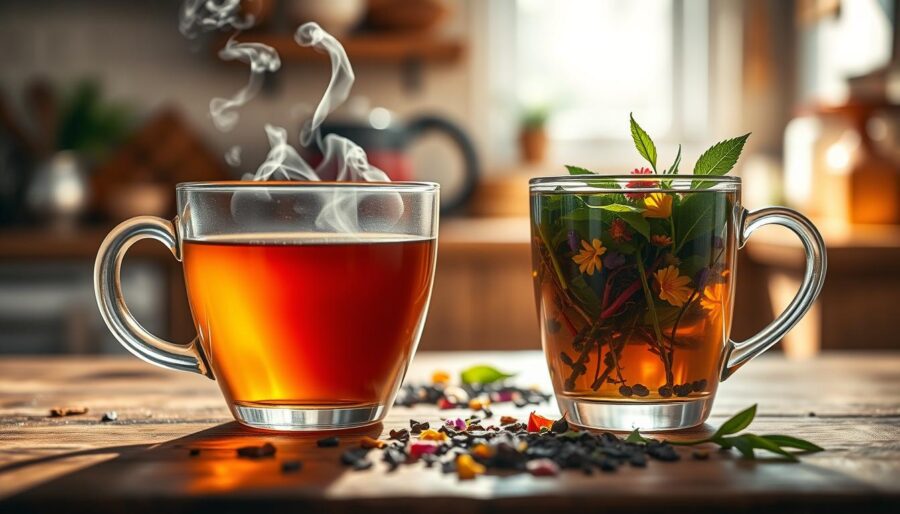
Decaf tea and herbal infusions are often seen as similar, but they start differently. Decaf tea comes from Camellia sinensis leaves that have most caffeine removed. Herbal infusions, or tisanes, are mixes of herbs, roots, flowers, seeds, and fruit, naturally free from caffeine.
Knowing the difference is key if you’re sensitive to caffeine or picking drinks for kids or evening use in the US. “Caffeine-free” and “decaffeinated” might sound the same, but they’re not. Decaf tea might have tiny amounts of caffeine, usually less than 2.5% of the original amount. Herbal teas, on the other hand, usually have no caffeine unless they include ingredients like yerba maté or cacao husks.
This article will help you understand the difference with clear explanations. We’ll cover how decaffeination methods like water processing, supercritical CO2, and solvent-based techniques affect flavor and health. You’ll learn about the trade-offs between decaf tea and herbal infusions. We’ll also share serving tips, popular US brands, allergy concerns, cultural notes, and practical advice to help you choose.
What is Decaf Tea?
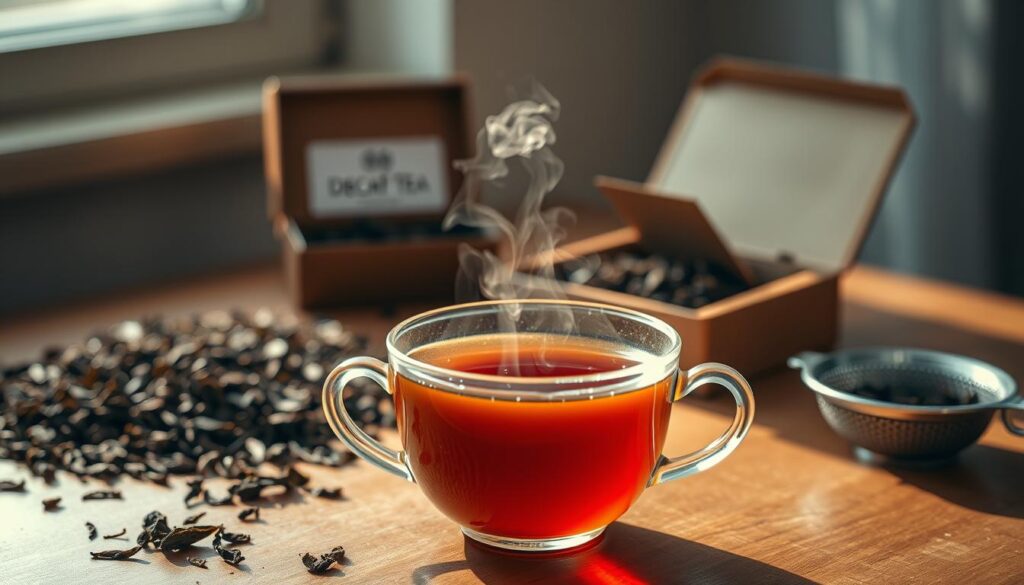
Decaf tea is a type of tea that has most of its caffeine removed. It’s made from real tea leaves, like black, green, white, or oolong. These leaves are processed to keep their flavor and aroma, but with less caffeine.
There are a few ways to make decaf tea. Some methods use solvents like ethyl acetate or methylene chloride. These solvents grab the caffeine and then evaporate, leaving behind just a trace of the solvent.
Other methods, like water processing or supercritical carbon dioxide (CO2), work differently. They remove caffeine while keeping more of the tea’s good stuff, like antioxidants. These methods help keep the tea’s flavor and health benefits intact.
Even with these methods, some caffeine might stay in the tea. Tea is considered decaf if it has less than 2.5% caffeine. This means you might get a tiny bit of caffeine in your cup, but it’s not much.
Decaf tea comes in many varieties, so you can pick your favorite. It’s great for those who can’t handle caffeine or want to enjoy tea without its effects. Just remember, some decaf teas might have fewer antioxidants than their regular counterparts.
What Are Herbal Infusions?
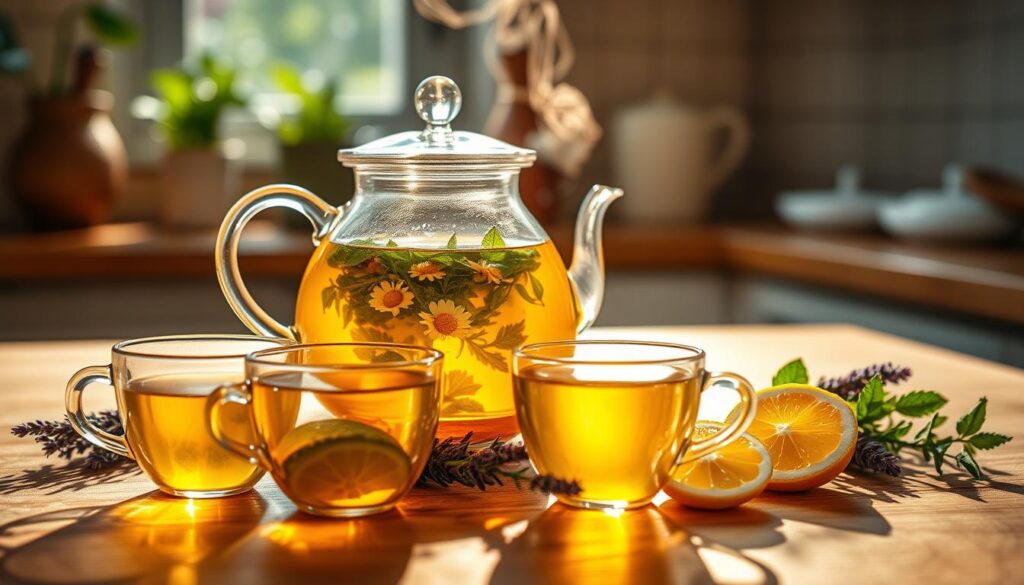
A herbal infusion is a drink made by steeping herbs, roots, seeds, fruit, flowers, or other botanicals in hot water. This makes it different from teas made from Camellia sinensis leaves. You might also hear them called tisanes or herbal beverages.
Examples include chamomile, peppermint, rooibos, ginger, turmeric, vanilla blends, and fruit-essence mixes. Rooibos, a tea from South Africa, is loved for being caffeine-free. It’s a great choice if you want a tea-like drink without caffeine.
Flavors can vary a lot. You might find floral, minty, fruity, spicy, grassy, sweet, or bitter tastes. Rooibos chai is a good example of how herbal teas can taste like traditional tea but without caffeine.
Most herbal infusions don’t need decaffeination because they rarely have caffeine. That’s why many people pick herbal tea for a caffeine-free option, like in the evening or for sensitive stomachs.
But, there are exceptions. Yerba maté and cacao shells or husks might have a bit of caffeine. So, if you’re very sensitive, always check the ingredients. Herbal infusions also have different antioxidants than traditional tea, thanks to the various plants used.
Key Differences Between Decaf Tea and Herbal Tea
Decaf tea and herbal tea are quite different. Decaf tea comes from the Camellia sinensis plant, which includes black, green, oolong, and white varieties. It then goes through a decaffeination process. Herbal tea, or tisanes, is made from flowers, roots, seeds, and leaves of other plants like chamomile, peppermint, and rooibos.
When it comes to caffeine, decaf tea usually has about 2 mg per cup. Herbal infusions are mostly caffeine-free, unless they include stimulants like yerba maté or cacao.
How they’re processed also differs. Decaf tea uses methods like water processing, supercritical CO2, or solvent extraction to remove caffeine. Herbal blends, on the other hand, are simply dried and blended botanicals without decaffeination. This affects their flavor, aroma, and chemical makeup.
Looking at polyphenol content is important for health. Traditional teas have compounds like flavonols, theaflavins, and catechins. Some decaffeination methods might reduce these, but water and CO2 methods keep more. Herbal infusions have their own antioxidants, with rooibos, chamomile, and peppermint each having unique benefits.
Research shows that drinking two to three cups of traditional tea a day can lower risks of heart disease and type 2 diabetes. Decaf tea offers a similar taste but with less caffeine. Yet, the amount of polyphenols might change after processing.
Herbal teas have specific benefits. Chamomile helps with sleep, peppermint aids digestion, and rooibos offers antioxidants. So, whether decaf or herbal is healthier depends on what you’re looking for.
In everyday life, decaf tea tries to mimic the taste of true tea and can be brewed like caffeinated tea. Herbal tisanes, on the other hand, have a wide range of flavors and might need different steeping times and temperatures. Both should be stored in a cool, dark place to keep fresh.
Use this comparison to make informed choices. If you prefer a tea-like taste with less caffeine, go for decaf. For specific plant benefits or caffeine-free options, choose herbal infusions.
Popular Decaf Tea Brands in the US
Looking for reliable decaf tea? Many well-known brands offer great options. Twinings has Decaffeinated English Breakfast and Earl Grey decaf lines. You can find them in many stores.
Bigelow also has Decaffeinated Earl Grey and Constant Comment decaf varieties. These are common on supermarket shelves.
Harney & Sons offers decaf black and flavored decaffeinated blends. They cater to both loose-leaf and sachet drinkers who want specialty quality. Tazo and Stash Tea provide decaffeinated black and green blends. These are easy to find in grocery stores and cafes.
For those who value craft and transparency, Rishi Tea and Numi are good choices. They sell decaf tea options and sometimes list the decaffeination method. This includes water-processed or CO2.
- Twinings — Decaffeinated English Breakfast, Decaffeinated Earl Grey
- Bigelow — Decaffeinated Earl Grey, Constant Comment decaf
- Harney & Sons — Decaf black and flavored blends
- Tazo — Decaf black and green blends
- Stash Tea — Widely available decaf choices
- Rishi Tea — Water-processed decaf options
- Numi — Specialty decaffeinated selections
When shopping, check the decaffeination method on labels. Water and CO2 processes are often highlighted. Some brands also mention residual caffeine and polyphenol preservation.
Read ingredient lists and brand statements if you need minimal residual caffeine. Or if you prefer a specific decaffeination method. Being selective helps you enjoy decaf tea benefits while meeting your taste and health needs.
Popular Herbal Tea Brands in the US
In the United States, you can find many herbal teas to choose from. Celestial Seasonings is known for its popular blends like Chamomile and Sleepytime. These teas are easy to find and perfect for relaxing.
Yogi Tea offers teas with special benefits. They have ginger, turmeric, and detox teas for your health. These teas are great for those looking for teas with specific health benefits.
Traditional Medicinals focuses on herbal remedies backed by science. They have single-ingredient teas like peppermint and chamomile. These teas are great if you want something simple and effective.
Twinings and Bigelow have a wide range of herbal teas. They offer flavors like peppermint and rooibos. These brands are known for their quality and clear labeling.
Stash Tea and Harney & Sons provide premium herbal teas. They have unique blends like rooibos chai. These teas are perfect for those who enjoy bold flavors without caffeine.
Rishi and Numi specialize in high-quality loose-leaf teas. They offer rooibos, yerba mate, and chai blends. Remember, some of these teas may have a bit of caffeine, so always check the label.
- Celestial Seasonings: Chamomile, Sleepytime, Wild Berry
- Yogi Tea: Ginger, Turmeric, Detox blends
- Traditional Medicinals: Peppermint, Chamomile
- Twinings and Bigelow: Peppermint, Rooibos, Lemon
- Stash Tea and Harney & Sons: Premium herbal tisanes
- Rishi and Numi: Loose-leaf rooibos and specialty blends
Many herbal tea brands focus on specific benefits like sleep and digestion. Rooibos is a great example of a caffeine-free tea with rich flavors. It offers the benefits of herbal tea without the caffeine.
When buying herbal tea, always check for caffeine in ingredients like yerba mate or cacao. Also, make sure the tea is organic and sustainably sourced if these are important to you.
Health Considerations: Decaf vs. Herbal
Choosing between decaf and herbal tea depends on several factors. Traditional tea leaves are rich in antioxidants like flavonols and catechins. Drinking 2–3 cups a day may lower risks of heart disease and diabetes.
Decaffeination can affect the amount of antioxidants in tea. Some methods remove more of these beneficial compounds than others. Yet, decaf tea is a good option for those who want to avoid caffeine’s effects.
Herbal teas, on the other hand, offer a wide range of health benefits. Plants like chamomile and peppermint can help with sleep and digestion. The benefits of herbal teas vary based on the plant and the quality of research.
Caffeine is a key factor for many people. It can increase heart rate and cause jitters. Decaf tea is a better choice for those who want to avoid these effects.
Herbal teas are often caffeine-free, making them great for a relaxing evening drink. They are also a good option for children. This makes them a practical choice for a calming cup of tea at night.
It’s important to consider how teas are processed and their safety. Solvent decaffeination uses chemicals like ethyl acetate, but these levels are very low. If you prefer a safer option, choose decaf made with water or CO2.
Drinking tea too hot can be risky. Temperatures above 131–140°F (55–60°C) may increase cancer risk. It’s best to let your tea cool a bit before drinking it.
What you add to your tea can also impact its health benefits. Milk can reduce the availability of antioxidants in tea. Skim milk has a greater effect than higher-fat milks.
Be careful with ready-made sweetened teas. They often have too much sugar, which can mask the health benefits of decaf and herbal teas. Making your own tea allows you to control the sweetness and other additives.
So, which is healthier? The answer depends on your goals. If you’re looking for specific health benefits from Camellia sinensis, decaf might be better. For caffeine-free options with targeted benefits, herbal teas are a good choice.
Ultimately, the decision between decaf and herbal tea should be based on your personal preferences and needs. There is no one-size-fits-all answer in the decaf vs herbal debate.
Flavor Pairings and Serving Suggestions
Decaf tea is perfect for a calm afternoon. Try pairing decaf English Breakfast with scones, light sandwiches, and mild cheeses. Add a splash of milk or a lemon slice to adjust the flavor. Remember, milk can lessen some antioxidants.
Herbal teas match the mood of the moment. Chamomile is great for quiet evenings, while peppermint helps with digestion. Rooibos chai goes well with pastries or oats. Fruity hibiscus pairs well with salads and spicy dishes. Use these tips to create a perfect menu.
- Iced options: steep strong hibiscus or fruit blends, chill, and serve over ice. Add lemon, cucumber, or mint for a refreshing drink.
- Hot spiced blends: warm rooibos chai or ginger tisane with honey or vanilla for sweetness without sugar.
- Simple tea pairing tip: balance bold flavors with mild foods and delicate teas with richer bites.
Temperature and timing affect taste. Steep black or oolong decaf for 4–5 minutes at near-boiling for full flavor. Green decaf should steep at 175–180°F for 2–3 minutes to keep fresh notes. Herbal tisanes need 5–10 minutes or more to release their aroma.
- Measure: use about one teaspoon per 8-ounce cup, increase for iced concentrates.
- Adjust steep time to avoid bitterness while keeping a strong decaf tea flavor or vivid herbal character.
- Experiment with additions like a splash of milk for rooibos chai or a slice of lemon for Earl Grey.
Explore different caffeine-free tea recipes. Try a chilled hibiscus spritzer, a warm rooibos latte with cinnamon, or a peppermint infusion after dinner. Small changes in steep time and serving style can create drinks for any occasion.
Preparing Your Perfect Brew
Begin with fresh, cold water. The quality of your water is key. For tea, avoid water that’s been reboiled or has high minerals. Use filtered or spring water for a cleaner taste.
Choose the right temperature for your tea. For decaf black and oolong teas, use water around 210°F for 4–5 minutes. Green decaf teas do best at 175–180°F for 2–3 minutes to avoid bitterness.
Herbal teas need boiling water. Steep herbal infusions in boiling water for 5–10 minutes. Many herbal teas release their full aroma and flavor with longer steeping. So, taste as you go to find the perfect balance.
- Measure by eye or scale. Loose-leaf gives control: use more leaves for a stronger cup or less for a mellow one.
- Tea bags and sachets are pre-measured for consistent flavor and ease.
- Longer steep increases strength; true teas can turn bitter if left too long.
Follow simple steps for caffeine-free tea preparation. Preheat your teapot or cup with hot water, add leaves or the bag, pour at the correct temperature, and time the steep. Remove leaves or bags promptly to avoid over-extraction.
Store tea properly to keep freshness. Use airtight containers and keep them in a dark cupboard at a stable room temperature. Protect loose-leaf from heat, light, moisture, odor, and air. Do not refrigerate or freeze, as condensation can harm the leaves.
- Unopened tea often keeps about a year past the best-by date.
- Opened tea usually lasts roughly one year.
- Some black and oolong teas can last up to two years; delicate greens may last six months.
Avoid bottled or heavily sweetened commercial options if you want control. Brewing at home yields a cleaner taste and lets you craft the perfect brew for your palate.
Understanding Allergies and Sensitivities
Tea and tisanes can affect you differently because of caffeine and plant compounds. Decaf tea has very little caffeine, about 2.5% or less. This is usually safe for most, but can be a problem for those very sensitive to caffeine.
Herbal infusions are a good pick for those who want less stimulant. But, not all are caffeine-free. Look for ingredients like yerba maté or cacao husks, which have caffeine. Always check the label to make sure it’s caffeine-free before you make it.
Allergies to herbs can happen when your immune system reacts to certain compounds. Chamomile, for example, can cause a reaction in people with ragweed allergies. If you have pollen allergies or know you react to certain plants, be careful with herbal products.
Some herbs can interact with medications. For instance, certain tisanes might affect blood thinners or how your body processes drugs. Always read the ingredient list and talk to your doctor if you’re on prescription medication.
How tea is processed is important if you’re sensitive to chemicals. Brands like Twinings and Numi use methods like water-processed or CO2-processed leaves. These methods might keep more of the good stuff in the tea and reduce harmful residues.
Be extra careful if you’re pregnant, breastfeeding, or young. Many herbal teas are safe, but some are not okay during pregnancy. Kids might also react differently to herbs and small amounts of caffeine. Always check with a healthcare provider to see what’s safe for you or your family.
- Check labels for caffeine content and specific botanicals.
- Seek CO2 or water-processed decaf if you worry about residues.
- Report any unusual symptoms to your clinician and keep ingredient lists handy.
When you shop for tea, think about both taste and safety. Learn about tea allergies, herbal sensitivities, decaf tea allergies, caffeine sensitivity, and caffeine-free tea safety. This way, you can choose teas that are good for you.
Cultural Significance of Decaf and Herbal Teas
Tea history starts in China, with medicinal use dating back to the 3rd century AD. Trade spread tea to Asia and Europe. In the 19th century, Great Britain made afternoon tea a social event, influencing today’s tea culture.
Traditional teas like Camellia sinensis have deep cultural meanings. In Japan, the tea ceremony focuses on matcha and careful preparation. In South Asia, masala chai is a daily drink, bringing people together.
Herbal teas tell stories of regions and remedies. Rooibos comes from South Africa, while yerba maté is shared in South America. Chamomile and peppermint are popular in Europe and North America. Each herbal blend reflects local traditions.
Decaf tea has become important in modern times. It allows you to enjoy tea without caffeine’s effects. This way, you can keep up with social rituals without worrying about sleep or focus.
- You can use decaf tea to honor rituals that matter to family and friends late in the day.
- Herbal infusion traditions give you functional choices for relaxation, digestion, or flavor exploration.
- Cafes and packaged-beverage brands now mix floral and spice notes to appeal to wellness-minded customers.
Be aware of cultural and health aspects of certain teas. Mate, for example, may be smoke-dried in some places, adding unwanted compounds. Also, very hot tea can be risky, so it’s important to drink it at the right temperature.
Your choice between decaf and herbal tea shows your taste, tradition, and health values. Both options add to global tea culture and let you connect with history while creating new traditions.
Making the Choice: Which is Right for You?
Start by thinking about what you want. If you like the taste of black, green, or oolong but without caffeine, decaf tea is for you. Look for brands that use safe methods like water or CO2 to keep the good stuff in.
Herbal teas are great if you want caffeine-free drinks with unique flavors. They offer benefits like chamomile for calmness or peppermint for freshness. Rooibos is good for those looking for antioxidants.
Consider your sensitivity and safety needs. If you’re very sensitive to caffeine or pregnant, choose herbal teas that are labeled as caffeine-free. For decaf, check the caffeine levels and how it was processed.
Traditional teas, even decaf, have some health benefits. But herbal teas give you specific plant compounds that might help with certain health goals.
Try a few teas from trusted brands like Twinings, Bigelow, and Harney & Sons. Brew them at home to control the strength and add-ins. Test iced herbal teas against decaf to find your favorite.
Remember, it’s not just about health. Your choice depends on taste, caffeine sensitivity, and health goals. Whether you prefer traditional tea or herbal, choose what fits your lifestyle best.