
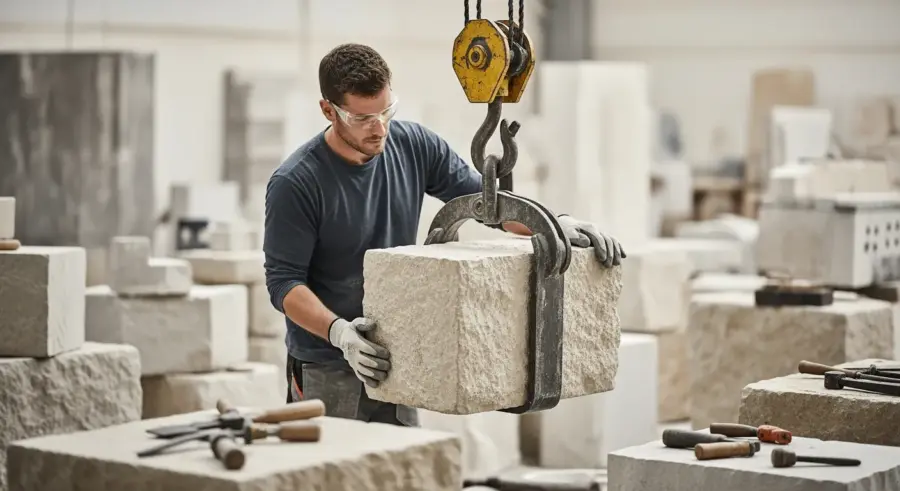
Working with stone can be a rewarding experience, but it also presents unique challenges. One of the most significant is safely and efficiently lifting and moving heavy stone slabs and blocks. Stone lifting clamps are essential tools for this purpose, providing a secure grip and reducing the risk of accidents. Using these clamps correctly is not just about convenience, it’s about ensuring the safety of yourself and your team.
This guide will provide a comprehensive overview of stone lifting clamps, covering everything from selecting the right type to proper maintenance. Understanding the different types of clamps and how to use them safely is crucial for anyone involved in stone masonry or lithic conservation.
Whether you’re a seasoned professional or just starting out, this guide will help you make informed decisions and implement best practices for using stone lifting clamps. Let’s get started by exploring the various types of stone lifting clamps available.
Types of Stone Lifting Clamps
Stone lifting clamps come in a variety of designs, each suited for specific applications. Understanding these differences is key to choosing the right tool for the job. The most common types include scissor clamps, parallel clamps, and slab lifters, each with its own advantages and disadvantages.
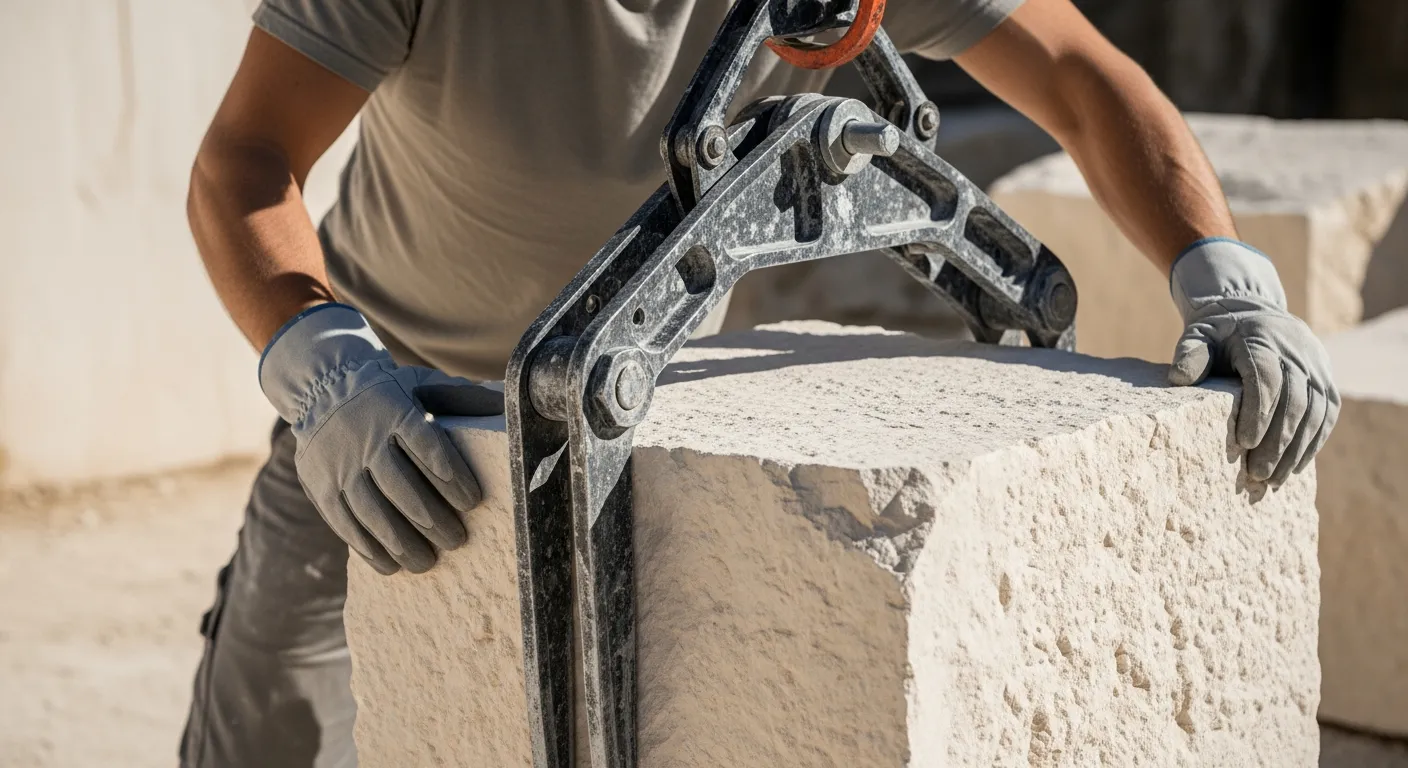
Scissor clamps, also known as ‘A’ frame clamps, are designed to grip stone from the top using a scissor-like action. They are versatile and can handle a range of stone thicknesses, making them a popular choice for general lifting tasks. The gripping force increases as the weight of the stone pulls down, providing a secure hold.
Parallel clamps, on the other hand, maintain a constant grip on the stone, regardless of its weight. These are ideal for lifting polished or delicate stone where minimizing pressure points is essential. They are often used in situations where precise placement is required, such as installing countertops or cladding panels.
Slab lifters are specifically designed for handling large, flat slabs of stone. They typically feature a wide gripping surface to distribute the weight evenly and prevent damage. Slab lifters are commonly used in quarries and fabrication shops for moving and loading stone slabs.
Beyond these common types, there are also specialized clamps designed for specific shapes or lifting orientations. Some clamps are designed for lifting cylindrical stones, while others are optimized for vertical lifting. Consider the specific needs of your project when selecting a clamp.
Vacuum lifters are another option for handling smooth, non-porous stone surfaces. These lifters use suction to create a strong grip, eliminating the need for mechanical clamping. Vacuum lifters are particularly useful for handling thin, fragile slabs that could be damaged by traditional clamps.
It’s also important to consider the material of the gripping pads on the clamp. Rubber pads are commonly used to protect polished surfaces, while metal pads may be suitable for rougher stones. Choose a clamp with pads that are compatible with the type of stone you are working with.
Selecting the Right Clamp for the Job
Choosing the appropriate stone lifting clamp is essential for safety and efficiency. Several factors should be considered, including the type of stone, its weight and dimensions, and the lifting environment. Ignoring these factors can lead to accidents, damage to the stone, or premature wear on the clamp.
For rough or unpolished stone, a scissor clamp may be sufficient, as it can provide a strong grip without damaging the surface. However, for polished or delicate stone, a parallel clamp with rubber-lined jaws is a better choice to prevent scratches or chips. Always assess the stone’s fragility before selecting a clamp.
The weight and dimensions of the stone are also crucial considerations. Ensure that the clamp’s weight limit exceeds the stone’s weight and that the jaw opening is wide enough to accommodate the stone’s thickness. Using a clamp beyond its capacity can result in failure and serious injury.
The lifting environment also plays a role in clamp selection. For example, if you are working in a confined space, a compact clamp may be necessary. If you are lifting stone at an angle, a clamp with a swivel feature can help maintain a secure grip.
Consider the stone’s surface texture when choosing a clamp. Porous stones may require clamps with specialized gripping pads to ensure a secure hold. Smooth stones might benefit from vacuum lifters to avoid surface damage.
Think about the frequency of use. If you are frequently lifting stones of varying sizes and weights, investing in a versatile clamp with adjustable jaws may be a worthwhile investment. This can save time and reduce the need for multiple clamps.
Don’t forget to factor in the ease of use. A clamp that is easy to operate and adjust will improve efficiency and reduce the risk of errors. Look for clamps with ergonomic handles and intuitive controls.
Inspecting Clamps for Damage
Regular inspection of stone lifting clamps is crucial for identifying potential problems before they lead to accidents. A pre-use inspection should be conducted every time before using the clamp. This includes checking for cracks, wear, and deformation of the clamp’s components.
Pay close attention to the gripping surfaces of the clamp, looking for signs of wear or damage. Worn or damaged gripping surfaces can reduce the clamp’s holding power, increasing the risk of slippage. Replace any worn or damaged parts immediately.
| Component | Inspection Criteria | Action |
|---|---|---|
| Gripping Pads | Check for wear, cracks, or detachment | Replace if damaged |
| Pivot Points | Ensure smooth movement, check for corrosion | Lubricate or replace if necessary |
| Frame | Inspect for cracks, bends, or deformation | Remove from service if damaged |
| Locking Mechanisms | Verify proper function and secure locking | Repair or replace if faulty |
| Welds | Check for cracks or signs of stress | Remove from service if cracked |
Check the pivot points and locking mechanisms of the clamp for smooth operation and secure locking. Corrosion or damage to these components can compromise the clamp’s functionality. Lubricate the pivot points regularly to prevent corrosion and ensure smooth movement.
Inspect the clamp’s frame for any signs of bending, cracking, or deformation. These types of damage can weaken the clamp and make it unsafe to use. If you find any damage to the frame, remove the clamp from service immediately.
Examine the welds on the clamp for cracks or signs of stress. Welds are critical for maintaining the clamp’s structural integrity. Any cracks in the welds should be addressed by a qualified welder before the clamp is used again.
Keep a log of all inspections and maintenance activities. This will help you track the clamp’s condition and identify potential problems early on. Regular inspections and maintenance are essential for ensuring the safe and reliable operation of your stone lifting clamps.
Proper Lifting Techniques
Using proper lifting techniques is just as important as selecting the right clamp and inspecting it for damage. Improper lifting techniques can put undue stress on the clamp and increase the risk of accidents. Always follow established safety protocols and guidelines when lifting stone.
Before lifting, ensure that the stone is clean and free of debris that could interfere with the clamp’s grip. Position the clamp so that the weight is evenly distributed and the stone is balanced. Avoid lifting stone at an extreme angle, as this can cause the clamp to slip.
When lifting, use slow, controlled movements to avoid sudden jolts or swings. Keep the load close to the ground to minimize the risk of injury if the clamp were to fail. Never walk or stand under a suspended load.
Communicate clearly with your team throughout the lifting process. Use hand signals or radios to coordinate movements and ensure everyone is aware of the load’s position. A well-coordinated team can significantly reduce the risk of accidents.
Always use appropriate personal protective equipment (PPE), such as gloves, safety glasses, and steel-toed boots. This will help protect you from potential injuries in the event of an accident.
Plan the lifting operation in advance, considering the path of travel and any potential obstacles. Ensure that the lifting area is clear of obstructions and that there is enough space to maneuver the stone safely.
If you are lifting stone with a crane or other lifting device, make sure that the equipment is properly inspected and certified. The operator should be qualified and experienced in lifting heavy loads.
Weight Limits and Safety Factors
Understanding weight limits and safety factors is crucial for safe stone lifting. Every stone lifting clamp has a maximum weight limit, which is the highest load it is designed to handle. Exceeding this limit can lead to clamp failure and serious injury.
The safety factor is a multiplier that indicates how much stronger the clamp is than its rated weight limit. A safety factor of 5:1, for example, means that the clamp can theoretically handle five times its rated load before failing. However, it is essential to never exceed the stated weight limit, regardless of the safety factor.
- Check the clamp’s weight limit before each lift
- Never exceed the stated weight limit
- Consider the stone’s actual weight, not just an estimate
- Factor in the weight of any rigging or attachments
- Use a clamp with an appropriate safety factor for the job
Always check the clamp’s weight limit before each lift and ensure that it is clearly marked on the clamp. If the weight limit is not visible or legible, do not use the clamp. Consult the manufacturer’s specifications for the clamp’s weight limit and safety factor.
When estimating the weight of a stone, it’s always better to overestimate than underestimate. Use a reliable method for determining the stone’s weight, such as a scale or a weight chart. Don’t rely on guesswork.
Remember to factor in the weight of any rigging or attachments that are used in conjunction with the clamp. This includes slings, shackles, and spreader bars. The total weight of the load should never exceed the clamp’s weight limit.
Choose a clamp with an appropriate safety factor for the job. A higher safety factor provides a greater margin of safety. For critical lifting operations, consider using a clamp with a safety factor of 7:1 or higher.
Maintaining Stone Lifting Clamps
Proper maintenance is essential for prolonging the life of your stone lifting clamps and ensuring their continued safe operation. Regular cleaning, lubrication, and storage can prevent corrosion, wear, and other damage. A well-maintained clamp is a safer and more reliable clamp.
After each use, clean the clamp to remove any dirt, dust, or debris. Use a wire brush or solvent to remove stubborn deposits. Pay particular attention to the gripping surfaces and pivot points.
Lubricate the pivot points and moving parts of the clamp regularly. Use a high-quality lubricant that is designed for heavy-duty applications. This will help prevent corrosion and ensure smooth operation.
When not in use, store the clamp in a dry, protected location. Avoid storing the clamp in direct sunlight or extreme temperatures. This can cause the rubber or plastic components to deteriorate.
Periodically inspect the clamp for signs of wear or damage. Replace any worn or damaged parts immediately. Keep a record of all inspections and maintenance activities.
Follow the manufacturer’s recommendations for maintenance and lubrication. The manufacturer may have specific instructions for maintaining your particular type of clamp. Adhering to these instructions will help ensure the clamp’s longevity and safe operation.
If you notice any unusual noises or vibrations during operation, stop using the clamp immediately and inspect it for damage. These could be signs of a serious problem that needs to be addressed.
Consider having your stone lifting clamps professionally inspected and certified on a regular basis. This can help identify potential problems that may not be apparent during a visual inspection.
Advanced Techniques and Considerations
Beyond the basics, there are advanced techniques and considerations that can further enhance the safety and efficiency of stone lifting operations. These include using multiple clamps for large or irregularly shaped stones, employing specialized rigging techniques, and understanding the dynamics of load distribution. Mastering these advanced techniques can significantly improve your ability to handle complex lifting tasks.
For large or irregularly shaped stones, using multiple clamps can provide a more secure and balanced lift. Distribute the weight evenly among the clamps and ensure that each clamp is within its weight limit. This technique requires careful planning and coordination to avoid overloading any single clamp.
Specialized rigging techniques, such as using spreader bars or slings, can help distribute the load and prevent damage to the stone. Spreader bars are particularly useful for lifting long, thin slabs, as they prevent the clamps from pinching the stone. Slings can be used to create a more secure connection between the clamp and the lifting device.
Understanding the dynamics of load distribution is crucial for safe lifting. Consider the center of gravity of the stone and ensure that the clamps are positioned to maintain balance. Uneven load distribution can cause the stone to tilt or slip, increasing the risk of accidents.
When using multiple clamps, ensure that they are all of the same type and weight rating. Mixing different types of clamps can lead to uneven load distribution and increase the risk of failure.
Consider using load cells to monitor the weight being applied to each clamp. This can help ensure that the load is evenly distributed and that no single clamp is being overloaded. Load cells provide real-time feedback on the weight being lifted.
For complex lifting operations, consider using a qualified rigging engineer to develop a lifting plan. A rigging engineer can assess the risks and develop a safe and efficient lifting strategy.
Common Mistakes to Avoid
Even with the best equipment and training, it’s easy to make mistakes when lifting stone. Being aware of common pitfalls can help you avoid accidents and ensure a safe working environment. Some of the most frequent errors include using the wrong type of clamp, neglecting pre-use inspections, and exceeding weight limits.
One of the most common mistakes is using the wrong type of clamp for the job. Using a scissor clamp on polished stone, for example, can cause scratches or chips. Always select the clamp that is best suited for the type of stone, its weight, and the lifting environment.
Neglecting pre-use inspections is another frequent error. Failing to check the clamp for damage before each use can lead to accidents if a critical component fails. Make pre-use inspections a routine part of your lifting operations.
Exceeding weight limits is a dangerous mistake that can have serious consequences. Always know the weight of the stone and the weight limit of the clamp. Never exceed the stated weight limit, even if it seems like the clamp can handle it.
Improper communication and coordination among team members can also lead to mistakes. Ensure that everyone is aware of the lifting plan and their role in the process. Use clear hand signals or radios to communicate movements and ensure everyone is on the same page.
Failing to properly train personnel on the safe use of stone lifting clamps is a significant oversight. Ensure that all workers are adequately trained and understand the risks involved. Training should cover clamp selection, inspection, lifting techniques, and emergency procedures.
Ignoring environmental factors, such as wind or rain, can also lead to accidents. Wind can cause the stone to swing, making it difficult to control. Rain can make the stone slippery, reducing the clamp’s grip. Always assess the environmental conditions before lifting stone.
Conclusion
Stone lifting clamps are indispensable tools for anyone working with stone, but their safe and effective use requires knowledge, preparation, and diligence. By understanding the different types of clamps, selecting the right tool for the job, and following proper lifting techniques, you can minimize the risk of accidents and ensure a safe working environment. Regular inspection and maintenance are also essential for prolonging the life of your clamps and ensuring their continued reliable operation.
Remember, safety should always be the top priority when working with heavy stone. Take the time to educate yourself and your team on the best practices for using stone lifting clamps. This investment in safety will pay dividends in the form of reduced accidents, increased productivity, and a more confident and skilled workforce.
By consistently applying the principles outlined in this guide, you can create a culture of safety in your workplace and ensure that stone lifting operations are conducted efficiently and without incident. Continue to stay informed about the latest advancements in stone lifting technology and best practices to further enhance your safety performance. The commitment to continuous improvement is key to maintaining a safe and productive work environment.