
Stone hammering is an age-old technique that remains essential in lithic conservation and stone masonry. It’s a method used to shape, split, and refine stone, and understanding the nuances of different hammering techniques is crucial for anyone working with stone. Proper application of these techniques ensures both the aesthetic appeal and structural integrity of stone structures.
This article will cover various stone hammering techniques, offering insights into how each can be used to achieve specific results. From the initial rough shaping to the final detailed refinement, mastering these skills allows artisans and conservators to preserve and enhance stone’s natural beauty.
Whether you are a seasoned professional or a beginner eager to learn, this guide provides a comprehensive overview of the tools and techniques necessary for effective stone hammering. By understanding and practicing these methods, you can unlock the potential of stone and create lasting works of art and architecture.
Understanding Different Types of Stone Hammers
The selection of the right hammer is fundamental to effective stone working. Different hammers are designed for specific tasks, and using the appropriate tool ensures efficiency and precision.
For instance, a pitching tool requires a heavy hammer to deliver powerful, controlled blows, while a bush hammer is used with a lighter touch for creating textured surfaces. Understanding these differences is key to achieving the desired results in stone masonry.
The point hammer is another essential tool, used for removing small amounts of material and refining shapes. Its pointed end allows for concentrated force, making it ideal for detailed work and cleaning up edges.
In contrast, the claw hammer, more commonly associated with woodworking, has limited use in stone work. It’s best suited for tasks like removing nails from wooden forms used in concrete setting, rather than direct stone shaping.
Besides the hammers already mentioned, consider the importance of the mallet in softer stone carving. Mallets, often made of wood or rubber, provide a softer impact, reducing the risk of chipping or fracturing delicate stones. They are frequently used with chisels for controlled material removal.
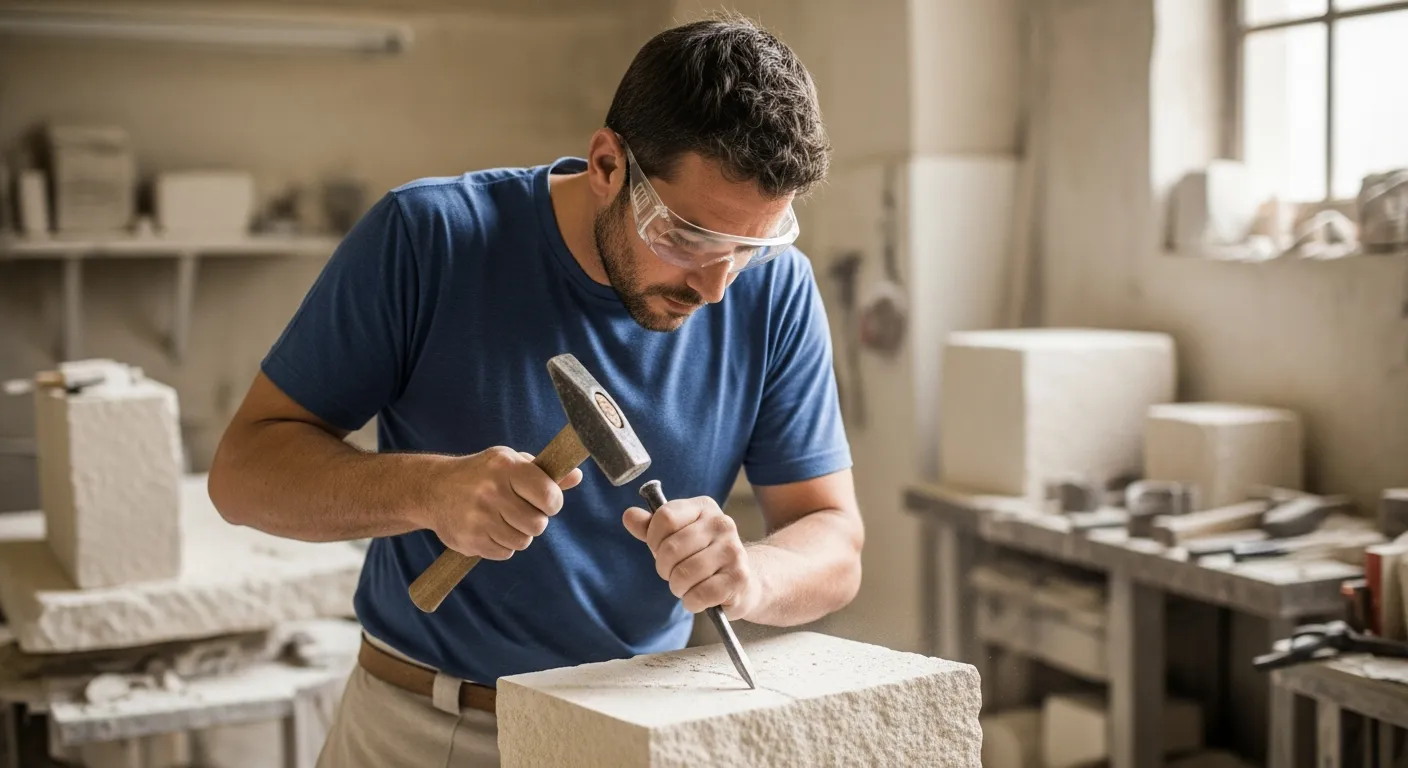
The scabbling hammer is another specialized tool, featuring a series of hardened steel points. It is used to remove surface layers of concrete or stone, often to prepare a surface for bonding with another material. This tool is particularly useful in restoration projects.
Furthermore, the brick hammer, with its chisel-like edge, is designed for splitting bricks and dressing edges. While not strictly a stone hammer, it finds application in projects involving both brick and stone, allowing for precise cuts and shaping. Its balanced design makes it easy to control.
The geological hammer, also known as a rock pick, serves a different purpose. It’s used for breaking and sampling rocks in geological fieldwork. Although not designed for shaping stone, it can be useful for initially breaking down larger pieces into manageable sizes.
Techniques for Pitching Stone to Achieve a Rough Face
Pitching is a technique used to split stone along a predetermined line, creating a rough, natural face. This method is often employed when preparing stones for walls or other structural elements where a rustic appearance is desired.
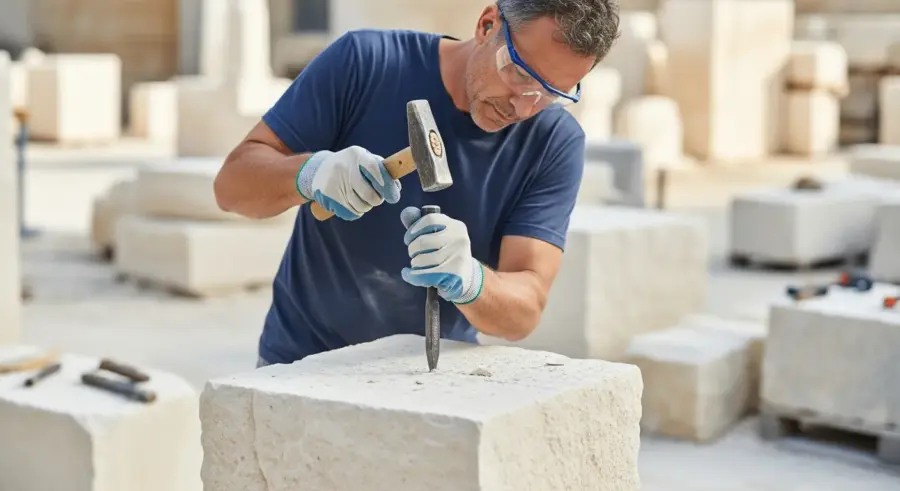
The process involves using a pitching tool and a heavy hammer to strike along the marked line, gradually splitting the stone. Accuracy and control are essential to ensure a clean break and avoid wasting material.
Start by scoring a line on the stone where you want it to split, using a chisel and hammer. Then, position the pitching tool along this line and strike it firmly with the hammer.
Continue this process, moving along the line and applying consistent force until the stone begins to split. With practice, you’ll develop a feel for the amount of force required to achieve a clean, predictable break.
Before you begin, ensure the stone is properly supported. Uneven support can lead to unpredictable breaks. A bed of sand or a purpose-built pitching block can provide a stable base.
When scoring the line, make multiple passes with the chisel, deepening the groove with each pass. This creates a clear path for the stone to split along. A shallow score line can lead to a wandering break.
Pay attention to the grain of the stone. Stone tends to split more easily along its natural grain. Orienting the pitching line with the grain will result in a cleaner, more controlled split.
If the stone is particularly thick or hard, you may need to use wedges in addition to the pitching tool. Drive the wedges into the score line to help propagate the split. This is especially helpful for large stones.
Remember to wear safety glasses and gloves during the pitching process. Stone chips can fly off with considerable force, posing a risk to your eyes and hands. Safety is paramount.
Using a Bush Hammer to Create a Textured Surface
Bush hammering is a technique used to create a textured surface on stone, adding visual interest and improving grip. This method is popular for paving stones, steps, and other surfaces where slip resistance is important.
The bush hammer, with its multiple pointed tips, is used to strike the stone surface, creating a pattern of small indentations. The density and depth of these indentations can be controlled to achieve different levels of texture.
| Bush Hammer Type | Tip Density | Typical Application |
|---|---|---|
| Fine Bush Hammer | High | Creating a light, even texture |
| Medium Bush Hammer | Moderate | General-purpose texturing |
| Coarse Bush Hammer | Low | Producing a heavy, pronounced texture |
| Pneumatic Bush Hammer | Adjustable | Large-scale projects requiring consistent texture |
When using a bush hammer, apply even pressure and consistent strikes. Overlapping your strikes slightly will help create a uniform texture. Avoid concentrating your blows in one area, as this can lead to unevenness.
The angle at which you strike the stone will also affect the texture. A steeper angle will create deeper indentations, while a shallower angle will produce a lighter texture. Experiment to find the angle that achieves your desired effect.
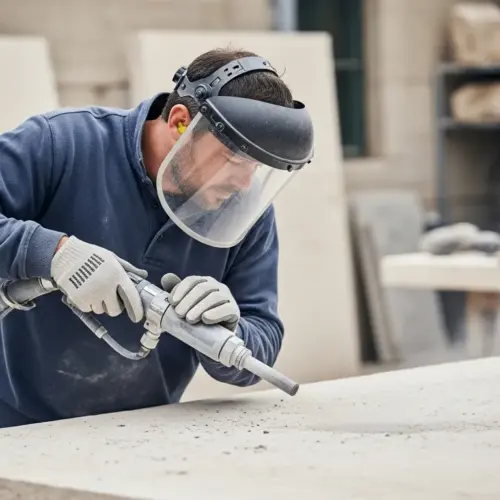
For larger surfaces, consider using a pneumatic bush hammer. These tools are powered by compressed air and can significantly speed up the texturing process. They also provide more consistent results than manual bush hammers.
After bush hammering, it’s often necessary to clean the stone surface to remove any loose debris. A stiff brush and water can be used to remove dust and small fragments. This will enhance the appearance of the textured surface.
Different types of stone will react differently to bush hammering. Softer stones will texture more easily than harder stones. Experiment with different stones to understand how they respond to the technique.
Pointing Stone for Detailed Shaping and Refinement
Pointing is a technique used for detailed shaping and refinement of stone, allowing for precise control over the final form. This method is often used to create decorative elements, smooth edges, or correct imperfections.
The process involves using a point hammer to remove small amounts of material, gradually shaping the stone to the desired form. Patience and a steady hand are essential for achieving accurate and aesthetically pleasing results.
Begin by identifying the areas that need to be refined or shaped. Then, using the point hammer, strike the stone at a shallow angle, removing small chips of material.
Work slowly and methodically, constantly checking your progress and adjusting your technique as needed. With careful attention to detail, you can achieve a high level of precision and create intricate stone features.
For larger areas, consider using a grid pattern to ensure even material removal. This involves marking a series of lines on the stone and working within each section before moving on to the next.
When pointing, it’s crucial to maintain a sharp point on your hammer. A dull point will require more force and can lead to uncontrolled chipping. Regularly sharpen your point hammer to ensure optimal performance.
The direction of your strikes is also important. Striking perpendicular to the surface will remove more material, while striking at an angle will create a smoother finish. Experiment with different angles to achieve the desired effect.
Use a variety of point hammers with different sized points. A finer point is ideal for delicate work, while a coarser point is better for removing larger amounts of material. Having a range of tools will allow you to adapt to different situations.
Consider using a magnifying glass to examine your work closely. This will help you identify any imperfections or areas that need further refinement. Detailed inspection is key to achieving a high-quality finish.
Remember to remove dust and debris frequently to maintain visibility. A clean surface will allow you to see your progress more clearly and avoid making mistakes. A small brush or compressed air can be used for this purpose.
Hammer Control and Precision: Tips for Accuracy
Hammer control is essential for achieving accuracy and precision in stone working. Consistent and controlled strikes are necessary to shape the stone effectively and avoid damage.
Proper grip, stance, and swing technique all contribute to hammer control. Practicing these elements will improve your accuracy and reduce the risk of errors.
- Maintain a firm but relaxed grip
- Use your whole arm for power, not just your wrist
- Keep your eye on the point of impact
- Practice on scrap stone to develop your technique
- Adjust your stance for optimal balance and control
Focus on developing a consistent rhythm. A smooth, rhythmic swing will improve your accuracy and reduce fatigue. Avoid jerky or erratic movements.
Experiment with different hammer weights. A heavier hammer will deliver more power, while a lighter hammer will offer more control. Choose a hammer weight that feels comfortable and allows you to maintain accuracy.
Practice striking at different angles. The angle of impact will affect the amount of material removed and the shape of the resulting surface. Mastering different angles will give you more control over the shaping process.
Use a guide or template when shaping complex forms. A template will help you maintain consistency and accuracy. You can create templates from wood, metal, or even cardboard.
Record your progress and analyze your mistakes. Keeping a journal of your work will help you identify areas where you need to improve. Pay attention to your technique and make adjustments as needed.
Selecting the Right Stone for Hammering Techniques
The type of stone significantly impacts the effectiveness of hammering techniques. Softer stones like sandstone are easier to shape but may be more prone to chipping or crumbling.
Harder stones like granite require more force and precision but can achieve finer details and more durable results. Understanding the properties of different stones is crucial for selecting the appropriate hammering methods.
For beginners, starting with a softer stone like limestone or soapstone can be beneficial. These stones are more forgiving and allow you to develop your skills without the frustration of working with extremely hard materials.
As you gain experience, you can gradually move on to harder stones like granite or marble. These materials offer greater challenges but also allow for more intricate and lasting creations.
Consider the grain and bedding planes of the stone. Stone will split more easily along these natural lines of weakness. Understanding the stone’s structure will help you choose the most efficient hammering techniques.
Test the stone’s hardness before you begin working on it. A simple scratch test can give you an indication of its hardness. Use a nail or other sharp object to scratch the surface of the stone. The easier it is to scratch, the softer the stone.
Be aware of any existing cracks or flaws in the stone. These weaknesses can affect how the stone responds to hammering. Avoid applying excessive force near cracks or flaws, as this can cause the stone to break unexpectedly.
Consider the intended use of the finished stone. If the stone will be exposed to the elements, choose a durable material that is resistant to weathering. If the stone will be used for decorative purposes, you can choose a softer material that is easier to carve.
Safety Precautions When Hammering Stone
Safety is paramount when working with stone hammering techniques. The potential for flying debris and sharp edges necessitates the use of appropriate protective gear.
Always wear safety glasses, gloves, and sturdy footwear to protect yourself from injury. Additionally, consider using a dust mask to avoid inhaling stone particles, especially when working indoors.
Ensure that your work area is well-lit and free from obstructions. A clear and organized workspace reduces the risk of accidents and allows you to focus on the task at hand.
Regularly inspect your tools for any signs of damage or wear. Replace any tools that are cracked, chipped, or otherwise compromised to prevent them from failing during use.
When hammering, be mindful of your surroundings and maintain a safe distance from others. Stone chips can travel a considerable distance, so it’s important to ensure that bystanders are protected.
Use proper ventilation, especially when working indoors. Stone dust can be harmful to your lungs, so it’s important to ensure that the air is properly circulated. Consider using a dust collection system to remove dust from the air.
Take breaks regularly to avoid fatigue. Fatigue can impair your judgment and increase the risk of accidents. Step away from your work area and stretch your muscles to prevent strain.
Be aware of the noise levels in your work area. Prolonged exposure to loud noise can damage your hearing. Consider wearing earplugs or earmuffs to protect your ears.
Learn basic first aid procedures. In case of an accident, it’s important to know how to treat minor injuries. Keep a first aid kit readily available in your work area.
Store your tools properly when not in use. This will prevent them from being damaged or causing accidents. Keep your tools in a safe and secure location, away from children and pets.
Integrating Stone Hammering Techniques in Lithic Conservation
Stone hammering techniques play a vital role in lithic conservation, allowing conservators to repair and restore damaged stone structures. These methods are used to replace deteriorated stones, consolidate weakened areas, and recreate missing elements.
When working on historical structures, it’s essential to match the original stone type and hammering techniques as closely as possible. This ensures that the repairs are sympathetic to the existing fabric and maintain the aesthetic integrity of the building.
Conservators often use pitching to prepare new stones that match the dimensions and texture of the original stones. Bush hammering can be used to replicate the surface finish of weathered stones, blending the new repairs with the old.
Pointing is used to refine the edges of repaired areas and ensure a seamless transition between the old and new stone. By mastering these techniques, conservators can preserve our cultural heritage for future generations.
Before undertaking any conservation work, thoroughly document the existing condition of the stone structure. This documentation will serve as a baseline for assessing the effectiveness of the repairs and monitoring any changes over time.
Use reversible materials and techniques whenever possible. This will allow future conservators to undo the repairs if necessary, without damaging the original stone. Reversibility is a key principle of conservation ethics.
Consult with experienced conservators and architects before beginning any major repairs. Their expertise can help you avoid costly mistakes and ensure that the repairs are carried out in a responsible and sustainable manner. Collaboration is essential for successful conservation projects.
Consider the long-term maintenance of the repaired stone structure. Regular cleaning and inspection can help prevent future deterioration and extend the lifespan of the repairs. Proactive maintenance is more cost-effective than reactive repairs.
Be mindful of the environmental impact of your conservation work. Choose sustainable materials and techniques that minimize waste and pollution. Conservation should be environmentally responsible.
The Art of Combining Stone Hammering Techniques
The true mastery of stone hammering lies in the ability to combine different techniques to achieve complex and nuanced results. Skilled artisans often use a combination of pitching, bush hammering, and pointing to create unique and expressive stone features.
For example, a stone carver might use pitching to rough out the basic shape of a sculpture, then use bush hammering to add texture and depth, and finally use pointing to refine the details and create a smooth finish.
Experimentation and practice are key to developing this level of skill. Try combining different techniques on scrap stone to see how they interact and what effects you can achieve.
Consider studying the work of master stone carvers and masons to learn from their techniques and approaches. By observing and emulating their methods, you can expand your own repertoire and develop your unique style.
Think about using stencils or masks to create patterns with different hammering techniques. This can add visual interest and complexity to your designs. Stencils can be made from wood, metal, or even plastic.
Explore the use of power tools in conjunction with hand hammering techniques. Power tools can speed up the rough shaping process, while hand hammering can be used for the finer details. A combination of both can be very efficient.
Consider the interplay of light and shadow when combining different textures. Rough textures will create more shadows, while smooth textures will reflect more light. Use this to your advantage to create visually dynamic surfaces.
Don’t be afraid to break the rules and experiment with unconventional techniques. Some of the most innovative stone carvings have been created by artists who dared to push the boundaries of traditional methods. Creativity is key.
Conclusion
Mastering stone hammering techniques is a journey that requires dedication, practice, and a keen eye for detail. From understanding the different types of hammers to combining techniques for complex results, the possibilities are endless.
By following the guidelines and safety precautions outlined in this article, you can develop the skills necessary to shape stone with precision and create lasting works of art and architecture. Embrace the challenge and unlock the potential of this ancient craft.
Continue to seek out new knowledge and techniques. Attend workshops, read books, and connect with other stone workers to expand your skills and stay up-to-date on the latest developments in the field. Lifelong learning is essential for continued growth.
Share your knowledge and experience with others. Mentoring aspiring stone workers is a rewarding way to give back to the community and ensure that this ancient craft continues to thrive. Pass on your skills and inspire the next generation.
Most importantly, have fun and enjoy the process of working with stone. Stone hammering is a challenging but ultimately rewarding art form. Appreciate the beauty and durability of this natural material and take pride in your creations.