
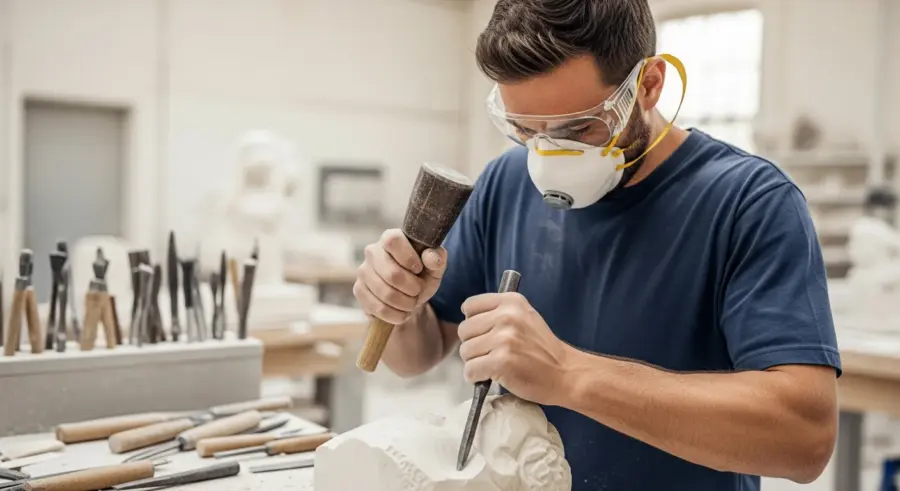
Stone sculpting is an ancient art form, and getting started can seem daunting. Selecting the right tools is the first step in bringing your creative visions to life.
This guide provides a comprehensive overview of essential stone sculpting tools, perfect for beginners eager to learn the craft. It will help you navigate the world of chisels, mallets, rasps, and more.
Understanding the purpose and function of each tool will help you make informed decisions. You’ll be well-equipped to begin your artistic exploration into the world of stone.
This knowledge will allow you to effectively shape and refine your sculptures. It will also help you choose the right tool for each task, ensuring efficiency and precision.
From chisels to rasps and mallets, we will cover the fundamental tools. We will also touch on the responsible use of power tools and the importance of safety equipment.
We’ll explore the nuances of each tool, providing practical advice for beginners. Safety will be emphasized throughout, ensuring a safe and enjoyable sculpting experience.
Understanding Different Types of Stone Chisels
Chisels are the workhorses of stone sculpting, used for removing material and shaping the stone. Different types of chisels are designed for specific purposes, so understanding their individual functions is essential.
Without a good understanding of chisel types, you may struggle to achieve the desired results. Choosing the correct chisel for the job is crucial for efficient and precise sculpting.
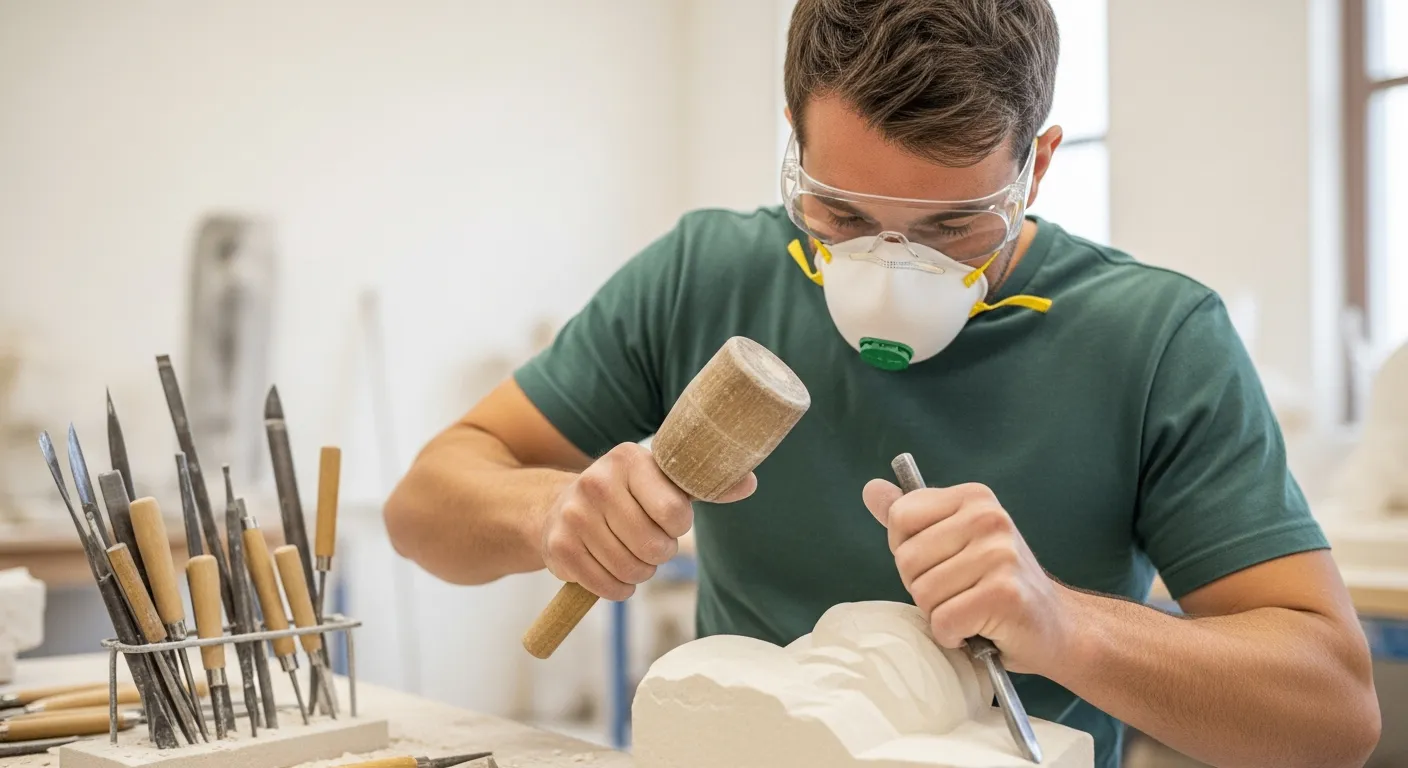
Point chisels, also known as pitching tools, are used for roughing out the initial shape of the stone. These chisels have a pointed tip that concentrates force on a small area, making them effective for removing large amounts of material.
The point chisel is your go-to tool for removing large chunks of stone quickly. It allows you to establish the basic form of your sculpture.
Tooth chisels feature multiple teeth along the cutting edge, making them ideal for creating textured surfaces. They are also used for refining the shape after the initial roughing out with a point chisel.
Tooth chisels are perfect for adding character and detail to your stone. They can also be used to create a more uniform surface after using a point chisel.
Flat chisels have a wide, flat cutting edge and are used for smoothing surfaces and creating clean lines. These chisels are essential for achieving a polished and refined look in your stone sculpture.
The flat chisel is your tool for achieving a professional finish. It allows you to create smooth, even surfaces and sharp, defined edges.
The size and shape of the chisel should be chosen based on the type of stone you are working with. Softer stones like soapstone may require smaller, finer chisels compared to harder stones like granite.
Using the wrong size chisel can damage the stone or make the sculpting process more difficult. Always consider the stone’s hardness and your desired level of detail when selecting a chisel.
Consider the angle at which you hold the chisel to the stone. A steeper angle will remove more material, while a shallower angle will create a smoother surface.
Also, remember to keep your chisels sharp. A dull chisel requires more force and can be dangerous.
Choosing the Right Mallet for Stone Sculpting
A mallet is used to strike the chisel, transferring force to the stone. The type of mallet you choose can significantly impact the efficiency and precision of your stone sculpting work.
The right mallet will not only make your work easier but also reduce the risk of injury. Selecting the appropriate mallet is essential for a comfortable and productive sculpting experience.
Wooden mallets are a popular choice for stone sculpting due to their shock-absorbing properties. They reduce the impact on your hands and wrists, making them comfortable to use for extended periods.
Wooden mallets are a great option for beginners as they are forgiving and easy to control. They are particularly well-suited for softer stones.
Polyurethane mallets offer a balance of hardness and durability. They provide a firm striking surface while still offering some shock absorption, making them suitable for various stone types.
Polyurethane mallets are a versatile choice that can be used for a wide range of stone sculpting projects. They offer a good compromise between power and comfort.
Steel mallets are the heaviest and most powerful option, best suited for working with hard stones like granite. However, they transmit more vibration to your hands and wrists, so use them with caution and proper technique.
Steel mallets are for experienced sculptors working with tough materials. Proper technique and protective gear are essential when using steel mallets.
The size and weight of the mallet should be proportional to the size of the chisel and the hardness of the stone. Experiment with different mallets to find the one that feels most comfortable and effective for your specific needs.
A mallet that is too heavy can be tiring to use, while a mallet that is too light may not provide enough force. Finding the right balance is key to efficient and comfortable sculpting.
Consider the handle of the mallet as well. A comfortable and ergonomic handle will reduce fatigue and improve control.
Always strike the chisel squarely with the mallet. Avoid glancing blows, which can damage the chisel or cause injury.
Using Rasps and Rifflers for Shaping Stone
Rasps and rifflers are essential tools for refining the shape of your stone sculpture. They allow you to remove small amounts of material and create smooth, flowing surfaces.
These tools are crucial for achieving a high level of detail and refinement in your work. They bridge the gap between rough shaping and final finishing.
Rasps are coarse tools with raised teeth that are used to remove material quickly. Rifflers are smaller, more delicate tools with various shapes and profiles, designed for reaching into tight spaces and creating intricate details.
Think of rasps as miniature planes for stone. Rifflers, on the other hand, are like tiny sculpting knives, allowing you to access and refine hard-to-reach areas.
| Rasp Type | Grit | Typical Use |
|---|---|---|
| Half-round rasp | Coarse to medium | General shaping of curved surfaces |
| Flat rasp | Coarse to medium | Smoothing flat surfaces and edges |
| Riffler rasp | Fine to extra fine | Detailed work in tight spaces |
| Cabinet rasp | Medium to fine | Refining shapes and smoothing surfaces |
This table provides a quick reference for selecting the appropriate rasp for your specific needs. Understanding the different types of rasps will help you achieve the desired results.
The choice of rasp and riffler depends on the desired level of detail and the shape of the area you are working on. Different shapes and profiles allow access to a wide variety of areas.
Having a variety of rasps and rifflers in your toolkit will greatly expand your sculpting capabilities. You’ll be able to tackle a wider range of projects and achieve more intricate details.
When using rasps and rifflers, apply gentle, even pressure and work in a consistent direction. This will help you achieve a smooth, uniform surface and avoid creating unwanted scratches or gouges.
Avoid pressing too hard, as this can damage the tool or the stone. Let the tool do the work, and focus on maintaining a consistent stroke.
Regularly clean your rasps and rifflers with a wire brush to remove accumulated stone dust. This will help maintain their sharpness and efficiency.
Consider using lubricating wax or oil on your rasps and rifflers. This can help reduce friction and improve the smoothness of the cut.
Power Tools for Stone Sculpting: A Cautious Approach
Power tools can significantly speed up the stone sculpting process. However, they should be used with caution and respect, as they can be dangerous if not handled properly.
While power tools offer efficiency, they also demand a high level of skill and awareness. Prioritize safety and proper training before using power tools for stone sculpting.
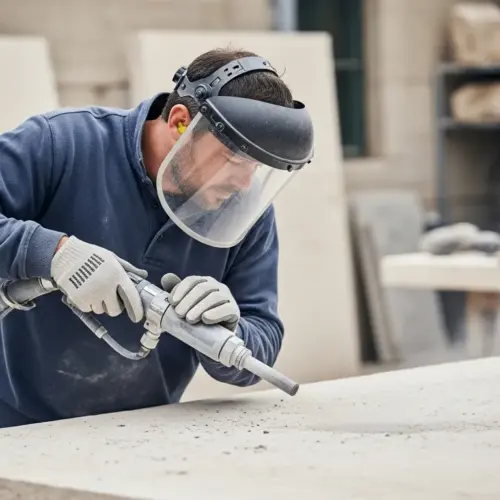
Angle grinders with diamond blades are commonly used for cutting and shaping stone. Rotary tools with various attachments can be used for carving, grinding, and polishing.
Angle grinders are powerful tools that can quickly remove large amounts of material. Rotary tools offer greater precision and control for detailed work.
When using power tools, always wear appropriate safety gear, including eye protection, a dust mask, and hearing protection. It’s important to protect yourself from flying debris, dust, and loud noises.
Never compromise on safety when using power tools. The potential for injury is significant, so always wear the recommended protective gear.
Use power tools in a well-ventilated area to minimize exposure to dust. Never force the tool, and let the tool do the work to avoid kickback and potential injury.
Forcing the tool can lead to loss of control and serious injury. Let the tool’s motor and blade do the work, and guide it gently.
Start with lower speeds and gradually increase as needed, maintaining a firm grip and controlling the tool’s movement. Practice on scrap pieces of stone to get a feel for the tool before working on your sculpture.
Practice is essential for developing the necessary skills and control. Start with simple cuts and gradually increase the complexity as you gain experience.
Be aware of the potential for kickback, especially when using angle grinders. Maintain a firm grip and avoid cutting in tight corners.
Always unplug the power tool before changing blades or attachments. This will prevent accidental starts and potential injury.
Sharpening and Maintaining Your Stone Sculpting Tools
Sharp tools are essential for efficient and safe stone sculpting. Dull tools require more force, increasing the risk of injury and producing poor results.
A sharp tool cuts cleanly and efficiently, requiring less effort and reducing the risk of slipping. Maintaining sharp tools is a fundamental aspect of stone sculpting.
Chisels can be sharpened using a grinding wheel or sharpening stones. Always follow the manufacturer’s instructions and use appropriate safety gear.
Grinding wheels are faster for removing material, but sharpening stones offer greater precision. Choose the method that best suits your needs and skill level.
Regularly clean your tools after each use to remove dust and debris. Store them in a dry place to prevent rust and corrosion.
Stone dust can be abrasive and can damage your tools over time. Cleaning and storing your tools properly will extend their lifespan.
Inspect your tools regularly for signs of wear and tear. Replace any damaged or worn-out tools to ensure your safety and the quality of your work.
Worn-out tools can be dangerous and can compromise the quality of your sculptures. Replace them promptly to maintain safety and efficiency.
Properly maintained tools will last longer and perform better, making your stone sculpting experience more enjoyable and productive. Taking care of your tools is an investment in your craft.
By investing in proper tool maintenance, you’ll save money in the long run and enjoy a more rewarding sculpting experience. Well-maintained tools are a testament to a sculptor’s dedication to their craft.
Consider applying a light coat of oil to your tools after cleaning to prevent rust. This is especially important in humid environments.
Learn how to properly dress your grinding wheel to keep it clean and efficient. A well-dressed grinding wheel will sharpen your tools more effectively.
Essential Safety Equipment for Stone Sculpting
Stone sculpting can generate dust and flying debris, posing potential health and safety risks. Wearing appropriate safety equipment is crucial to protect yourself from these hazards.
Ignoring safety precautions can lead to serious health problems and injuries. Prioritizing safety is essential for a long and fulfilling career in stone sculpting.
Eye protection, such as safety glasses or goggles, is essential to protect your eyes from flying chips and dust. A dust mask or respirator is necessary to prevent inhalation of stone dust, which can cause respiratory problems.
Choose safety glasses or goggles that fit snugly and provide adequate coverage. Select a dust mask or respirator that is appropriate for the type of stone you are working with.
- Safety glasses or goggles
- Dust mask or respirator
- Hearing protection
- Gloves
- Apron or work suit
This list provides a comprehensive overview of the essential safety equipment for stone sculpting. Ensure you have all of these items before starting your project.
Hearing protection, such as earplugs or earmuffs, is recommended when using power tools or working in a noisy environment. Gloves protect your hands from cuts and abrasions, while an apron or work suit protects your clothing from dust and debris.
Choose hearing protection that is comfortable and provides adequate noise reduction. Select gloves that fit well and allow you to maintain a good grip on your tools.
Always prioritize safety when stone sculpting. By taking the necessary precautions, you can minimize the risks and enjoy your creative pursuits with peace of mind.
Safety is not just a set of rules; it’s a mindset. Develop a safety-conscious attitude and make it a habit to prioritize your well-being.
Consider investing in a high-quality dust collection system to further reduce your exposure to stone dust. This is especially important if you are sculpting regularly.
Learn basic first aid and keep a well-stocked first-aid kit in your workspace. Be prepared to handle minor cuts and abrasions.
Understanding Stone Types for Sculpting
Different stones offer unique challenges and rewards for sculptors. The stone’s hardness, grain, and color all influence the final piece.
Choosing the right stone is a crucial decision that will impact the entire sculpting process. Understanding the properties of different stones is essential for success.
Soapstone, for example, is relatively soft and easy to carve, making it ideal for beginners. Alabaster is another soft stone that is prized for its translucence.
Soapstone is a forgiving material that allows beginners to develop their skills without frustration. Alabaster’s translucence adds a unique dimension to sculptures, allowing light to pass through.
Limestone offers a good balance of workability and durability, suitable for both detailed carvings and larger sculptures. Marble is a classic choice, known for its beauty and ability to take a high polish.
Limestone is a versatile stone that can be used for a wide range of projects. Marble’s smooth texture and ability to reflect light make it a prized material for sculptors.
Granite is one of the hardest stones to carve, requiring specialized tools and techniques. However, it is incredibly durable and can withstand the elements, making it suitable for outdoor sculptures.
Granite’s hardness presents a significant challenge, but its durability ensures that sculptures will last for centuries. It is a popular choice for monuments and public art.
Consider the properties of each stone when selecting materials for your project. The right stone can enhance your artistic vision and ensure the longevity of your sculpture.
Think about the desired texture, color, and overall aesthetic when choosing a stone. The stone should complement your artistic vision and enhance the final result.
Research the different types of stone available in your area. Local stone can be a more sustainable and affordable option.
Visit stone yards and talk to experienced stone suppliers. They can provide valuable insights and help you choose the right stone for your project.
Workspace Setup for Stone Sculpting
A well-organized workspace is essential for efficient and safe stone sculpting. Having the right setup can make a big difference in your productivity and enjoyment of the craft.
A dedicated and well-equipped workspace will enhance your creativity and productivity. A comfortable and safe environment is essential for long hours of sculpting.
Choose a location that is well-ventilated and provides ample space for you to move around. A sturdy workbench is essential for supporting your stone and tools.
Adequate ventilation is crucial for minimizing exposure to stone dust. A spacious workspace allows you to move freely and safely around your sculpture.
Good lighting is crucial for seeing the details of your work. Consider using a combination of natural and artificial light to illuminate your workspace.
Proper lighting will help you avoid mistakes and create more accurate and detailed sculptures. A combination of direct and indirect lighting is ideal.
Keep your tools organized and within easy reach. A tool rack or pegboard can help you keep your workspace tidy and prevent accidents.
An organized workspace will save you time and frustration. A tool rack or pegboard will keep your tools readily accessible and prevent them from being misplaced.
Establish a designated area for collecting stone dust and debris. A vacuum cleaner or dust collection system can help keep your workspace clean and minimize exposure to dust.
Controlling stone dust is essential for protecting your health and maintaining a clean workspace. A dust collection system is a worthwhile investment for serious sculptors.
Consider using a tarp or drop cloth to protect your floor from stone dust and debris. This will make cleanup much easier.
Invest in a comfortable and adjustable chair or stool. You’ll be spending many hours sitting while sculpting, so comfort is essential.
Advanced Stone Carving Techniques
Once you’ve mastered the basics, you can explore more advanced stone carving techniques. These techniques can add depth, texture, and visual interest to your sculptures.
Advanced techniques will elevate your sculptures to a new level of artistry. Mastering these techniques requires practice, patience, and a willingness to experiment.
Under-cutting involves carving away material beneath an overhanging feature, creating shadows and adding dimension. Texturing can be achieved using various chisels, rasps, and power tools to create rough or smooth surfaces.
Under-cutting adds drama and complexity to your sculptures. Texturing allows you to create a wide range of effects, from rough and rustic to smooth and polished.
Polishing brings out the natural beauty of the stone and creates a smooth, reflective surface. It typically involves using a series of progressively finer abrasives.
Polishing enhances the color and texture of the stone, creating a luminous and captivating effect. It is the final step in transforming a rough stone into a work of art.
Inlaying involves inserting pieces of contrasting stone or other materials into carved recesses. This can add color and visual interest to your sculptures.
Inlaying allows you to create intricate patterns and designs within your sculptures. It adds a unique and personalized touch to your work.
Experiment with different techniques to find your own unique style and push the boundaries of stone sculpting. The possibilities are endless when you combine skill and creativity.
Don’t be afraid to try new things and challenge yourself. The most innovative and exciting sculptures often come from pushing the boundaries of traditional techniques.
Study the work of master sculptors and learn from their techniques. Attend workshops and seminars to expand your knowledge and skills.
Develop a critical eye and constantly evaluate your own work. Identify areas for improvement and strive to refine your techniques.
Stone Sculpting Project Ideas for Beginners
Starting with simple projects is a great way to build your skills and confidence. Here are a few stone sculpting project ideas for beginners.
Beginner-friendly projects will help you learn the fundamentals without feeling overwhelmed. These projects are designed to be achievable and enjoyable.
A simple geometric shape, such as a sphere or cube, is a good starting point. You can practice using different chisels and rasps to create smooth surfaces and clean lines.
Geometric shapes are excellent for practicing basic carving techniques and developing your control over the tools. Focus on achieving accurate dimensions and smooth surfaces.
Carving a small animal or plant is another popular project for beginners. Choose a simple design and focus on capturing the essential features.
Animals and plants offer opportunities to practice creating curves and organic shapes. Choose a subject that inspires you and focus on capturing its essence.
Creating a decorative stone, such as a paperweight or garden ornament, is a fun and practical project. You can experiment with different textures and finishes.
Decorative stones allow you to combine carving with other techniques, such as polishing and texturing. These projects are a great way to add a personal touch to your home or garden.
A simple relief carving, where the design is raised above the background, is a great way to learn about depth and dimension. Start with a simple pattern and gradually increase the complexity.
Relief carving introduces the concept of creating depth and perspective. Start with a simple design and gradually increase the complexity as you gain confidence.
Remember to take your time, be patient, and enjoy the process of creating something beautiful from stone. Every project is a learning opportunity.
Stone sculpting is a journey of discovery and self-expression. Embrace the challenges and celebrate your successes along the way.
Don’t be afraid to make mistakes. Mistakes are a valuable learning opportunity and can lead to unexpected discoveries.
Share your work with others and seek feedback. Constructive criticism can help you improve your skills and grow as an artist.
Conclusion
Selecting the right stone sculpting tools is the first step in your artistic endeavors. Understanding the purpose and function of each tool will empower you to create stunning works of art.
With the right tools and knowledge, you’ll be well-equipped to embark on your stone sculpting journey. The world of stone sculpting awaits your creative exploration.
Remember to prioritize safety, maintain your tools properly, and experiment with different techniques. With practice and dedication, you can unlock your creative potential and bring your stone sculpting visions to life.
Embrace the challenges, celebrate your successes, and never stop learning. The art of stone sculpting is a lifelong journey of discovery and self-expression.