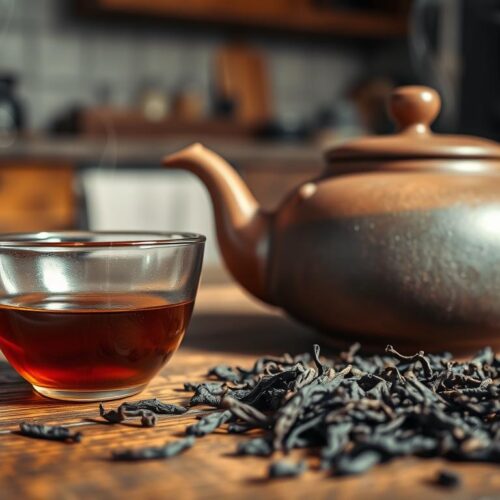

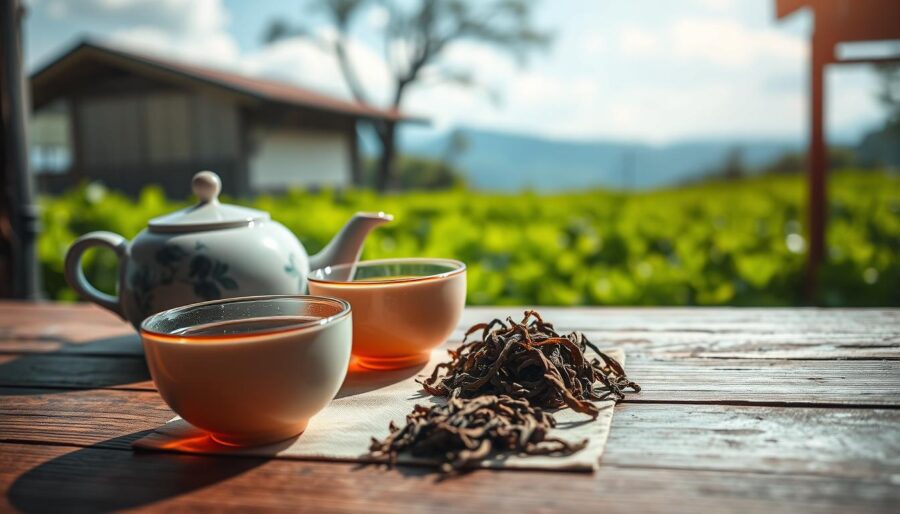
Have you seen dark tea (Heicha) on specialty shelves? It’s a type of Chinese tea that’s fermented and aged for a long time. Unlike black tea, Heicha has darker leaves and a rich, savory taste. It tastes like roasted mushrooms, red dates, and autumn leaves.
To understand Heicha tea’s origin, look at southern Chinese processing. It starts with green-tea steps like plucking and firing. Then, leaves are piled, exposed to dew, baked or steamed, and pressed or packed for aging. This process turns fresh leaves into a darker liquor over months or years.
Heicha tea is more than just a drink. It’s rooted in tradition and place. Many varieties are made with special techniques passed down through generations. In the past, compressed teas were even used as currency on journeys to Tibet.
Pu-erh tea is often included in Heicha, but it has its own rules. It must come from Yunnan and be sun-dried. Yet, methods like wet piling show they share a common heritage. Heicha tea has a rich history, loved for its warming and soothing qualities in cold weather.
Understanding Heicha: An Introduction to Dark Tea
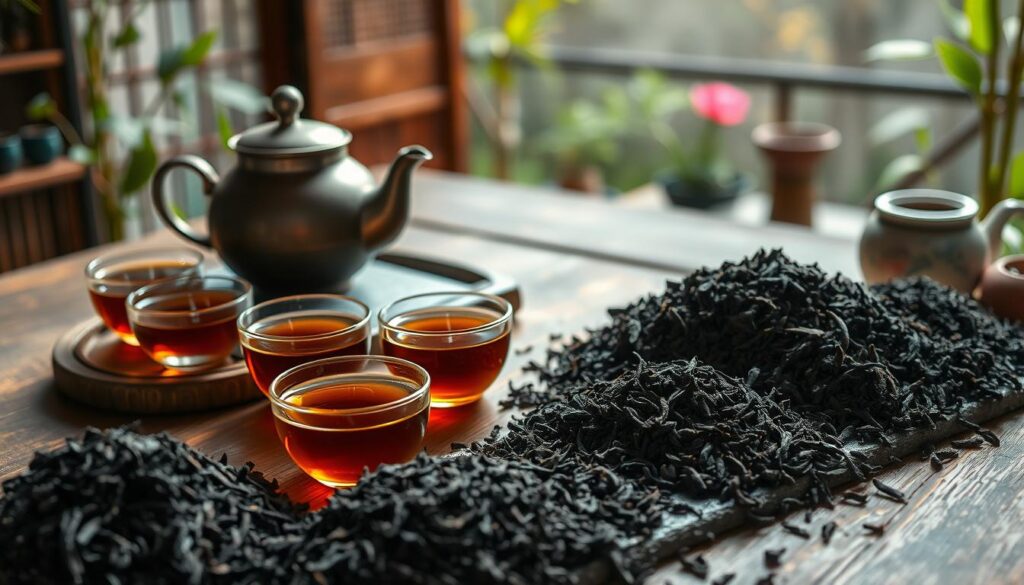
Ever wondered about dark tea and why it’s so popular? Dark tea, or hei cha in Chinese, gets its unique taste from a special aging process. This process darkens the leaves and liquor, giving them deep, savory flavors.
To understand Heicha tea, start with the leaves. They’re first treated like green tea: plucked, withered, heat-fixed, rolled, and dried. Then, the Heicha tea production changes. Leaves are piled, baked, or left to dew, allowing bacteria and fungi to transform the flavors over time.
The stories of Heicha tea’s origins are rooted in Chinese provinces. Pu-erh comes from Yunnan, with strict rules. Liu Bao, Fu Zhuan, and others come from Guangxi, Hunan, and Anhui. Each region uses its own drying and storage methods, affecting the taste and aging.
Fermentation can happen naturally over time or be sped up with wet-piling. This process breaks down certain compounds, creating earthy, musty, or molasses-like flavors. This is why shu pu-erh and some Heicha teas taste similar after aging.
Tea is packed into baskets or compressed into bricks to make transport easier and aging faster. Storage conditions greatly influence the final taste. Hot, humid storage speeds up ripening, while drier storage preserves fresher, floral notes. If you want to brew Heicha tea, start with small samples stored differently to see the effects.
- What is dark tea: a fermented, aged tea category defined by microbial ripening.
- Heicha tea production process: begins like green tea, then uses piling, baking, or dew exposure for fermentation.
- Heicha tea origin: multiple provinces shape styles—Yunnan, Guangxi, Hunan, Anhui among them.
- What is Heicha tea: a savory, earthy alternative to green and hong cha styles.
A Deep Dive into Liu Bao Tea
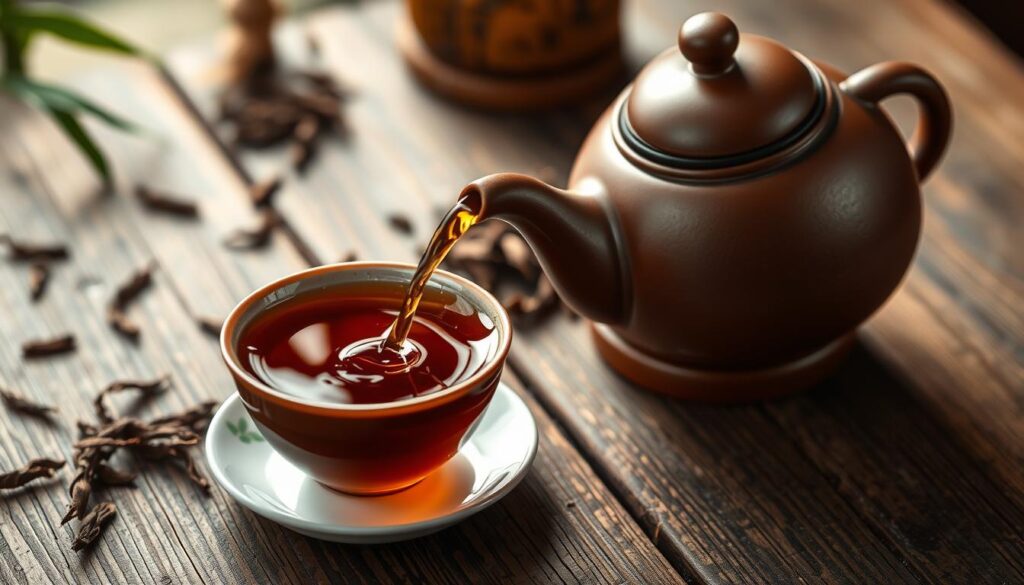
Liu Bao tea comes from Guangxi province. It’s a classic Type of Heicha tea. Its texture and aroma come from Wuzhou’s processing traditions.
Heicha tea is dark, post-fermented tea. Liu Bao is part of this family. It has a strong earthy smell and tastes like betel nuts.
What makes Liu Bao special is how producers balance wet-piling and storage. Traditional recipes, like the 25017 batch from Three Cranes/Wuzhou Tea Factory, use 29 days of piling and years of aging. This process makes the tea’s flavor deep and layered.
To brew Liu Bao, rinse the leaves quickly. Use a gaiwan or small teapot for gongfu-style brewing. This method brings out the tea’s best flavors. You can also use a larger pot or thermos for a simpler brewing process.
Heicha tea tasting notes include damp-basement, mushroom, and aged-wood. As you brew it more, the flavors sweeten. You might taste bark, mineral, and cocoa.
- History: Liu Bao has deep regional roots in Guangxi and grew through trade and basket storage.
- Processing: Wet piling, steaming, packing into baskets, then hot-humid aging in Wuzhou.
- Brewing tip: Quick rinse and short, repeated steeps highlight evolving flavors.
When comparing Liu Bao tea to ripe shou pu-erh, you’ll notice differences. Ripe pu-erh is smoother with molasses, caramel, and roasted-nut notes. Liu Bao is earthier, with notes of charcoal or aged wood at stronger infusions.
Collectors and vendors share specific examples. A 2012 Three Cranes 25017 wet-piled Liu Bao has bitter-sweet chocolate, betel nut, and a classic chen xiang, or old taste. These examples show how Liu Bao’s profile changes with recipe, piling length, and storage.
Learning these nuances will improve your appreciation of Types of Heicha tea. Try different vintages and storage histories. See how Heicha tea tasting notes change from musty and raw to sweet and refined over time.
The Profiles of Other Heicha Varieties
There are many types of Heicha tea beyond pu-erh and Liu Bao. Fu Zhuan Brick tea is often compressed. It has deep, earthy layers with gentle fungal notes that many find approachable.
Lu’an heicha from Anhui is unique. It’s made from young buds and goes through baking and piling steps. Younger vintages are bright and sweet. Older ones have tobacco and earthy tones that are rewarding to savor slowly.
Mo gan and other regional teas show local craftsmanship. The way they’re processed, like oven or sun drying, affects the taste. Fermentation styles also play a role, with natural aging creating subtle fragrances and wet-piling giving quick flavors.
- Region shapes microbes and taste—Wuzhou’s humid stores speed aging, giving Liu Bao its warm, mellow character.
- Yunnan teas, like sun-dried assamica in shu pu-erh, can have molasses, wood, and dark fruit notes.
- Anhui’s lu’an often leans inky and smooth, with a cooling finish and layered sweetness in aged cakes.
When shopping, look for provenance and clear processing notes. Choose vendors who detail wet-piled versus naturally aged teas and storage conditions. Reputable sources like Yunnan Sourcing or established Wuzhou factories help trace the tea’s origin and avoid poor storage.
Use sensory checks when selecting. A quality sample should be free of musty rot, present cohesive earthy and sweet elements, and feel silky in the mouth. Heicha tea tasting notes often highlight balance between earth, sweetness, and a clean finish.
Try small buys of 50–100 g to explore styles. Comparing samples from trusted producers, including known pu-erh houses like Menghai for contrast, helps you identify the Best Heicha tea brands for your palate.
Health Benefits of Heicha Tea
Heicha tea is a fermented dark tea from Camellia sinensis. It has a rich, earthy taste. This fermentation changes the tea’s polyphenols, making it different from green tea. Many enjoy Heicha tea for its mellow, savory taste that helps with digestion after big meals.
Heicha tea’s antioxidants are a big reason for its popularity. Fermentation doesn’t remove all antioxidants. It changes the mix of compounds, creating new antioxidants during aging. This mix of compounds is what makes Heicha tea beneficial for health.
Heicha tea is often used to aid digestion. In southern China, it’s known for settling the stomach and feeling soothing after eating. Its warmth and polyphenol profile may help with digestion better than harsher teas.
Some say fermented teas like Heicha can help with weight management. But, these claims are not proven and should be part of a bigger plan. Heicha tea can be seen as a supportive element, not a solution.
It’s important to be careful with aged and fermented teas. They can have high levels of minerals like fluoride. Quick rinses, shorter steep times, or cold brewing can help. Choosing teas from younger leaves and trusted sources is safer.
- Antioxidant support: Heicha tea antioxidants persist after fermentation.
- Digestive comfort: Traditional use highlights stomach-settling effects.
- Metabolic hints: Possible weight-management roles, but evidence is limited.
- Practical safety: Rinsing and mindful steeping cut excess extraction.
If you have health issues or take medications, talk to your doctor before trying Heicha tea. Choosing good sources and using it in moderation can help you enjoy its benefits while avoiding risks.
How to Brew Perfect Heicha Tea
First, get the right tools. A small gaiwan or 100–200 ml teapot is best for gongfu-style brewing. A kettle with temperature control and a scale are also key for consistent results. For a casual cup, a large pot or thermos works well with less leaf and longer steeps.
Start by rinsing the leaves with boiling water. A quick pour and discard opens the leaves and removes surface dust or strong fermentation aromas. Make sure your vessel and cups are preheated with hot water to keep the temperature steady during short infusions.
For a gongfu ratio, use a high leaf-to-water weight and short, repeated steeps. Start with a 5–15 second first infusion, then increase the time slowly over 6–10 steeps. Use fully boiling water for most heicha. Adjust the steep times based on your taste preferences.
For western-style brewing, add more water and steep for 2–4 minutes with boiling water. Short, flash infusions highlight cleaner, sweeter notes. Longer, stronger steeps bring out earth, charcoal, barn, and aged-wood character.
- Equipment: gaiwan or small teapot (porcelain, clay, or Yixing), kettle with temp control, scale, serving pitcher for gongfu.
- Casual method: large pot or thermos, lower leaf ratio, longer steep.
- Rinse: one quick pour and discard before the first infusion.
Heicha re-steeps well. Later infusions often sweeten and evolve. Cold-brewing ripe heicha in the fridge overnight can reveal fruitier or root-beer-like notes and a pronounced sweetness.
Be mindful of extraction with very old leaves. To limit mineral extraction, avoid extremely long single hot steeps from aged material. Vary methods between short gongfu and longer western brews.
As you practice, take notes on aroma and flavor. Record Heicha tea tasting notes for each infusion. This helps refine leaf weight, steep time, and water temperature. You’ll learn what works best and understand What is Heicha tea through experience.
Heicha in the Modern Tea Culture
Heicha is becoming more popular in the US, attracting specialty tea lovers and collectors. Online forums and tea bars are filled with discussions about Heicha. Topics include different types like liu bao, fu zhuan, and lu’an.
Exploring Heicha tea tasting notes reveals interesting comparisons. Tasters often compare it to ripe pu-erh, highlighting its unique flavors. The notes can vary from earthy and savory to sweet and floral, depending on the tea’s age and processing.
There are now more ways to brew Heicha than ever before. Traditional gongfu with compressed pieces is popular for focused tastings.
But, modern brewers also use loose-leaf gongfu, Western-style steeping, thermos infusion for on-the-go, and cold-brew experiments. These methods show different sides of Heicha, allowing you to enjoy it in various ways.
Heicha is great with hearty foods like dim sum, roasted meats, and starchy dishes. Bars and modern tea shops offer menus that show how Heicha enhances flavors and aids digestion.
Learning about Heicha is easier than ever, thanks to community education. Sample packs, tasting events, and detailed vendor descriptions help you understand different Heicha types. They also help you improve your tasting skills with practical notes.
For those learning How to brew Heicha tea, start with small samples. Try different brewing methods and note how water temperature and steep time affect the taste. Tasting and trying again will deepen your appreciation for this evolving tea category.
Heicha Tea and Food Pairings
Heicha tea pairs well with hearty, savory dishes. It cleanses your palate with its earthy finish. Try it with dim sum, roasted pork, braised beef, barbecue, or rich stews.
For cheese lovers, aged cheddar or washed-rind cheeses are great with Heicha. Sweet buns and buttery pastries also make a nice contrast when enjoyed with an aged cup of Heicha.
Think about the tea’s profile before pairing. Liu Bao is good with gamey meats for musty notes. Shu pu-erh is perfect for molasses and caramel flavors with smoked dishes. Lu’an aged styles are great for lighter, cooling sweetness with milder foods.
Use mindful brewing to bring out more layers in your tea. A short rinse or gongfu method can highlight the tea’s tasting notes, which change with each infusion.
- Match intensity: delicate infusions with lighter dishes, bold charcoal or aged-wood brews with rich meats.
- Try multiple infusions to watch sweetness increase and tannins soften.
- Experiment with temperature; cold brew can bring out fruitier, softer aspects.
Sample small lots from reputable vendors like Verdant Tea or Jing Tea. This will help you find the right style for your table. Storage affects the taste, with hot-humid environments changing the flavor. This impacts both the taste and the tea’s benefits, like digestion support after heavy meals.
As you explore pairings, ask yourself: What is Heicha tea in this cup, and how does it change with each bite? This curiosity will lead you to pairings that enhance both food and tea without overpowering either.
Where to Buy Heicha Tea
You can find Heicha online or in specialty stores that sell Chinese dark teas. Yunnan Sourcing is a great place for Liu Bao and pu-erh. Regional U.S. tea shops also offer samplers. Visiting a local tea house lets you taste before buying.
When choosing, look at the tea’s origin, factory, and how it was processed. Good listings will tell you about the wet-pile duration, storage history, harvest year, and compression format. This information helps you choose what Heicha tea is right for you.
Start with small sampler sizes of 50–100 g to compare styles without a big commitment. Compare producers like Wuzhou Tea Factory for Liu Bao and Menghai for pu-erh cakes. Community forums and customer reviews can help you understand a vendor’s reputation and storage claims.
- Search specialty importers and boutique sellers for rare fu zhuan and lu’an heicha.
- Ask vendors about storage: dry storage keeps notes crisp, Wuzhou-style humid storage adds earth and sweetness.
- Prefer clear descriptions over vague listings; avoid teas described as moldy or with unclear provenance.
If you shop internationally, consider shipping time and cost. Shipping from China can take weeks, and fees vary. Look for vendors with sample weights and clear return policies.
To find the Best Heicha tea brands, start with a few trusted sources and compare vintages. Use samplers to narrow your favorites, then buy larger compressed formats when you know which style you enjoy most.
After buying, refresh your knowledge on How to brew Heicha tea. The right brewing method and water temperature can reveal the tea’s character. This helps you decide which origins and producers fit your taste.
Experiencing Heicha: Tasting Events and Workshops
Attending tastings and workshops in the United States can deepen your love for Heicha tea. Look for events at tea festivals, specialty shops, and cultural centers in cities like New York, San Francisco, and Seattle. These gatherings often focus on different Heicha teas, like Liu Bao and shu pu-erh. You’ll also learn how to brew and taste tea.
Workshops are great for learning about Heicha tea’s history and how it’s made. Instructors show the difference between natural aging and fermentation. They also teach how storage impacts flavor and guide you through breaking compressed cakes. You can find both in-person and online courses from vendors like Yunnan Sourcing, which include tasting kits and detailed notes.
Joining tea communities can speed up your learning and help you find good places to buy Heicha tea. Look for tea groups on Reddit, Steepster, and Facebook. Local tea circles and meetups let you taste different teas and find ones that suit your taste.
When you go to an event, bring an open mind and a notebook. Note the changes in aroma, mouthfeel, and aftertaste with each infusion. This practice will improve your tasting skills and help you choose your favorite Heicha teas as you explore its rich history.