

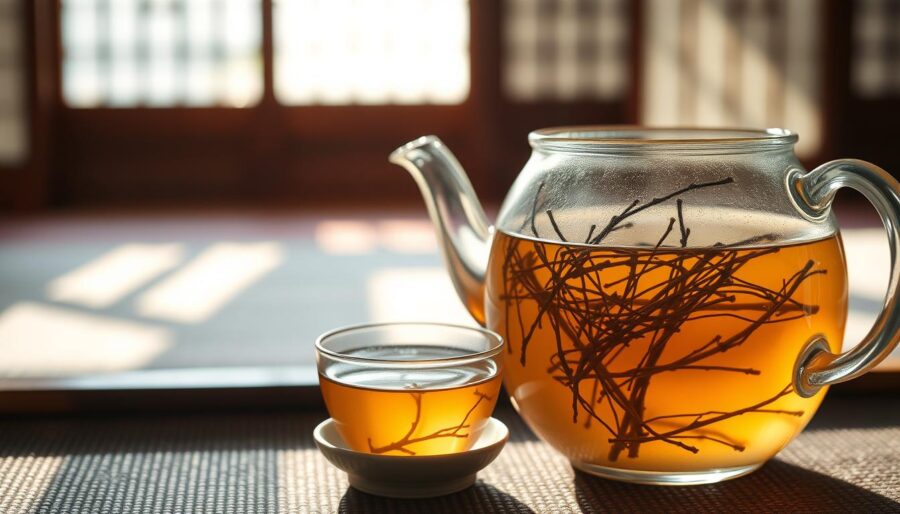
Japanese green teas like sencha and matcha are well-known. But kukicha twig tea and Meicha tell a unique story. They’re made from twigs, stems, and a few leaves, not just leaf blades. This makes Japanese Kukicha tea lighter, with less caffeine, and a clean, nutty taste.
Kukicha is also called “stem tea” or karigane when it comes from high-grade leaves. Meicha is a twig-and-stem product with its own flavors. Both are by-products of leaf processing, yet they have gained fans for their unique taste and balance.
The type of Kukicha green tea depends on its source. Sencha, gyokuro, or bancha processing lines change its flavor, caffeine, and tannins. You can also find organic Kukicha tea from producers certified under systems like JAS. This appeals to those who want clean, traceable sources.
In this article, you’ll learn about kukicha, its history, and the benefits of Kukicha tea. You’ll also find out how to brew the perfect cup and how it compares to other teas. Discover the flavor notes that make it special, Meicha distinctions, and where to buy quality Kukicha. Plus, learn how to make kukicha a part of your daily routine.
What is Kukicha Twig Tea?
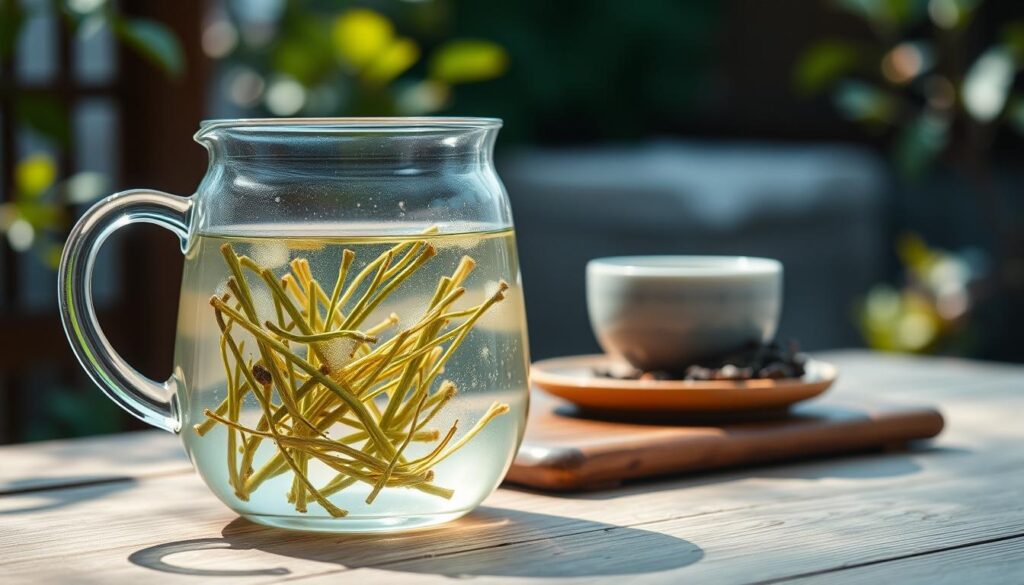
Kukicha twig tea is a Japanese tea made from stems, twigs, and a few leaf bits. It’s also known as kukicha or mecha in specialty stores. These twigs are called DEMONO, meaning they come from by-products, not primary leaf harvests.
The taste of kukicha green tea varies by its origin. Gyokuro stems make a sweeter, milder tea due to shading. Stems from bancha or sencha, on the other hand, offer a stronger taste.
How the parent teas are processed affects the twig tea. Steamed leaves give a fresh taste. Roasted stems, like in hojicha-based kukicha, add toasted flavors and less tannins. Shading increases L-theanine, making the taste rounder.
Stems have different amounts of amino acids, catechins, and caffeine than leaves. This means kukicha often has less caffeine and tannins. It’s a gentler tea, perfect for enjoying later in the day.
You can buy kukicha as loose-leaf or in tea bags. Organic Kukicha tea is available for those who prefer it. Stores like Yunomi offer farm-specific and organic Kukicha tea for quality and traceability.
The History of Kukicha Tea
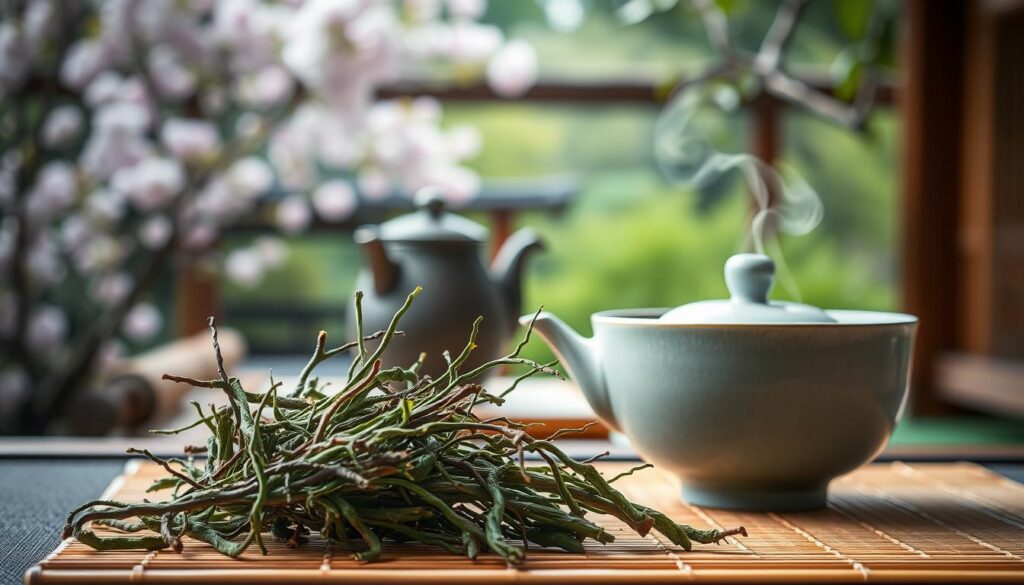
Kukicha is a key part of Japanese tea history. Tea came to Japan with Buddhist monks in the 8th century. It spread to places like Uji, Shizuoka, Nishio, and Yame. Shops like Tsuen played a big role in how tea was grown, processed, and enjoyed.
The start of kukicha is simple. It came from leftover stems and twigs after sorting leaves. These were used to make everyday teas. Over time, kukicha became a staple for daily use.
In many homes, kukicha is enjoyed without sugar or milk. It’s brewed in kyusu pots and drunk from yunomi cups. The way it’s enjoyed varies by region, adding to its charm.
As tastes changed, kukicha gained more respect. Karigane, a twig tea made from gyokuro and tencha, became famous for its aroma. This shift made kukicha more sought after for its delicate taste.
- Tea’s arrival in the 8th century framed the broader context for the history of kukicha.
- Stem collection and blending explain how kukicha green tea entered daily routines.
- Regional producers and historic shops shaped how Japanese Kukicha tea is known today.
Exploring kukicha reveals both simple kitchen habits and high-quality tea making. This mix makes Japanese Kukicha tea special in tea culture and in your cup.
The Health Benefits of Kukicha
Kukicha contains bioactive compounds similar to those in green teas. These compounds, like catechins, act as antioxidants. They help protect cells from damage. L-theanine, an amino acid, supports calm focus without causing jitters.
Steamed green teas, including kukicha, often retain vitamin C. The stems of kukicha also contain small amounts of minerals. These add to the overall nutritional value of the tea.
The stem-focused profile of Kukicha tea offers unique benefits. Stems have lower tannins and less caffeine than leaf teas. This makes kukicha easier on the stomach and a good choice for a milder cup later in the day.
Japanese tea literature emphasizes vitamin C and catechins in teas like sencha. Researchers and practitioners note the antioxidant activity. They also mention possible support for digestion and overall wellbeing.
Roasted stem teas, like hojicha-style variants, have even fewer stimulants. They are often recommended for evening drinking.
While Kukicha tea has health benefits, it’s not a substitute for medical care. It should be part of a balanced diet and healthy habits for the best results.
- Choose organic Kukicha tea if you want to avoid pesticide residues.
- Store tea airtight, cool, and away from strong odors to preserve flavor and activity.
- Use fresh tea within a month after opening when possible to maintain potency.
For those sensitive to stimulants, kukicha tea’s low caffeine level is a plus. It’s a gentle option for evening cups. It provides calm energy without causing sleeplessness.
Preparing the Perfect Cup of Kukicha
Begin with 1–2 teaspoons (about 2–3 g) of kukicha for 150–200 ml of water. This ratio helps balance the flavor. If using Kukicha tea bags, follow the package instructions but treat it like loose leaf for timing.
Choose soft or filtered water for a cleaner taste. Warm your kyusu or teapot with hot water first. Pour water evenly over the twigs to avoid over-extracting one side.
Match the water temperature to the type of kukicha. For green-stem kukicha, aim for 175–185°F (80–85°C). For karigane, cool slightly to 75–80°C to keep sweetness. For roasted kukicha, use near-boiling water (195–205°F / 90–96°C) to emphasize toasty notes.
Steep the first infusion 60–90 seconds. You can steep 2–3 times, reducing steep time with each pass. When using Kukicha tea bags, steep 2–4 minutes depending on your preference.
Pour out every cup to the last drop to equalize flavor across servings. If planning multiple infusions, make the next brew immediately after pouring the previous one. Do not mix old leaves with fresh ones.
- Equipment tip: use a fine strainer for loose kukicha to catch small twigs.
- Water tip: avoid repeated reheating; fresh hot water gives cleaner extraction.
Store kukicha in airtight containers, away from heat and strong odors. Unopened packages can go into the refrigerator or freezer for long-term storage. Let cold packages reach room temperature before opening to prevent condensation.
For karigane, use slightly less water per gram and the lower temperature above. This highlights the delicate sweetness unique to gyokuro-derived stems and brings out finer aromatics.
Kukicha vs. Other Types of Teas
Kukicha stands out when compared to other teas like sencha, gyokuro, bancha, genmaicha, hojicha, and matcha. Sencha is made from steamed and rolled leaf blades. This method gives a brighter tea with more caffeine and tannins than kukicha.
Gyokuro is made from shaded leaves, giving it a sweet taste. Karigane kukicha, made from gyokuro stems, has less caffeine but keeps the sweetness. It offers a gentle flavor with less caffeine than leaf teas.
Bancha is a coarse, later-harvest leaf with more astringency. Bancha stems make a kukicha good for everyday drinking. It has a softer mouthfeel than bancha leaf tea.
Genmaicha blends roasted brown rice with sencha or bancha. Adding kukicha to genmaicha enhances its body and stem character. The stems add depth without increasing caffeine levels.
Hojicha is known for its roasted flavor. Roasting kukicha stems creates a stem-based hojicha that’s low in stimulants. This roasted kukicha is perfect for evening drinks, with a mellow, warm taste.
Matcha is powdered leaf with high levels of catechins and caffeine. Whisking the whole leaf into the bowl gives a strong, full flavor. Kukicha, not powdered, is much milder in both stimulants and texture.
- Kukicha vs other teas: stems vs leaves drive most differences.
- Kukicha green tea: lighter tannin and gentler mouthfeel for many drinkers.
- Kukicha tea caffeine: often lower, so it works well in the evening or for those sensitive to caffeine.
- Kukicha tea bags: convenient, but expect some loss of subtle aroma compared with loose stems.
For a soft cup with low tannin and modest stimulants, choose kukicha. Sencha or gyokuro are better for a brighter, more assertive green tea. Roasted kukicha is a low-caffeine alternative to hojicha. Kukicha tea bags are convenient but may lose some stem flavors.
The Flavor Profile of Kukicha
Kukicha green tea often has light vegetal notes. It tastes sweet, like hay, or has a mild nutty flavor. This taste is gentle on the tongue.
Karigane, made from stems of shaded gyokuro fields, is creamier and richer. This is because the parent leaves have more amino acids. They give a sweeter, more umami-like taste.
Stems from bancha or later harvests have a more robust taste. They have a slightly astringent finish. This comes from the use of larger, mature leaves in the original teas.
Roasted kukicha, made in a hojicha-style roast, has toasted, biscuity notes. It also has caramel and faint smoky hints. It’s very low in bitterness, making it smooth for evenings or richer desserts.
To enjoy kukicha, warm the cup first to lift the aroma. Take a slow sip and let the liquid linger. This way, you can separate sweetness from astringency.
Pairings work well with subtle wagashi or light savory dishes and rice-based meals. Roasted-kukicha pairs nicely with richer desserts and evening snacks. Its toasty profile complements deeper flavors.
To get the best experience, learn how to brew Kukicha tea. Use water just below boiling and steep for a short time. Adjust the leaf amount and time to match your taste preferences.
Exploring Meicha: The Other Tea Twig
Meicha is a stem-and-small-leaf product in Japanese tea classification. It’s often seen as a secondary tea, similar to kukicha and meicha in many tea lists.
Naming can vary by region and producer. Meicha comes from early-picked, fine needle-like bits from gyokuro or tencha processing. Kukicha, on the other hand, is a mix of stems and twigs from sencha, bancha, or gyokuro production.
Meicha and kukicha have unique textures and flavors. Meicha offers a delicate, sweet umami taste. Kukicha, on the other hand, has a nutty, rounded body. These differences make them great for different brewing and pairing choices.
- Brewing notes for Japanese Kukicha tea and meicha are similar to sencha. Use slightly larger water volumes to balance extraction; guidance often suggests 130–150 ml per person.
- Temperatures remain moderate to preserve subtle aromatics and avoid bitterness.
Meicha stems have multiple uses. They can be blended into teas, roasted into hojicha-style products, or sold as karigane when stems come from shaded, high-grade leaves.
The value of kukicha and meicha depends on use and preference. Both are important in Japanese tea grading and preparation guides. They both deserve a spot in a thoughtful tea rotation for their unique character and versatility.
Where to Buy Quality Kukicha
Quality kukicha can be found through reputable Japanese tea vendors and specialty stores. Look for sellers that provide farm or region details. Shops like Yunomi show farmer and harvest info, helping you find the right Kukicha twig tea.
When searching for organic Kukicha tea, check for JAS certification or other organic seals. Remember, repackaging can change certified status. So, choose vendors that keep original packaging or explain their repackaging.
Here are some tips to judge quality:
- Check the harvest date and season; stems vary by harvest year.
- Prefer airtight, light-blocking packaging for freshness.
- Look for origin and cultivar notes and whether it comes from gyokuro (karigane), sencha, or bancha.
- See if the seller provides clear brewing instructions.
In the United States, you can find kukicha at specialty tea shops, Japanese grocery stores, and online retailers. Choose between loose-leaf and kukicha tea bags based on your preference. Loose-leaf offers fuller flavor, while tea bags are quicker to brew.
To find what you need online, use terms like “organic Kukicha tea,” “karigane kukicha,” “Japanese kukicha stems,” and “kukicha twig tea bags.” Include “where to buy Kukicha twig tea online” to find trusted shops that ship to the U.S.
If you prefer farm-specific listings, choose vendors that name the producer and harvest. This transparency helps you compare quality and traceability when looking for where to buy Kukicha twig tea.
Incorporating Kukicha into Your Lifestyle
Begin your day with a gentle cup of Kukicha green tea. It helps you focus without feeling jittery. Enjoy it in the morning or a calm afternoon pick-me-up. For a relaxing evening, try roasted kukicha.
Keep some single-origin or karigane kukicha for quiet moments. Use loose leaf in a kyusu pot or a simple yunomi cup for a ritual. Tea bags are handy for a quick Kukicha fix at work.
Use brewed kukicha as a cooking liquid for extra flavor. It’s great for poaching fish or veggies, adding to rice or soup, or as a base for sauces. Roasted kukicha adds a toasty taste to baked goods and pairs well with sesame, miso, and roasted root veggies.
- Swap late-night coffee for a low-caffeine kukicha to support sleep while enjoying a warm drink.
- Pair kukicha with balanced meals to aid digestion and complement greens, fish, and light grains.
- If you avoid pesticides, choose certified organic Kukicha green tea for cleaner sourcing.
Learn to brew Kukicha tea for the best flavor and health benefits. Use cooler water and a longer steep for green kukicha. For roasted kukicha, warmer water brings out toasty aromas.
Store kukicha in a cool, dark, airtight container to keep it fresh. Rotate your supply to enjoy each batch at its best. These small steps make adding Kukicha to your life easy, nourishing, and tasty.
Conclusion: Embracing Kukicha in Your Tea Rituals
Kukicha twig tea is a unique Japanese brew made from stems and twigs. It offers a milder, lower-caffeine cup with flavors like vegetal, sweet, or toasty. Whether you prefer everyday bancha blends or karigane from gyokuro stems, kukicha is a special Japanese tea.
To enjoy Kukicha tea, follow simple steps: use cooler water, steep for shorter times, and use more leaves. Try roasted-stem versions and karigane to find your favorite flavor. For organic options, choose pesticide-free Kukicha and look for vendors who share details about the tea.
Kukicha tea is known for its lower caffeine and mineral-rich taste. But it’s more than just a drink. Use it in recipes, as a calming ritual, or with light meals. Experiment with small changes in brewing to discover new flavors in this rewarding tea.