
You’re about to discover a special part of traditional Chinese tea making. Here, the yellow tea process stands out. We’ll explore why Men Huang is considered a lost art, its role in the yellow tea origin story, and why it’s so valuable.
Yellow tea starts like green tea. First, the leaves are harvested and then “kill-green” to stop oxidation. But then, it takes a different path. A step called Men Huang adds slow heat and humidity, making the tea soft, sweet, and yellow.
Real post-fermented yellow tea is made in small batches in China, mainly in Hunan, Sichuan, and Anhui. But most of what you find in the U.S. is not genuine. True leaves are rare and often found through specialty vendors or reputable estates.
Men Huang is like baking an apple. It caramelizes the grassy catechins, making them milder. This process keeps most of the EGCG and makes antioxidants easier on the stomach. It also adds a warm, honeyed flavor that many love.
In the next sections, you’ll learn about production, regional differences, brewing methods, health benefits, aging, and how to spot real yellow tea. By the end, you’ll know how to appreciate this unique, slowly growing craft.
What is Yellow Tea?
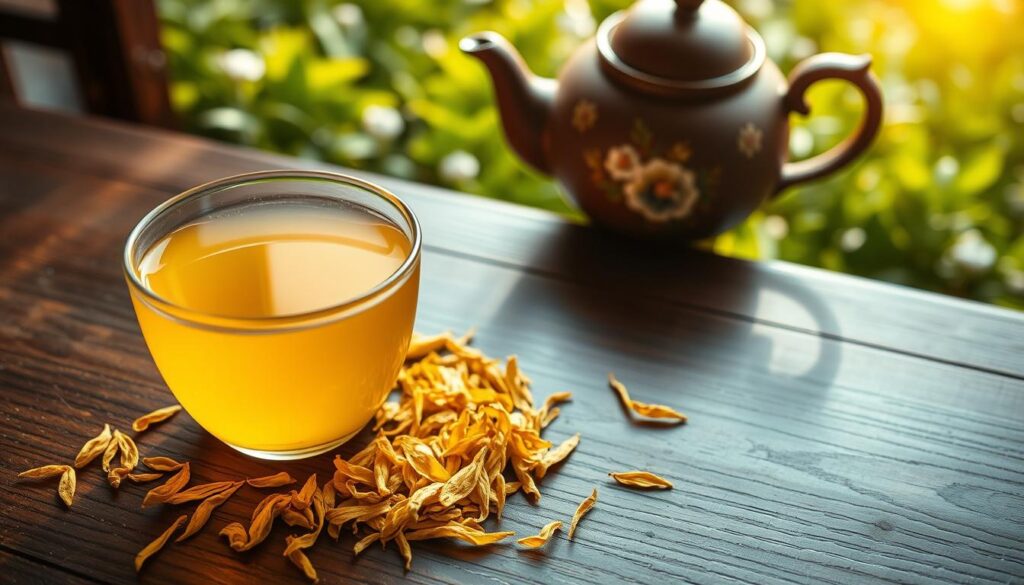
Green and white teas are well-known, but yellow tea is unique. It starts like green tea, with the same steps. But then, it gets a special step called Men Huang before drying.
The yellow tea process includes a warm, humid rest. This encourages a slight oxidation. This step changes the tea’s chemistry, unlike green or white teas.
Green tea stops oxidation quickly, while white tea is handled lightly. Yellow tea falls in between. This makes the leaves turn from bright green to yellowish-brown.
When you drink yellow tea, you’ll notice changes. The color, body, and taste are smooth. You might taste sweet corn, sugarcane, and baked apple. The tea also leaves a sweet feeling in your throat.
Yellow tea is valued in Chinese cooking for its gentle taste. It’s easier on your stomach than many green teas. It’s often suggested after greasy meals for its calming effect.
The Unique Process of Yellow Tea
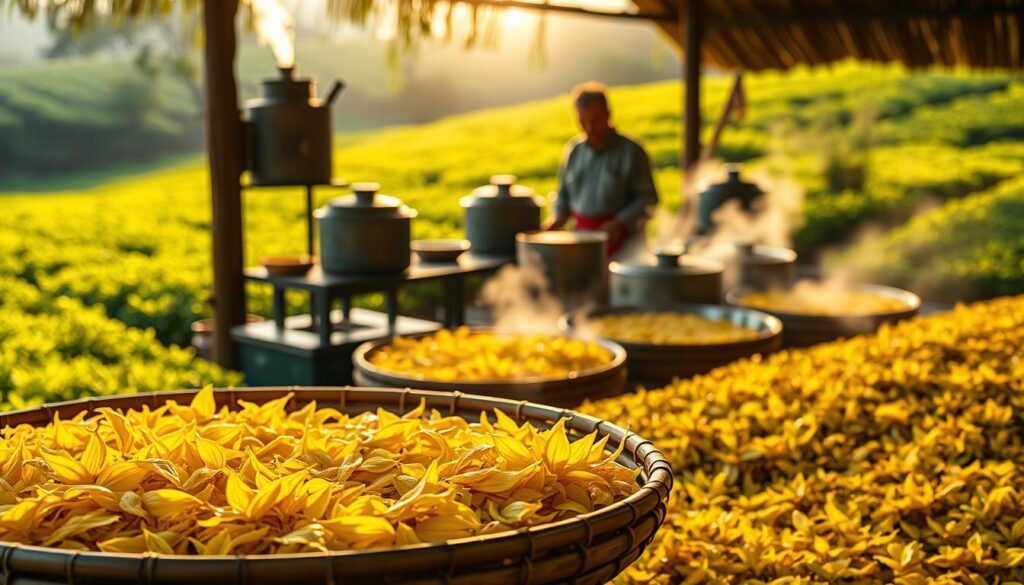
Yellow tea production starts with harvesting. Farmers pick the best buds or a bud-and-leaf mix at dawn. This is when the tea’s aroma is most intense.
The next step is called kill-green or fixation. Here, farmers use pan-firing or brief steaming. This stops the tea from oxidizing too much, preserving its freshness.
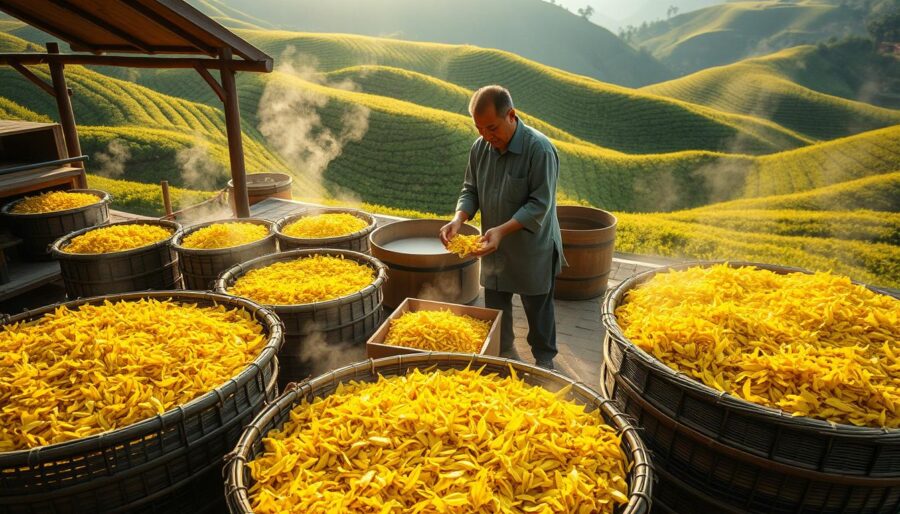
Then comes Men Huang. Leaves are smothered in a warm, humid bed. This process can take hours or even days. It’s important to keep the temperature and humidity just right.
If it gets too hot, the leaves can rot. If it gets too cool, the yellowing stops. This careful control makes traditional Chinese tea making very hard work.
During Men Huang, the tea’s chemistry changes. A warm, humid environment helps break down chlorophyll. This turns the leaves yellow. At the same time, the tea’s flavors become sweeter and milder, like caramel.
After Men Huang, the tea is dried and shaped. This is done at low heat to keep the new flavors. Some tea makers add a final roast or dry to enhance the aroma and stability.
These extra steps make yellow tea production unique. Men Huang makes the process longer and riskier. Many growers found quicker green tea production easier and cheaper. This shift made high-quality yellow tea rare and expensive today.
Here’s a quick overview of the steps:
- Harvest: buds or bud-and-leaf
- Kill-green/fixation: pan-firing or steaming
- Men Huang: controlled smothering with constant checks
- Drying and shaping: low heat to set form
- Final roast/dry as needed
Understanding Men Huang
Men Huang is a key step in yellow tea making. It involves wrapping damp, warm leaves in cloth or paper. Then, they are placed in wooden boxes or heaped to “sweat”. The leaves sit in the heat and moisture until they change as desired.
The yellow tea process relies on careful sweating. Tea masters must watch the temperature and humidity closely. This is to prevent rot or an incomplete change. It’s a high-stakes task that requires skill, timing, and experience.
The changes from Men Huang are noticeable. It reduces bitterness and grassy smells, adding a sweet aroma like baked apples. The tea becomes softer in the mouth but keeps most of its antioxidants. This results in a mellow cup that’s also nutritious.
Men Huang is what makes yellow tea unique. It sets this tea apart from green and white teas. Its role is key to the tradition and identity of post-fermented yellow tea.
- Sealing method: cloth or paper wrap, wooden boxes, or heaps
- Control points: temperature, moisture, and time
- Outcome: reduced bitterness, sweeter aroma, preserved antioxidants
The Fermentation Process
The yellow tea process is different from black tea’s heavy fermentation. Men Huang uses a light auto-oxidation and limited micro-fermentation. This makes the green astringency softer while keeping the tea fresh.
The chemistry of yellow tea production is subtle but key. Chlorophyll breaks down, giving the leaves a warmer color. Catechins turn into less bitter compounds, and some grassy smells fade. Studies show EGCG retention is high, near 85% like green tea, with some EGCG changing into related compounds.
These changes affect how the tea tastes and acts in your body. The mild fermentation makes it gentler on the stomach than green tea. Both traditional practices and modern research highlight its digestive benefits.
- Reduced bitterness from catechin modification
- Greater bioavailability of certain antioxidants
- Milder effect on the stomach after heavy meals
When you age it, the tea’s flavor evolves. The gentle micro-fermentation makes it more stable than fresh green tea. Over time, it develops honey-like notes and a smoother liquor without losing its freshness.
Exploring yellow tea production reveals a careful balance. The aim is to enhance flavor and health benefits without full oxidation. This results in a delicate, rounded, and forgiving tea for many.
Regions Known for Yellow Tea
Yellow tea’s roots are in China’s historic pockets. Here, terroir and craft create unique cups. Each area uses local cultivars and keeps Men Huang methods alive through small-scale production.
-
Jun Shan Island, Dongting Lake, Hunan Province — Jun Shan Yin Zhen. This single-bud treasure has sugarcane and sweet corn notes. It’s pricey and often mistaken for white silver needle, but its processing makes it a true yellow tea rarity.
-
Mt. Meng Ding, Sichuan Province — Meng Ding Huang Ya. A tribute tea from the Tang Dynasty, it has nutty and chestnut tones with a long sweet finish. Its flavor is more savory than Jun Shan, showing local soil and climate.
-
Huo Shan, Anhui Province — Huo Shan Huang Ya. Lost and then revived in the 1970s, this tea has peas and toasted nut notes with a high floral aroma. It’s a great starting point for those new to yellow tea.
Soil, elevation, and microclimate make each region unique. Men Huang traditions and heritage farmers in Hunan and Sichuan preserve techniques. These can’t be copied by mass production.
When shopping, look for provenance and ask about production methods. This helps match flavor expectations with the right region and style.
The Aging Process of Yellow Tea
Aging yellow tea is a slow process. Men Huang’s method adds a bit of fermentation and chemical stabilization. This makes the leaves mellow and develop a honey-like or toastier taste over one to two years or more.
Green tea, on the other hand, should be drunk quickly to avoid a stale taste. But yellow tea stays fresh and vibrant with time, if stored right. This means your investment in quality leaves can actually get better.
To keep your tea fresh, follow some basic storage tips. Store it in airtight containers, in a cool, dry place. Make sure it’s away from light and strong smells. These steps are key for keeping the delicate aromas in organic yellow tea.
Collectors and specialty vendors pay close attention to where the tea comes from and when it was made. This is because the aging process can affect its value. Even well-aged yellow tea can sell for high prices among serious tea lovers.
- Store in sealed tins or vacuum bags.
- Avoid heat, humidity, and odors from spices or coffee.
- Label with harvest and processing dates to track aging.
When picking tea, think about the making process and how it ages. Knowing this helps you choose leaves that will get better with time and careful brewing.
Brewing Yellow Tea
For the best yellow tea, keep the water temperature moderate. Aim for 80°C–85°C (175°F–185°F). Boiling water can make the tea taste less sweet.
Here are simple steps for brewing yellow tea:
- Preheat your vessel with a small rinse of warm water.
- Measure tea: about 2–3 grams per 150 ml of water, then adjust for stronger cups.
- Pour water at the recommended temperature and steep 2–3 minutes for most yellow teas.
The glass brewing method is great for bud-only teas like Jun Shan Yin Zhen. Use a tall clear glass to see the “Dance of the Three Ups and Three Downs.” Buds will float, sink, then rise as they unfurl.
Porcelain or glass teapots are good for other yellow tea styles. For multiple infusions, shorten the steep time with each rinse. Yellow tea supports several short brews if you tune leaf-to-water ratio and timing to your taste.
Sensory cues help you judge success in the yellow tea process. Look for a golden cup and a bright “golden ring” inside the rim. Aroma should be sweet and gentle. The flavor will be soft with a pleasant Hui Gan, a returned sweetness on the finish.
Try small tweaks to find your ideal brew. Slightly lower temperature or a shorter first steep will highlight delicate floral notes. A little more leaf or one extra minute brings forward body and sweetness.
Pairing Yellow Tea
Yellow tea pairs well with light foods that let its sweetness shine. Try pairing it with light pastries, madeleines, or almond biscotti for a delightful afternoon.
Yellow tea also goes well with mild cheeses like Brie or young Gouda. Its soft taste won’t overwhelm the cheese, keeping the flavors balanced.
Seafood and poultry are great with yellow tea. Try it with steamed fish, shrimp, or roasted chicken with light herbs. The tea’s subtle taste complements these dishes nicely.
For Asian dishes, yellow tea is a perfect match. It pairs well with dim sum or gentle stir-fries. Its gentle flavor enhances soy and ginger without overpowering them.
- Fatty or greasy foods: the tea’s gentle sweetness helps cut richness.
- After rich meals: many people enjoy yellow tea to aid digestion.
- Afternoon sipping: use yellow tea as an elegant alternative to green or white tea.
Remember the health benefits of yellow tea when pairing it. It’s known to aid digestion after heavy meals, helping the stomach settle.
Play with temperature and steep time to find the perfect match for your food. Shorter steeps are good for light desserts. Longer steeps bring out richer flavors for heartier dishes.
Use these tips to create a thoughtful tasting experience. Your guests will appreciate how yellow tea enhances both food and flavor without taking over.
Cultural Significance of Yellow Tea
Yellow tea is deeply rooted in China’s imperial history. It originated in court gardens, where it was known as Gong Cha, a special tea for emperors. The color yellow was seen as powerful, so making and drinking yellow tea was a privilege only a few could enjoy.
In China, making tea is a traditional art form. In places like Anhui, Hunan, and Sichuan, tea masters carefully follow ancient steps. These steps are what make Men Huang tea so unique, with its delicate taste and soft texture.
But economic changes almost made yellow tea disappear. Farmers started growing quicker green tea to make more money. Only a few tea lovers kept the old ways alive, keeping yellow tea’s spirit alive.
Now, there’s a growing interest in yellow tea. Specialty shops and tea lovers are looking for authentic teas like Jun Shan Yin Zhen, Meng Ding Huang Ya, and Huo Shan Huang Ya. They’re willing to pay more to taste these teas, which are a piece of history.
- Historical role: imperial tribute and court beverage.
- Preservation: craftsmen in Anhui, Hunan, Sichuan kept techniques alive.
- Revival: specialty markets and enthusiasts sustain renewed demand.
Looking for yellow tea connects you to its rich history. It links the yellow tea origin, traditional Chinese tea making, and its cultural importance. Every cup of yellow tea is a taste of tradition, once for emperors, now for those who seek a unique experience.
The Future of Yellow Tea
As a tea enthusiast, you play a big role in yellow tea’s future. Small growers face big challenges. They need to spend a lot of time and effort on Men Huang, which makes it expensive.
This high cost makes it hard for farmers to choose yellow tea over quicker green tea. Market confusion adds to the pressure. Some sellers call oxidized green teas yellow, which hurts trust.
Buying from trusted vendors can help. They show where the tea comes from and work closely with farms in Hunan, Sichuan, or Anhui.
Specialty yellow tea has a bright future. Tea lovers, boutique shops, and importers are looking for high-quality, small-batch teas. They value quality and knowing where the tea comes from.
Organic yellow tea is also gaining ground. It appeals to today’s consumers who want ethical and sustainable products. This can help farmers make a living while preserving traditional farming methods.
Your choices have a big impact. Paying more for teas from known sources helps. Support vendors who work directly with farms. This keeps traditional farming alive and profitable.
- Look for provenance from Hunan, Sichuan, or Anhui.
- Favor vendors who disclose processing details and harvest dates.
- Support small-batch and certified organic offerings when possible.
How to Choose Quality Yellow Tea
Start by looking at where the tea comes from. Teas from places like Jun Shan, Meng Ding, or Huo Shan are good. Ask about the batch and if it’s made in small batches. Real sellers will tell you about the making process and the special practices used.
Be careful of teas that are too cheap. Good yellow tea takes a lot of work and costs more.
Before buying, check how it smells. It should smell sweet, floral, or a bit nutty. The leaves should be a bright golden color, not dull brown.
Try a sample if you can. It should taste lively and sweet. This shows it’s of high quality and has the health benefits of yellow tea.
Also, check how it brews. Use water at 80°C–85°C and steep it for a short time. Look for the leaves to move up and down in the water. This means it’s well made. If it doesn’t look bright, it might be old or made wrong.
Buy from stores that give advice on storing tea and show where it comes from. Tea stored right can get better with age, taking one to two years to improve. If the seller can’t answer your questions, look elsewhere for quality yellow tea.